For a woman travelling alone in India, the journey often begins long before she reaches the airport or bus station. It starts with a barrage of well-meaning but layered questions from friends, family, and even strangers. The inquiries about safety, the absence of a companion, and the responsibilities left behind are a familiar prelude. In the gap between concern and curiosity lies a silent assumption: a woman travelling solo must be either exceptionally brave or somewhat irresponsible, rarely just an ordinary person seeking an experience.
The Weight of Invisible Luggage: Stereotypes on the Road
Yet, she travels anyway. She becomes a small, quiet revolution at terminals and stops across the country—a woman with a backpack, a suitcase, or an overstuffed tote. She quickly learns that her travel is as much about navigating societal expectations as it is about discovering new places. From the auto-rickshaw driver asking about her husband's whereabouts to the hotel receptionist double-checking her solo booking, the reminders are constant. Distant relatives remark on her frequent absences as if wanderlust were a character flaw.
She carries compactly folded stereotypes like invisible baggage. There's the pervasive myth that women travel purely for leisure and luxury—seeking beaches, spas, and Instagrammable cafes—rather than for genuine inquisitiveness about forests, mountains, or cultures that push boundaries. Another common narrative paints the solo female traveller as a lonely soul on a quest to 'find herself,' where a desire for solitude or adventure is misinterpreted as evidence of an emotional crisis. Sometimes the journey is about self-discovery, but often, it's simply about craving good food and a beautiful view.

Acquiring a Silent Intelligence: Skills Beyond Guidebooks
On the road, she finds a different rhythm. In unfamiliar cities, she walks more slowly, not out of fear, but to absorb the details. She masters the art of sitting nonchalantly even when unsure, perfecting a neutral, alert 'travel face' that politely discourages nonsense. She learns which questions merit a response and which smiles are best ignored. This is not weakness; it's a hard-earned skill, a silent intelligence gained through experience that no guidebook ever mentions.
Amidst the challenges, she encounters unexpected kindness—the kind that defines a journey more than any monument. It's the auntie on a train who insists she eat more, the café owner who personally walks her to the bus stop after dark, or the village women who gesture for her to join their circle, sharing laughter despite a language barrier. These are not headline moments, but they leave a lasting imprint.
Redrawing Frontiers: How Solo Travel Changes Narratives
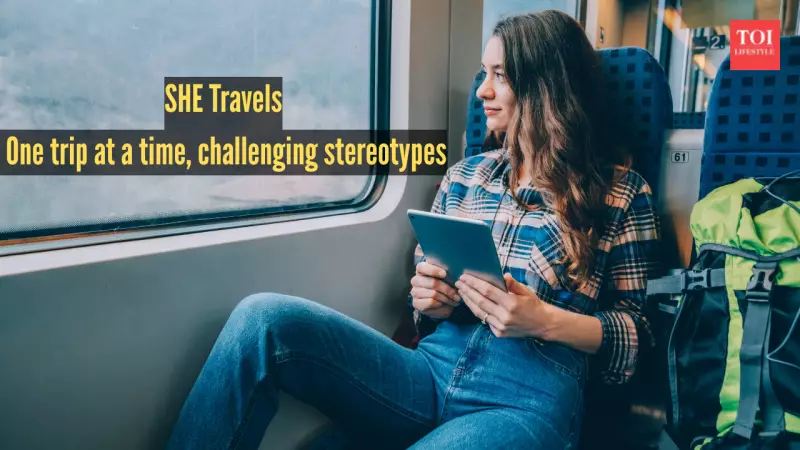
Defying stereotypes isn't always a dramatic, cinematic act. Sometimes, it's simply choosing the window seat on an overnight train, booking a trip without seeking multiple approvals, or silencing the inner voice that demands a justification for her desire to go. She discovers that while safety is paramount, fear should not be in the driver's seat. Trusting her instincts becomes as crucial as trusting a map. The world reveals itself not as entirely hostile nor completely kind, but wonderfully complicated, much like the people in it.
As she continues her journeys, the questions she receives begin to change. 'Isn't it unsafe?' softens into 'How did you manage alone?' and 'Which place was your favourite?' Curiosity starts to replace concern. Sometimes, another woman listens, her eyes lighting up with a new possibility filed away for the future. This is how stereotypes crack—not through lectures, but through lived example.
Gradually, the story shifts. A woman on the road ceases to be an anomaly. She becomes familiar, expected, even commonplace. This mundane normalcy is the best kind of progress. With each trip, she redraws frontiers, both on maps and in minds. She didn't necessarily set out to make a statement, but by moving freely, she does. Without shouting. Without permission. Just by going.