Supervolcano Tourism: From Catastrophe to Captivation
When people imagine supervolcanoes, visions of apocalyptic disasters, massive explosions, sun-blocking ash clouds, and global chaos often dominate the mind. However, beyond these dramatic scenarios lies a fascinating scientific reality and an unexpected tourist appeal. Scientifically, a supervolcano is defined as a volcanic system capable of producing eruptions rated as VEI 8 on the Volcanic Explosivity Index, representing the most explosive events on Earth.
Paradoxically, despite their potential for immense destruction, many extinct supervolcanoes have evolved into some of the world's most captivating tourist destinations. Three volcanic calderas stand out for their geological significance and immense popularity among travelers: the Yellowstone Caldera in the United States, the Toba Caldera in Indonesia, and the Taupō Caldera in New Zealand.
Yellowstone Caldera: America's Geological Wonderland
The Yellowstone Caldera lies beneath Yellowstone National Park in Wyoming, one of the most visited tourist spots globally and the world's oldest national park. This caldera last erupted approximately 640,000 years ago, yet it remains geologically active, as evidenced by ongoing geothermal processes.

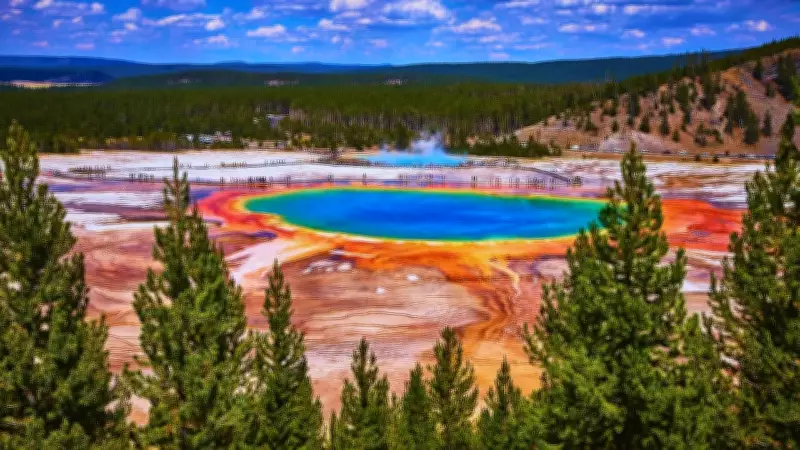
What makes Yellowstone truly special is the visible manifestation of subterranean geological activity. Visitors can witness spectacular geysers erupting with water, steaming vents, bubbling mud pools, and stunning hot springs. These natural wonders are direct products of current geological forces, showcasing the immense energy trapped beneath the Earth's surface.
Yellowstone boasts extensive tourist infrastructure, including boardwalks and observation stations that allow safe viewing of geothermal features. Simultaneously, the park preserves vast wilderness areas perfect for wildlife observation and outdoor adventures. The entire system is continuously monitored by the United States Geological Survey, ensuring visitor safety and scientific oversight.
Toba Caldera: Indonesia's Serene Volcanic Lake
The Toba Caldera in North Sumatra, Indonesia, resulted from one of Earth's most powerful eruptions around 74,000 years ago. This VEI 8 event likely triggered significant global climatic effects, potentially causing a volcanic winter that impacted early human populations.
Today, this area presents a remarkably tranquil landscape where the massive caldera is filled by beautiful Lake Toba, Southeast Asia's largest volcanic lake. Within the lake lies Samosir Island, home to the Batak people and their rich cultural heritage.
Toba has become renowned for relaxing vacations and cultural tourism, attracting visitors with its breathtaking scenery and pleasant climate. Unlike Yellowstone's active geothermal displays, Toba appears dormant, offering a peaceful retreat amidst landscapes shaped by ancient cataclysm.
Taupō Caldera: New Zealand's Adventure Hub
The Taupō Caldera in New Zealand experienced its most significant eruption approximately 26,500 years ago during the Oruanui event, one of the largest known eruptions in recent geological history. Today, this caldera is covered by expansive Lake Taupō, a freshwater body that dominates New Zealand's North Island central region.
This area has developed into a premier destination for recreational activities including boating, fishing, skydiving, and hiking. Nearby geothermal parks and attractions like Huka Falls add further interest, making Taupō a major tourist draw that demonstrates how severe geological activity can evolve into popular tourism infrastructure.
Safety Considerations for Supervolcano Tourism
A crucial question arises: Are these supervolcanoes safe for visitors? Do they pose immediate dangers to tourists? Practically speaking, the answer is no, at least not in the catastrophic ways often imagined.
These regions are under constant scientific surveillance, with no indications of imminent large-scale eruptions. Supervolcanoes operate on geological timescales spanning tens of thousands of years, making such events extremely rare in human terms.

However, these areas are not without risks. Geothermal fields require special precautions due to high temperatures and unstable ground conditions. Visitors must adhere to all safety guidelines, staying on marked trails and following park regulations to ensure safe exploration.
The Transformative Power of Supervolcano Tourism
Yellowstone National Park exemplifies how supervolcanoes can be leveraged for leisure and education, offering opportunities to witness planetary geological activity while enjoying spectacular natural beauty. Lake Toba provides travelers with spaces for reflection and relaxation against backdrops formed by ancient cataclysms. Taupō perfectly combines volcanology with adventure tourism, creating unique recreational experiences.
Together, these three destinations illustrate an important principle: even the most destructive natural forces, like supervolcanoes, can eventually transform into inhabitable, beautiful landscapes that attract millions of visitors annually. Through careful management and scientific monitoring, these geological wonders continue to inspire awe while remaining accessible and safe for tourism.