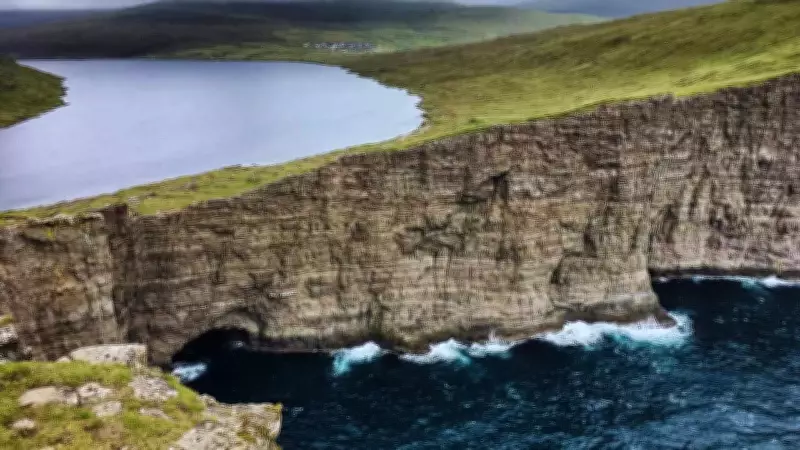
Sørvágsvatn: The 'Floating Lake' Illusion in the Faroe Islands
Some natural landscapes possess an almost magical quality, defying logic and challenging our perception of the world around us. From mountains that seem to hover in the sky to waterfalls flowing in impossible directions, these wonders are often optical illusions crafted by geography and perspective. Among these breathtaking phenomena is Sørvágsvatn, a lake in the Faroe Islands that appears to float high above the Atlantic Ocean, creating a visual spectacle that has captivated people worldwide.
The Illusion That Defies Reality
Sørvágsvatn, also known as Leitisvatn, is situated on the island of Vágar in the Faroe Islands, near the region's only airport. This lake is renowned for a spectacular optical illusion that makes it look as if it is suspended hundreds of meters above the ocean. When viewed from certain angles, particularly from the cliffs of Trælanípa, the lake seems to defy gravity, hovering in mid-air. However, the reality is more grounded: the actual height difference between the lake and the ocean is just 30 to 40 meters. This illusion is created by the lake's inland location and the dramatic cliffs that surround it, which obscure the space between the water and the sea when seen from above.
Geography and Formation of Sørvágsvatn
The Faroe Islands have volcanic origins, formed from basalt lava flows, and Sørvágsvatn is nestled within this rugged landscape. As the largest lake in the Faroe Islands, it spans a significant area and is fed by nearby streams and rainfall. The water eventually flows into the Atlantic Ocean through the stunning Bosdalafossur waterfall, where it cascades directly off a cliff into the sea. Despite this connection to the ocean, Sørvágsvatn remains a freshwater lake, adding to its unique character. The cliffs and coastal features play a crucial role in shaping the dramatic scenery and are key to creating the famous illusion that has made this site internationally famous.

A Photographer's Dream Destination
In recent years, Sørvágsvatn has emerged as a popular destination for photographers and tourists seeking unusual and picturesque landscapes. The hike to Trælanípa cliff offers the most photogenic vantage point, where the illusion of the floating lake is most pronounced. From this spot, the lake appears to be suspended in air, providing endless opportunities for stunning photographs. Unlike many tourist hotspots, Sørvágsvatn has retained its natural, untouched beauty. Visitors are advised to tread carefully along the trails due to the rugged terrain and unpredictable weather, which only adds to the adventure and allure of this remote location.
The Science Behind the Spectacle
While the optical illusion is real and visually striking, the science behind it is straightforward yet fascinating. The illusion arises from the lake's positioning slightly inland and the steep cliffs that frame it, which create a forced perspective when viewed from specific angles. This geographical setup tricks the eye into perceiving a greater height difference than actually exists. Sørvágsvatn does not literally float above the ocean; instead, it sits at a modest elevation, with the illusion purely a result of natural topography. This blend of visual wonder and scientific explanation makes Sørvágsvatn a unique destination, appealing not only to those seeking beauty but also to curious minds interested in how our environment can deceive us.
In summary, Sørvágsvatn stands as a testament to nature's ability to create awe-inspiring illusions. Its combination of stunning visuals, geological intrigue, and relative isolation makes it a must-see for anyone fascinated by the world's natural wonders. Whether you're a photographer, a traveler, or simply someone who appreciates the extraordinary, this lake offers an experience that challenges perception and celebrates the beauty of our planet.