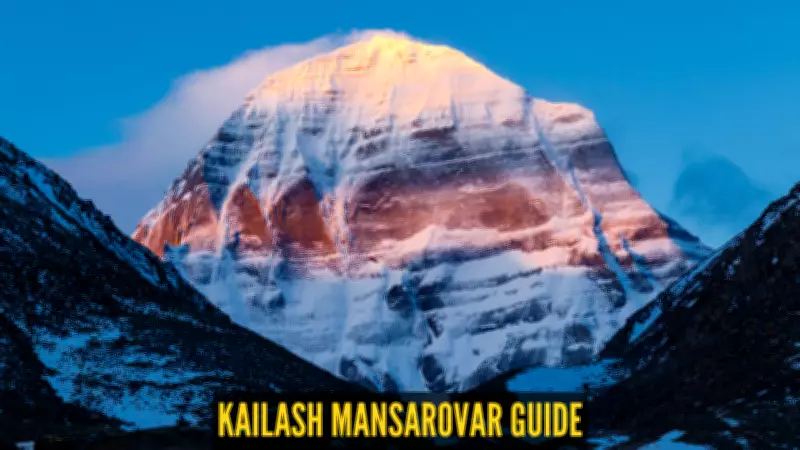
For countless pilgrims and avid travellers, making the trek to Kailash Mansarovar is vastly more profound than a standard holiday. It is an unforgettable blend of deep spirituality, raw adventure, stunning scenery, and serious physical endurance. Revered across Hinduism, Buddhism, Jainism, and the Bon religion, Mount Kailash stands as one of the most sacred peaks on Earth, whilst the neighbouring Lake Mansarovar carries immense spiritual weight.
However, unlike your run-of-the-mill tourist spots, getting there demands meticulous preparation. Because of its sheer isolation, soaring altitudes, tricky terrain, and a maze of permit requirements, you really must organise things well ahead of time. Here is the comprehensive lowdown on what to sort out before you go.
Where is Kailash Mansarovar?
It is a fairly common mix-up to think Mount Kailash sits within Indian borders. In truth, both the mountain and Lake Mansarovar are tucked away in the Tibet Autonomous Region of China, brushing right up against the borders of India and Nepal.

The peak itself reaches a dizzying 6,638 metres, whilst the lake rests roughly 4,590 metres above sea level. You are looking at one of Tibet's most heavily restricted and isolated pockets, wrapped in dramatic mountain ranges, sweeping plateaus, and some of the highest-altitude landscapes imaginable. Because it lies within a highly sensitive border zone, anyone wishing to visit has to navigate international crossings and secure a stack of specific permits just to get a foot in the door.
How to Reach Kailash Mansarovar
You will generally find three main pathways into the region, with each offering a noticeably different mix of comfort, time commitment, and physical strain.
Via Nepal: The Most Popular Route
The vast majority of international visitors opt to slip into Tibet via Nepal.
- The Overland Route: This classic journey kicks off in Kathmandu. From there, you drive out to the Kyirong border, rolling across the vast Tibetan plateau until you hit Darchen, the traditional gateway to Mount Kailash. Expect this entire circuit to take anywhere from 13 to 16 days.
- The Helicopter Option: If you are a bit pressed for time, helicopter itineraries are up for grabs. You will fly out of Kathmandu over to Nepalgunj, then on to Simikot, before finally crossing the Hilsa border. Doing it this way usually shaves the trip down to a brisk 9 to 11 days.
Via the Indian Government Routes
For Indian nationals, the Ministry of External Affairs runs two official pilgrimage corridors.
- The Lipulekh Pass (Uttarakhand): Serving as the ancient, traditional route, this path requires some heavy-duty trekking and demands a good 22 to 25 days. It is tough going, yet it remains incredibly popular with pilgrims wanting an authentic experience.
- The Nathu La Pass (Sikkim): This route is mostly accessible by motor vehicles, making it noticeably more comfortable, and generally takes roughly 21 days.
Keep in mind that both of these official routes are strictly regulated, relying on a tight selection process dictated by government rules and bilateral agreements.
Via Lhasa
A third avenue is heading into Tibet's capital, Lhasa, either coming from mainland China or Kathmandu. From the capital, you make an overland drive out to Kailash. Yes, it takes longer, but the slower pace is brilliant for acclimatising to the thin air. Plus, you get the chance to take in legendary sights like the Potala Palace before the real pilgrimage even begins.
Best Time to Visit
If you are wondering when to pack your bags, mid-May right through to September is your best window. Across these months, temperatures are actually quite bearable, roads are mostly clear, and the high mountain passes are not choked with deep snow. While the weather up there can still turn on a sixpence, travel conditions are miles better than during the rest of the year.
Permits and Documentation
Forget about turning up unannounced, independent travel simply is not allowed here. You absolutely must book through a recognised, authorised tour operator. The non-negotiable paperwork includes:

- A passport holding a minimum of six months' validity past your travel dates.
- A Chinese Group Visa, which your tour operator will sort out for you.
- A Tibet Travel Permit (TTP).
- An Alien Travel Permit (ATP).
- Specific military permits granting you access to the heavily restricted Ngari region.
Sorting out this bureaucratic headache takes time, so you should get the ball rolling several months before you plan to depart.
Questions to Ask Your Tour Operator Before Booking
Before handing over your hard-earned cash for any package, make sure you grill your operator with these vital questions:
- What is the maximum weight limit if I want to hire horse services for the Parikrama?
- What exactly is the refund policy if horse access is denied, particularly on day two?
- What is the reality of the toilet facilities along the route?
- If landslides or foul weather extend the trip, who foots the bill for the extra accommodation and meals?
- If I decide to skip the Parikrama and just wait at the hotel in Darchen, who covers those specific room and board costs?
- What is your exact emergency evacuation process, what is the expected response time, and how much will it cost?
- What is the insurance policy, and crucially, what is the process for body repatriation should a death occur in Tibet?
A Kailash Mansarovar journey is far from a walk in the park to plan. But for the people who actually make the effort, the payoff is genuinely extraordinary. Whether you are driven by deep faith, an itch for adventure, or simple curiosity, you will likely head home carrying memories of epic landscapes, incredibly profound personal shifts, and a newfound reverence for one of the most sacred spots on the globe.