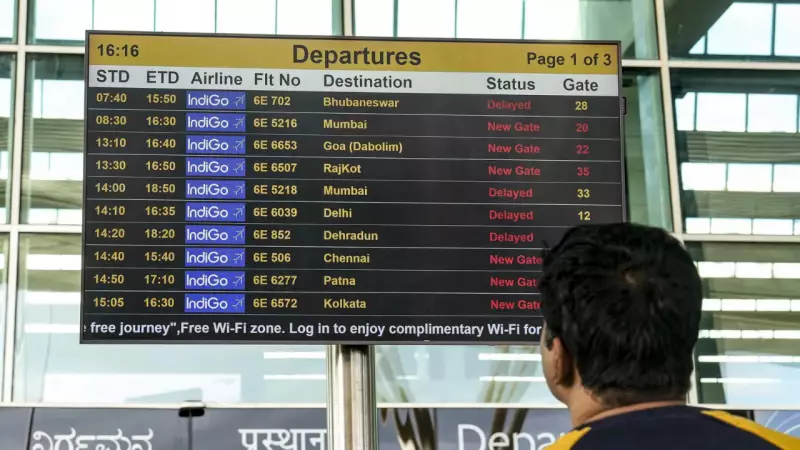
India's largest airline, IndiGo, is grappling with its worst operational crisis in two decades, causing massive disruptions across major airports. The situation reached a peak at Bengaluru's Kempegowda International Airport, where over 50 flights were cancelled, leaving terminals jammed and passengers stranded.
Nationwide Disruption and Root Causes
The crisis was not confined to a single city. Nationwide, IndiGo cancelled a staggering 225 flights in Delhi, 104 in Mumbai, 92 in Hyderabad, and 102 in Bengaluru. Aviation authorities and the airline cited a severe pilot shortage and issues related to crew duty time limits as the primary reasons behind this unprecedented breakdown. This disruption is being termed the most significant in the carrier's 20-year history.
Chaos on the Ground in Bengaluru
At Bengaluru airport, the scene was one of utter confusion. A total of 52 arrivals and 50 departures operated by IndiGo were cancelled. Terminal 1 experienced extreme congestion, with seating areas completely occupied and long queues snaking across check-in counters and security checkpoints. Baggage belts were overwhelmed, and frustrated passengers reported a near-total lack of communication from airline staff.

Many travellers were left in limbo, unsure whether to wait or leave the airport. Distressing images emerged from the terminal showing crowded check-in areas, baggage chaos, and exhausted passengers sleeping on floors. Some reported waiting for over 13 hours without any clear updates or guidance on their flights.
Financial and Sector-Wide Fallout
The sudden shortage of available seats triggered a sharp surge in airfares across all carriers. Last-minute ticket prices skyrocketed, with Delhi–Bengaluru fares reaching between Rs 11,000 and Rs 43,145, and Mumbai–Kolkata tickets touching approximately Rs 19,000. Passengers were forced to pay premium prices for urgent travel, adding financial strain to their ordeal.
The crisis had a spillover effect, disrupting the operations of other airlines as well. Aircraft stuck at airports like Pune caused delays and boarding process bottlenecks for other carriers, highlighting the interconnected nature of India's aviation ecosystem.
Regulatory Intervention and the Path Forward
The Directorate General of Civil Aviation (DGCA) stepped in to manage the situation. The regulator held multiple meetings with IndiGo, directing it to stabilise operations and ensure fare caps were not exploited. The DGCA is closely monitoring the airline's corrective measures, emphasizing passenger safety while working to reduce inconvenience.
As part of its recovery plan, IndiGo has requested exemptions from Flight Duty Time Limit (FDTL) rules for its A320 fleet operations until 10 February 2026. The airline has assured the regulator that these measures, combined with other corrective actions, will help restore normalcy. IndiGo has committed to a full restoration of its schedule by the February deadline, with steps including addressing crew shortages, optimizing flight schedules, and improving passenger communication.