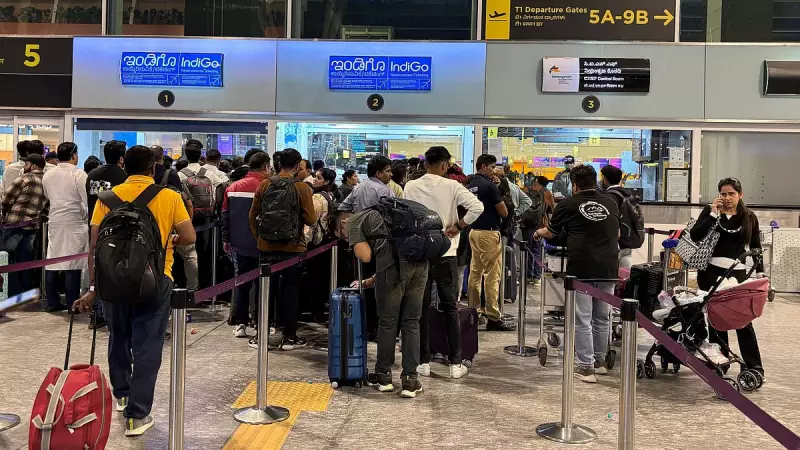
Passengers across India faced significant travel disruptions on Sunday as the country's largest carrier, IndiGo, cancelled over 100 flights. The situation was particularly severe at Bengaluru's Kempegowda International Airport (KIA), which accounted for a staggering 62 of the grounded flights.
Widespread Disruptions and Passenger Anger
The mass cancellations left hundreds of travelers stranded and frustrated at airports. Many took to social media platforms to voice their complaints, sharing stories of last-minute cancellations, a lack of timely information, and difficulties in securing refunds or alternative bookings. The airline's customer service channels were reportedly overwhelmed by the surge in inquiries and complaints.
IndiGo officially attributed the large-scale disruption to a combination of factors. The primary reason cited was fog and adverse weather conditions in several parts of the country, which is a common challenge during the winter months. However, the airline also pointed to operational constraints as a contributing factor, though specific details were not elaborated upon in their initial communication.

Bengaluru Airport Becomes Epicenter of Crisis
Kempegowda International Airport in Bengaluru bore the brunt of the cancellations. Out of the total 100+ flights grounded by IndiGo, 62 were scheduled to depart from or arrive at the Bengaluru hub. This massive chunk indicates a severe operational bottleneck at one of India's busiest airports.
The cancellations affected a wide range of domestic routes, connecting Bengaluru to major cities like Delhi, Mumbai, Hyderabad, and Kolkata. The ripple effect caused delays and rescheduling headaches for connecting passengers as well. Airport terminals saw long queues at IndiGo counters as staff worked to manage the fallout and assist affected customers.
Airline's Response and Passenger Advisory
In response to the crisis, IndiGo issued a statement acknowledging the inconvenience caused to its passengers. The airline stated that it was making all possible efforts to minimize the impact and assist affected travelers. Passengers on cancelled flights were offered the choice of a full refund or the option to reschedule their journey on an alternative date.
The airline also urged passengers to check their flight status via the IndiGo website or mobile app before heading to the airport. They advised customers to keep their contact details updated in their bookings to receive timely notifications about any schedule changes. Despite these measures, the scale of the disruption meant that many passengers faced hours of uncertainty and last-minute changes to their travel plans.
This incident highlights the vulnerability of air travel networks to weather disruptions and operational challenges, especially during peak travel seasons. It also puts a spotlight on the need for airlines to have robust contingency plans and effective communication strategies to handle such large-scale disruptions efficiently and keep passengers informed.