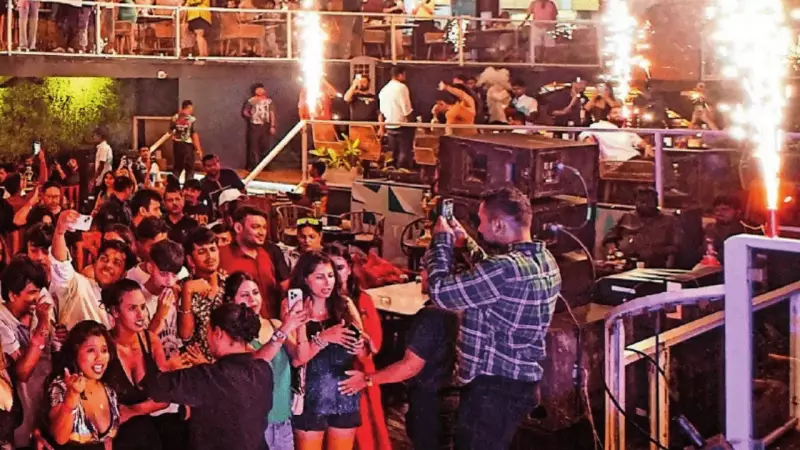
The swinging sixties laid the foundation for Goa's legendary nightlife, drawing global wanderers to its moonlit shores. What began with beach bonfires and the state's first nightclub, Baghlaoo, on Calangute beach, evolved into a massive, often unregulated industry. Pioneer Tito Henry D'Souza formalized the scene with Tito's, setting a template for decades of pulsating music from Bhangra to trance. However, this vibrant culture faced a catastrophic silence on December 6, 2025, when a devastating inferno at Birch by Romeo Lane in North Goa claimed 25 innocent lives, brutally exposing years of regulatory neglect in a tourism-driven economy.
The Unchecked Explosion: From 20 to Over 200 Nightclubs
For six decades, Goa's party scene thrived. Yet, a dramatic and dangerous transformation occurred in a short span. Until 2020, Goa had approximately 20 nightclubs, largely constructed with permanent materials. That number has since ballooned to over 200, with a significant portion operating illegally. Many circumvented rules by masquerading as private shacks or restaurants to obtain initial approvals.
Ashok Menon, chairman of operations at the Fire & Security Association of India and former director of Goa Fire Services, highlighted the common trick: "Owners get approval for a restaurant and kitchen, but later convert it into a pub or disco. The change is often only noticed during fire NOC renewal, leaving action to the regulator's conscience." This discrepancy was widely ignored, allowing high-risk establishments to proliferate.

How Clubs Became Death Traps: Flouting Every Safety Norm
The quest for bigger crowds and exotic experiences led to deadly compromises. Beach bonfires gave way to indoor pyrotechnics, electric fireworks, and fire dancers, turning dance floors into tinderboxes. To bypass Coastal Regulation Zone (CRZ) and eco-sensitive area rules, clubs used highly flammable materials like grass, thatched roofs, bamboo sheets, and wooden flooring to qualify as "temporary" structures.
Internally, the design was a recipe for disaster. Soundproofing foam, decorative drapes, wooden interiors, and false ceilings allowed fires to spread rapidly while generating toxic smoke. Nitin Raiker, director of fire and emergency services, stated that fireworks without safe isolation distances present a severe risk. Furthermore, to contain sound pollution—often after High Court interventions—open-air clubs were enclosed, creating narrow passageways and single exits to maximize commercial space. A fire station officer called this a "perfect setup for disaster."
Most clubs operate without crucial clearances: fire NOCs, occupancy certificates, or structural safety approvals. They lack mandatory safety features like automatic sprinkler systems, clear exit signage, and adequate ventilation. Basements, used as club spaces, become lethal traps with restricted escape routes and rapid accumulation of toxic gases like carbon monoxide.
Systemic Collusion and The Path Forward
The regulatory failure was systemic. Panchayats permitted clubs in no-development zones, while the Town and Country Planning (TCP) department overlooked National Building Code violations. Despite local protests, authorities largely turned a blind eye, as tourism is a major revenue source for the state government.
The tragic Birch fire necessitates urgent, non-negotiable reforms. A report by the Directorate of Fire and Emergency Services on the incident underscores the dangers. Experts propose a strict action plan:

- Ban indoor fireworks, pyrotechnics, and fire performances, or enforce strict isolation distances.
- Mandate automatic sprinkler systems, smoke detectors, and alarms that override music.
- Enforce occupancy limits based on venue size and exit capacity.
- Ensure clear, well-lit, and unobstructed exit pathways at all times.
- Conduct mandatory fire safety and evacuation training for all staff.
- Implement regular inspections and immediate closure with penalties for violations.
The transition from Goa's organic hippie trail endpoint to a hub of chaotic, commercially-driven nightlife has reached a fatal crossroads. The December 6th tragedy is a stark warning that the music cannot continue until safety becomes the foremost beat, overriding all other considerations in the state's beloved but perilous party scene.