Goa Tourism Minister Declares State Will Not Be Marketed as Budget Destination
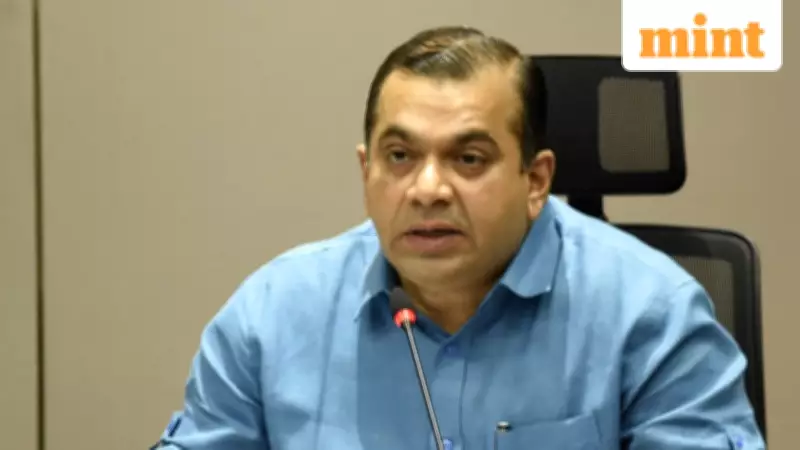
In a bold strategic shift, Goa's tourism minister Rohan Khaunte has emphatically stated that the coastal state will no longer position itself as a "cheap" tourist destination. This declaration comes at a critical juncture when Goa faces dual challenges: reduced international traffic due to global conflicts and increasing competition from Southeast Asian beach destinations that are attracting Indian travelers.
Luxury Over Volume: A New Vision for Goa
"We don't want to promote ourselves as a cheap destination just to attract more tourists," Minister Khaunte asserted during an exclusive interview. "Don't come to Goa if you're looking for a cheap destination. Other countries are very welcome to take these tourists."
The minister's comments reflect a fundamental reorientation of Goa's tourism strategy, prioritizing quality over quantity. "The whole thought is that Goa has become a 'costly' destination," Khaunte explained. "But Goa, being at that cost, I would say is a luxury destination, and people are buying it."

Supporting this premium positioning, Khaunte revealed that Goa's four- and five-star hotels are operating at nearly 100% capacity, indicating strong demand for upscale accommodations despite concerns about empty beaches highlighted by social media influencers.
Statistical Reality: Growth Amid Challenges
The latest tourism data presents a complex picture of recovery and transformation:
- Domestic Tourism Boom: FY25 saw a 20% increase in domestic footfalls, surpassing 10 million visitors
- International Recovery: Foreign arrivals grew more than 25% to over 500,000, though this represents only 55% of pre-pandemic levels
- Pre-Pandemic Baseline: In FY19, Goa welcomed just over 7 million domestic tourists and more than 900,000 international visitors
"There is a huge potential of growing this number," Khaunte acknowledged, while identifying connectivity as the primary challenge. "We have been talking to the Centre—both the ministry of tourism and the ministry of civil aviation—to connect Goa. We cannot lose business."
Global Conflicts Reshape Tourist Demographics
The ongoing wars in Russia and Israel—traditionally Goa's largest sources of international tourists—have significantly reduced arrivals from these regions. However, this decline has been partially offset by increased tourism from Scandinavian countries and Eastern Europe.
In November, Goa welcomed its first seasonal charter flight from Poland, signaling diversification of its international market. Despite this positive development, charter flight numbers declined from 266 flights carrying nearly 59,000 tourists in 2024 to just 189 flights with approximately 40,000 international visitors in 2025.
Southeast Asian Competition Intensifies
While Goa pivots toward luxury tourism, Southeast Asian destinations are aggressively courting Indian travelers with easier access and competitive pricing:
- Thailand: Welcomed 2.48 million Indian visitors in 2025, a 17% year-on-year increase, with 438 weekly flights connecting the two countries
- Sri Lanka: Received over 530,000 Indian tourists in 2025, making India its largest source market
- Vietnam: Attracted 740,000 Indian visitors in 2025, though this trailed behind arrivals from China, Taiwan, South Korea, and Japan
Minister Khaunte, however, dismisses direct competition with these destinations. "We are very different as far as culture and people are concerned," he stated. "Our hospitality is different. We wouldn't want to be Thailand, very simple."
Economic Imperatives Drive Strategic Shift
The tourism sector's economic significance to Goa cannot be overstated, contributing approximately 16.4% to the state's economy and supporting 40-45% of employment, both directly and indirectly. This substantial economic footprint explains the government's cautious approach to tourism development.

The transformation of Goa's tourism profile is already evident. The destination is evolving from its historical identity as an inexpensive getaway for foreign hippies and young Indian professionals to an aspirational venue for destination weddings and specialized tourism circuits focused on wellness, spirituality, and historical heritage.
Interestingly, Thailand's tourism authority has announced its own intention to attract "high value" tourists from India, suggesting that premium tourism is becoming a competitive battleground across Asia.
As Goa navigates this strategic transition, the state faces the delicate balance of maintaining its unique cultural identity while appealing to discerning travelers willing to pay premium prices for exceptional experiences. The success of this luxury-focused approach will depend on enhanced connectivity, infrastructure development, and sustained marketing that highlights Goa's distinctive offerings beyond its famous beaches.