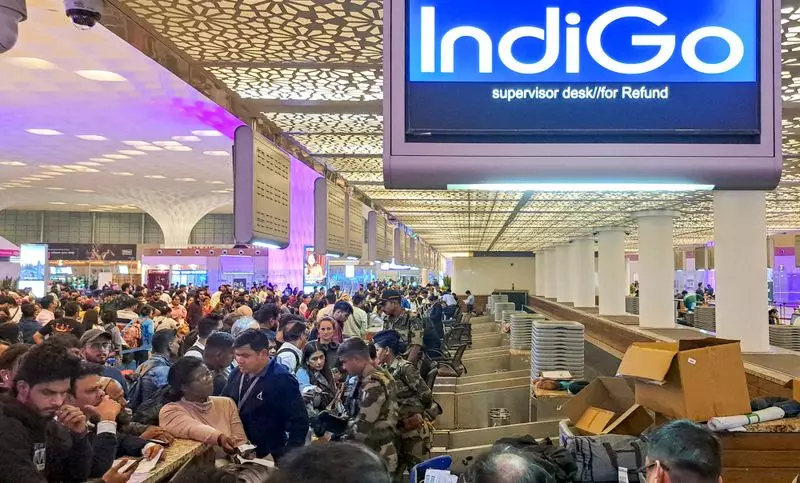
Passengers planning last-minute air travel across India are facing severe sticker shock, with domestic airfares skyrocketing to levels rarely seen before. On key routes, one-way economy class tickets are being sold for prices that rival or even exceed international business class fares, placing a massive burden on travelers.
Exorbitant Fares on Major Domestic Corridors
The situation is particularly acute on routes connecting metropolitan hubs. Data from airline websites and travel portals on Monday revealed astonishing figures. A one-way economy class ticket from Kolkata to Mumbai for travel on Tuesday, June 4, was priced at a staggering Rs 90,000 on a full-service carrier. Similarly, a flight from Mumbai to Bhubaneswar for the same day was listed at Rs 84,000.
Other routes are not far behind. Travelers looking to fly from Guwahati to Delhi found tickets priced at Rs 52,000, while a Patna to Delhi ticket was going for Rs 48,000. Even the usually busy Delhi to Bengaluru sector saw fares touching Rs 30,000 for last-minute bookings. These prices represent the base fare and do not include additional charges for baggage or meals, pushing the final cost even higher.
A Perfect Storm of Disruptions Driving Prices Up
This dramatic surge in airfares is not a random occurrence but the result of multiple converging factors severely disrupting air travel schedules and capacity.
The primary and most immediate cause is the aftermath of Cyclone Remal, which made landfall on May 26. The severe weather conditions forced the cancellation of over 400 flights to and from Kolkata. While operations have resumed, airlines are still struggling to clear the massive backlog of stranded passengers, leading to extremely high demand for the limited seats available.
Compounding this problem are ongoing operational issues at the country's busiest airport. Mumbai's Chhatrapati Shivaji Maharaj International Airport (CSMIA) has seen significant flight disruptions due to runway maintenance work. This has reduced the number of flight movements, squeezing capacity on routes connected to Mumbai and creating a ripple effect across the national network.
Industry experts point out that airlines in India follow a dynamic pricing model. When demand far outstrips supply, as is currently the case, fares for the last few available seats on a flight can reach exorbitant levels. This is a standard revenue management practice, but the scale of the current disruption has amplified its effects dramatically.
Impact and the Road Ahead for Travelers
The consequences of this fare surge are being felt directly by passengers, many of whom are traveling for urgent family or work commitments. The high costs are forcing some to postpone travel, seek alternative modes of transport like trains, or bear a significant financial hit.
Aviation analysts suggest that while fares are expected to remain elevated in the immediate short term, they should gradually normalize as airlines restore their full flight schedules and the passenger backlog is cleared. The situation underscores the vulnerability of air travel to external shocks like weather events and infrastructure work.
For now, travelers are advised to book tickets as far in advance as possible and to remain flexible with travel dates if they wish to avoid the peak pricing. Monitoring airline announcements for schedule restoration and considering connecting flights through less congested hubs may also provide some relief from the direct, high-demand routes.
The current crisis highlights the need for robust contingency planning within the aviation sector to better manage capacity during dual disruptions, ensuring passengers are not consistently subjected to such extreme price volatility.