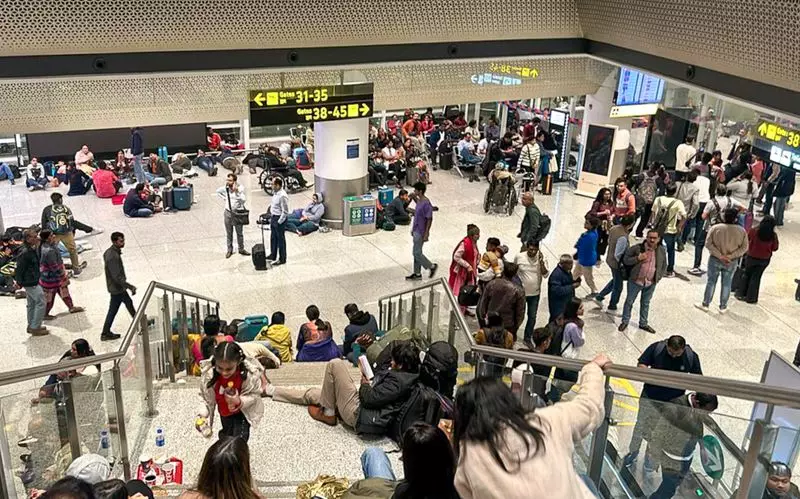
Operations at Delhi's Indira Gandhi International (IGI) Airport were severely disrupted on Tuesday as dense fog and extremely low visibility conditions forced the cancellation of dozens of flights. The adverse weather, a hallmark of North Indian winters, led to significant travel chaos for thousands of passengers.
Widespread Disruption and Passenger Woes
A total of 66 flights were cancelled at the airport, one of the busiest in the country. The cancellations affected both domestic and international services, leaving travellers stranded and scrambling for alternative arrangements. Beyond the outright cancellations, the fog-induced low visibility caused substantial delays for numerous other flights, compounding the frustration for flyers.
Passengers at the terminals reported long waits, uncertainty, and confusion as airline staff worked to manage the situation. Many took to social media to express their distress, sharing images and videos of crowded waiting areas and delayed flight information boards. The disruption underscored the vulnerability of air travel to severe winter weather in the region.

Operational Challenges and Safety Protocols
The primary cause of the disruption was the dense fog that drastically reduced runway visual range (RVR). For safe take-offs and landings, particularly under Instrument Landing System (ILS) procedures, a minimum RVR is mandatory. When visibility drops below these critical safety thresholds, airport authorities are compelled to either delay or cancel flights to prevent any accidents.
While Delhi Airport is equipped with advanced CAT III-B ILS technology that allows aircraft to land in very low visibility conditions, not all airlines have pilots certified to operate under such stringent protocols. Furthermore, the procedures themselves slow down the rate of arrivals and departures significantly, creating a cascading effect of delays throughout the day's schedule.
Broader Impact and Advisory for Travelers
The ripple effects of the cancellations at the Delhi aviation hub were felt across the national network. Flight schedules in other major cities like Mumbai, Bengaluru, and Kolkata were also impacted due to aircraft and crew being out of position. The incident highlights the need for passengers to be prepared during the winter months.
Aviation experts and airlines advise travelers flying out of or into North India during this season to take proactive steps. These include continuously checking their flight status with the airline before heading to the airport, allowing for extra travel time to account for potential road delays due to fog, and understanding the airline's policy on cancellations and rescheduling. Keeping essential medications and important items in hand luggage is also recommended in case of extended waits.
As the cold wave persists, more such disruptions are anticipated. The episode serves as a stark annual reminder of how natural weather phenomena can bring a modern transportation hub to a near-standstill, testing the resilience of infrastructure and the patience of the traveling public.