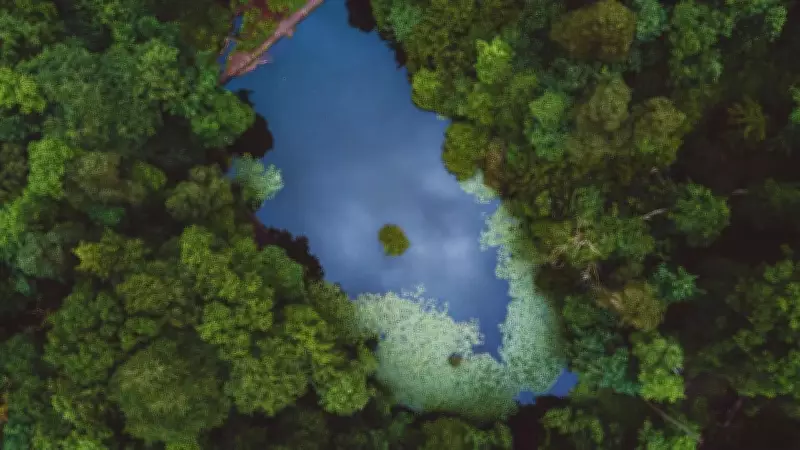
Benxi Lake: The World's Smallest Natural Lake in Northeastern China
When envisioning lakes, most people picture expansive water bodies like Lake Superior or India's Wular Lake, vast aquatic landscapes that command geographical attention. However, at the opposite end of the spectrum exists a remarkably small natural feature widely acknowledged as the world's smallest lake: Benxi Lake in northeastern China.
Location and Recognition
Benxi Lake is situated in Benxi City within China's Liaoning Province. Nestled at the base of a mountain within a compact park area, this diminutive water body has evolved into a significant local tourist attraction precisely because of its extraordinary claim to fame. Despite its unassuming appearance, Benxi Lake has garnered substantial international attention over recent decades for its exceptionally small dimensions.
Precise Measurements and Physical Characteristics
How small is Benxi Lake exactly? The lake spans approximately 15 square meters in surface area, comparable to a modest bedroom or compact urban living space. In dimensional terms, it measures roughly 5 meters in length and 3 meters in width, though these figures may fluctuate slightly with seasonal water level variations. The lake's depth is estimated at about 1.8 meters (approximately 6 feet), sufficient for an adult to stand within while maintaining enough depth to qualify as a natural water body rather than a mere shallow puddle.

Due to its miniature proportions, Benxi Lake often resembles an oversized pond or widened spring. Nevertheless, it satisfies the fundamental criteria for lake classification: a naturally occurring, inland body of standing water distinct from rivers or artificial reservoirs.
Scientific Classification and Hydrological Features
Why is Benxi Lake scientifically considered a lake rather than a pond? Traditional limnological definitions suggest that lakes are sufficiently deep to prevent light penetration to their lowest points, whereas ponds typically allow sunlight to reach their entire bottom surfaces. Alternative classifications emphasize ecological or hydrological characteristics over mere size considerations.
Benxi Lake maintains its status through an underground spring that provides consistent water supply, resulting in relatively stable water levels that support its lake designation. This natural origin and persistent water source differentiate it from temporary rain-fed pools. While widely promoted as the "world's smallest lake," this title remains informal, based more on popular recognition than strict scientific ranking. Despite this, Benxi Lake consistently appears in travel literature and regional tourism materials as holding this unique distinction.
Tourist Experience and Global Context
Beyond its physical dimensions, Benxi Lake's presentation contributes significantly to its appeal. A small pavilion and carefully landscaped surroundings frame the lake, lending it ceremonial importance. Visitors frequently express astonishment at its actual size, often expecting something larger only to encounter a water body that could comfortably fit within a standard apartment.
The novelty factor has transformed Benxi Lake into a popular destination for tourists exploring Liaoning Province. While photographs from specific angles may create illusions of greater size, the lake remains astonishingly compact in reality.
Occasional claims emerge regarding other tiny lakes worldwide, but most prove to be artificial water features or seasonal pools rather than permanent natural lakes. Some extremely small crater lakes or alpine lakes exist in remote regions, yet many lack formal measurement or international acknowledgment. In contrast, Benxi Lake has been consistently measured, documented, and promoted for decades. Its established dimensions—approximately 15 square meters in area—solidify its position among the smallest known naturally occurring lakes with permanent water supplies.
In a world captivated by superlatives—the largest, longest, and highest—Benxi Lake demonstrates that sometimes the smallest natural features can generate the most profound fascination.