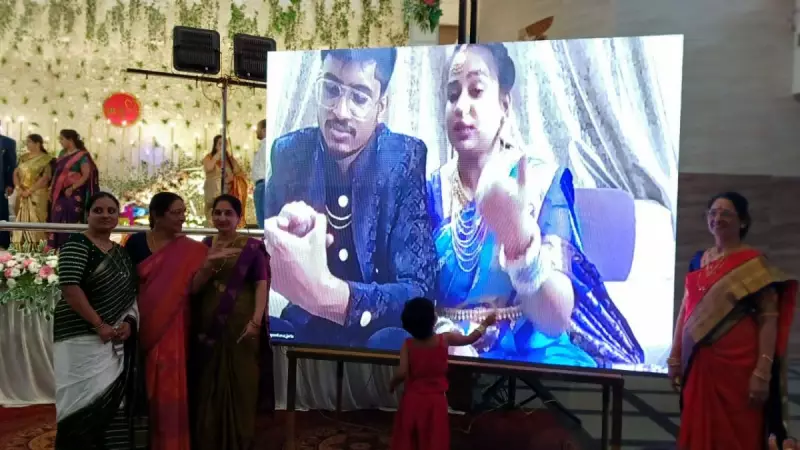
A young software engineer couple from Bengaluru was forced to attend a close friend's wedding reception virtually after their IndiGo flight was abruptly cancelled, leaving them stranded at the airport. The incident, which highlights the growing frustration with last-minute flight disruptions, occurred on the evening of December 4, 2025.
The Stranded Journey to a Celebration
Arjun Mehta and Priya Sharma, both IT professionals working in Bengaluru, were eagerly travelling to attend the wedding reception of a dear friend. They had booked seats on IndiGo flight 6E-205, scheduled to depart from Kempegowda International Airport (KIA) in Bengaluru at 5:55 PM on December 4. The couple arrived at the airport well in time, completed check-in, and were awaiting boarding when their plans unravelled.
Without prior warning or a clear explanation, the airline announced the cancellation of their flight. The couple, along with other passengers, was left in the lurch at the departure terminal. Despite inquiries, the ground staff could only cite "operational reasons" for the cancellation, a term often used by airlines that offers little concrete information to affected travellers.

A Digital Solution to an Emotional Dilemma
Faced with the prospect of missing a significant personal event, Arjun and Priya decided on a modern, tech-savvy workaround. Using the airport's Wi-Fi, they video-called their friends who were already at the wedding venue. For over an hour, they participated in the reception festivities from their airport seats—watching speeches, offering congratulations, and even virtually partaking in the celebrations.
"It was heartbreaking to miss being there in person, but we didn't want to miss it entirely," Arjun was quoted as saying. "We were dressed for the wedding, stuck at the airport, so we just made the best of a bad situation. Our friends held up the phone during key moments, and it felt bittersweet."
Aftermath and Passenger Grievances
The cancellation triggered a cascade of inconveniences for the couple. IndiGo reportedly offered them a rebooking on a flight the next morning. However, this alternative was useless for attending the evening reception. The couple also had to bear the financial loss of their pre-booked hotel stay at the destination.
This incident has amplified discussions around passenger rights in India, governed by the Civil Aviation Requirements (CAR) issued by the Directorate General of Civil Aviation (DGCA). As per regulations, airlines are mandated to compensate passengers in cases of cancellations made within two weeks of departure without sufficient notice, unless the cause is attributed to a "force majeure" event.
The key question raised is whether the vague "operational reasons" cited by IndiGo qualify for an exception from compensation rules. Passengers like Arjun and Priya often find themselves navigating a confusing process to claim their rightful compensation for last-minute cancellations and delays.
The experience of this Bengaluru couple underscores a recurring challenge in Indian aviation. While technology provided a temporary emotional patch, it cannot replace the tangible support and accountability expected from service providers. The event serves as a reminder for passengers to be aware of their rights and for airlines to strive for clearer communication and more reliable operations.