8 Global National Parks Housing Earth's Most Iconic Natural Landmarks
From towering mountains that pierce the sky to colossal waterfalls, ancient monoliths, and vast canyons carved over millions of years, these natural landmarks draw travellers from across the globe. While the famous feature may be the star attraction, the surrounding national park often protects an entire ecosystem of forests, wildlife, rivers, and geological wonders. Here are eight national parks around the world that are home to globally recognised and iconic natural landmarks.
Grand Prismatic Spring — Yellowstone National Park, United States
One of the most visually striking natural features on Earth, the Grand Prismatic Spring is the largest hot spring in the United States and the third largest in the world. Located in Yellowstone National Park’s Midway Geyser Basin, the spring is famous for its extraordinary rainbow-like colours, with a deep blue at the centre surrounded by rings of green, yellow, orange, and red created by heat-loving microorganisms. It measures around 112 metres across and more than 30 metres deep, making it one of Yellowstone’s most photographed and visited attractions.
Grand Canyon — Grand Canyon National Park, Arizona, United States
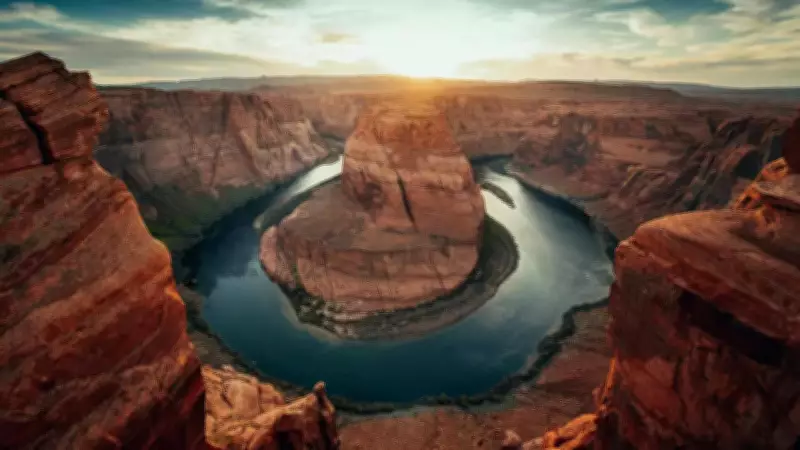
Few landscapes on Earth are as instantly recognisable as the Grand Canyon. This immense gorge was carved over millions of years by the Colorado River, stretching over 446 kilometers in length and reaching depths of over 1,800 meters. Contained within Grand Canyon National Park, the multicolored rock strata reveal geological history stretching back nearly two billion years. The viewpoints from the South Rim and North Rim offer some of the most spectacular and awe-inspiring scenery in North America.

Mount Everest, Sagarmatha National Park, Nepal
The highest mountain in the world, Mount Everest, is located in the Himalayas within Sagarmatha National Park in Nepal. Standing tall at a height of 8,848.86 metres, this majestic peak is the park's crown jewel. Beyond the mountain, the park is home to glaciers, deep valleys, and villages of the Sherpa people. Trekking enthusiasts flock to the park to visit Everest Base Camp and witness the breathtaking grandeur of this iconic natural landmark.
Uluru, Uluru-Kata Tjuta National Park, Australia
Located in the heart of the Australian desert, Uluru is one of the most famous landmarks in the Southern Hemisphere. This massive sandstone rock structure rises about 348 metres tall and has a circumference of approximately 9 kilometres at its base. Situated within Uluru-Kata Tjuta National Park, this majestic landmark holds significant religious and cultural importance for the indigenous Anangu people of the region, adding a deep spiritual dimension to its natural beauty.
Victoria Falls – Mosi-oa-Tunya National Park, Zambia / Victoria Falls National Park, Zimbabwe
Victoria Falls is one of the largest and most magnificent waterfalls in the world, situated at the border of Zambia and Zimbabwe. Known locally as ‘Mosi-oa-Tunya,’ meaning ‘The Smoke That Thunders,’ this waterfall stretches over 1.7 kilometers with a dramatic drop of more than 100 meters into a spectacular gorge. The surrounding national parks protect the lush ecosystems and provide stunning vantage points for visitors.
Half Dome – Yosemite National Park, California, United States
Half Dome is one of the most famous rock formations globally and a defining feature of Yosemite National Park. Rising 1,500 metres above the valley floor, the granite dome appears as if half the mountain has been sliced off. It has become a symbol of American wilderness, attracting thousands of hikers annually who attempt the famous cable-assisted climb to its summit for unparalleled views.
Angel Falls — Canaima National Park, Venezuela
Hidden within the dramatic table-top mountains of Canaima National Park, Angel Falls is the tallest waterfall on Earth. Water plunges from a height of about 979 metres from the summit of the Auyán-tepui plateau. The isolated jungle surroundings and towering cliffs create a mythical and spectacular setting, making it one of South America's most awe-inspiring natural landmarks.

Mount Kilimanjaro – Kilimanjaro National Park, Tanzania
Mount Kilimanjaro is the highest mountain in Africa, rising 5,895 meters above the plains of Tanzania. Situated within Kilimanjaro National Park, this dormant volcano features snow-capped peaks that contrast sharply with the tropical plains below. Its unique ecological zones, including rainforests, alpine meadows, and desert, offer some of the world's most spectacular and diverse trekking routes.