There are some flowers that people love to admire because of their beauty. Then there are those flowers that are extremely hard to find, flower for just a few hours, blossom once in decades, or grow in far-off locations requiring strenuous efforts to visit. And that is exactly what someone who loves everything about flowers would not want to miss out on. Flowers have become tourist attractions across the globe in themselves, enticing botanists, photographers, trekkers, and adventurous tourists eager to see one of nature's rarest phenomena. Here are 7 unique species of flowers that still mystify tourists.
Rafflesia – Southeast Asia
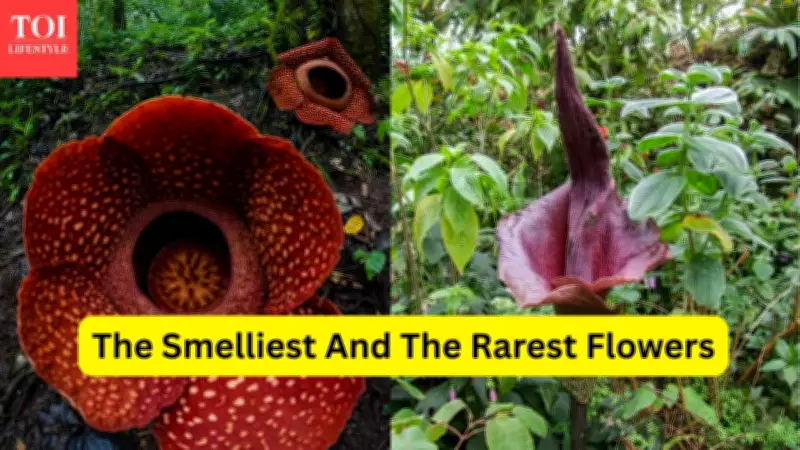
Rafflesia is one of the world's most extraordinary and bizarre flowers, famous for being the largest individual flower on Earth. Found in the rainforests of countries such as Malaysia, Indonesia, Thailand, and the Philippines, some species of Rafflesia can grow over three feet wide and weigh several kilograms. Despite its spectacular size, the flower is surprisingly difficult to spot because it blooms unpredictably and survives for only a few days before wilting.
Corpse Flower (Titan Arum) – Indonesia
The Titan Arum is possibly the world's most widely known foul-smelling flower. Indigenous to the Indonesian island of Sumatra, this flower produces an odor that resembles decomposing flesh, which helps it attract pollinating insects. The unique feature about the plant is that it may flower only after many years and remains open only briefly during the period. When this flower blooms at botanic gardens, there are huge crowds to view the event.

Middlemist Red – United Kingdom and New Zealand
Considered one of the rarest flowers on Earth, the Middlemist Red is found only in a few places around the world in cultivation. Initially imported into Europe from China in the nineteenth century, this flower then became extinct in its natural surroundings. Today, it survives only in selected botanical gardens and private collections.
Neelakurinji – India
The Neelakurinji flower makes certain sections of the Western Ghats look blue-purple once every 12 years. The flower is endemic to parts of Kerala and Tamil Nadu and ranks amongst the most awaited natural wonders in India. In the flowering years, places like Munnar experience an incredible influx of people looking to view the hills covered in colorful flowers.
Ghost Orchid – Florida and Cuba
The Ghost Orchid is considered one of the world's most mysterious flowers. It attracts people from all corners of the world, such as photographers and orchid aficionados. Native to the wet regions of Florida and Cuba, the ghost orchid flower is quite elusive in the wild due to its rarity and remoteness. What sets it apart from other flowers is the fact that it does not have any leaves; hence, the white flower looks like it is floating in mid-air amidst dark forest surroundings.
Shirui Lily – India
Native to the Shirui Hills of Manipur, the Shirui Lily ranks among India's rarest and most beloved flowers. Classified scientifically as Lilium mackliniae, the soft-pink flowering lily is found in the vicinity of Ukhrul during May-June when it blooms for just a few weeks at a time. Due to its rarity, the fragile ecosystem, and limited period of blooming, the lily attracts numerous tourists, making it one of the major attractions of Northeast India. In addition, the annual Shirui Lily Festival is organized by locals celebrating the bloom of the unique flower with tourists, music, and cultural events.
Atacama Desert Bloom – Chile
Known as one of the driest places on earth, the Atacama Desert periodically transforms into an enormous field of wildflowers after experiencing unusual precipitation. Commonly referred to as the "Flowering Desert" (Desierto Florido), this phenomenon is rare, infrequent, and extremely unpredictable since it only occurs under certain climatic conditions. For instance, it may be associated with the occurrence of the El Niño climatic anomaly. When it happens, vast expanses of the desert are covered with a colorful carpet of blooms, drawing tourists and scientists alike.