7 Iconic Canyons Worldwide for Your Adventure Travel Wishlist
Canyons are far more than just visually stunning natural formations; they are profound geological records shaped by millions of years of tectonic shifts, erosion, and climatic evolution. For the intrepid traveler, these majestic landscapes offer more than mere scenery. They present environments where scale becomes deceptive, ecological zones dramatically transition, and layers of human history—from indigenous cultures to modern exploration—intertwine with the raw power of nature. The world's most renowned canyons captivate not only through their immense size but through the rich experiences and unique content they provide.
Grand Canyon, United States
The Grand Canyon, sculpted over eons by the relentless Colorado River, transcends a simple viewpoint to stand as a monumental geological entity. Its stratified rock layers encapsulate an astonishing two billion years of Earth's history, making it one of the planet's most extensively studied regions. The South Rim offers developed amenities and easy accessibility, while the higher-altitude North Rim provides a quieter, less crowded alternative. For serious trekkers, descending via the Bright Angel or South Kaibab trails reveals the canyon's true grandeur. Distances that appear minimal from above can demand hours or even days to traverse, emphasizing the vastness of this natural wonder.
Antelope Canyon, United States
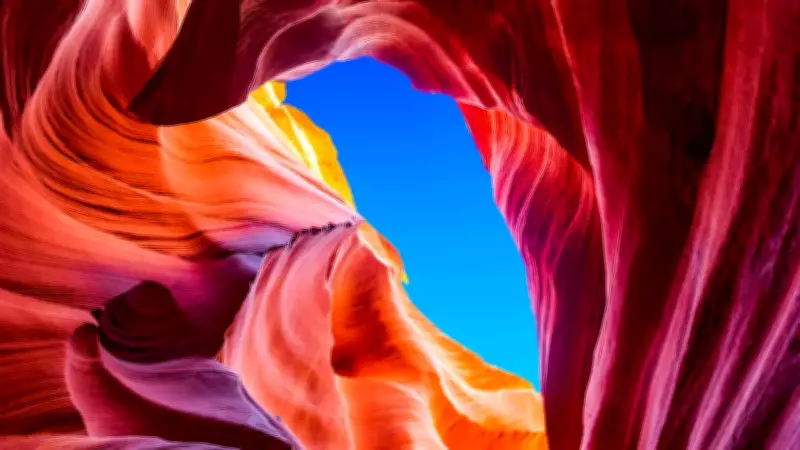
Nestled within the Navajo Nation in Arizona, Antelope Canyon represents a distinct type of canyon system known as a slot canyon, formed not by a river but by powerful flash flooding. Over time, rushing water has smoothed the sandstone into mesmerizing, wave-like rock formations. The canyon is divided into Upper and Lower sections, each with its own character. Upper Antelope Canyon is famed for its dramatic light beams that pierce the narrow openings, while Lower Antelope Canyon challenges visitors with narrow passages requiring crawling and careful navigation.

Colca Canyon, Peru
Colca Canyon distinguishes itself with a depth exceeding 3,200 meters, making it significantly deeper than the Grand Canyon. What truly sets it apart, however, is the remarkable adaptation of human life to its harsh environment. The canyon is adorned with ancient pre-Inca farming terraces, many of which remain actively cultivated and inhabited today. Villages perched on the rim and within the valleys add a rich cultural dimension rarely found in other canyon destinations. A highlight for visitors is spotting the majestic Andean condor, one of the world's largest flying birds, as it soars on thermal currents rising from the canyon walls.
Fish River Canyon, Namibia
As Africa's largest canyon, Fish River Canyon captivates with its stark, almost lunar beauty. In contrast to lush, vegetated canyons, this landscape is defined by arid dryness, rugged rock formations, and profound silence. The Fish River Hiking Trail, renowned as one of Africa's most challenging treks, spans several days and tests adventurers with extreme weather conditions and scarce water sources. This immense canyon was shaped over hundreds of millions of years through a combination of tectonic activity and relentless erosion.
Verdon Gorge, France
Verdon Gorge offers a striking contrast to more rugged canyon systems, where a vibrant turquoise river winds through pale limestone cliffs, creating a scene of such beauty it often appears man-made. This landscape is the result of complex karst geology, where water has slowly dissolved the rock over millennia, forming steep walls and hidden subterranean passages. For travelers, Verdon is as much about adventure as aesthetics, serving as one of Europe's premier destinations for rock climbing, kayaking, and the thrilling sport of canyoning.

Tiger Leaping Gorge, China
Situated along the upper reaches of the Yangtze River, Tiger Leaping Gorge is characterized by its sheer verticality. The Jade Snow Mountain Range and Haba Snow Mountain Range plunge dramatically into the riverbed, creating one of the world's deepest river canyons. The trekking route through the gorge is celebrated as one of Asia's best, offering not only spectacular scenery but constantly shifting perspectives—from river-level crossings to breathtaking mountain vistas. The gorge's name originates from local mythology, which tells of a tiger leaping across the river's narrowest point to escape a hunter.
Yarlung Tsangpo Grand Canyon, China
Widely regarded as the deepest canyon on Earth, the Yarlung Tsangpo Grand Canyon cuts through the eastern Himalayas. Its depth surpasses even that of the Grand Canyon, yet its remote location has left it largely unexplored. What is known reveals a region of extreme biodiversity and dramatic topography, where the river makes a sharp turn around Namcha Barwa, one of the area's tallest peaks. Unlike many global wonders, this canyon remains untouched by mass tourism, representing a true frontier for scientific interest and adventurous observation.