5 Largest Birds in the World Worth Traveling For
The largest birds on Earth are not merely oversized versions of common species; they represent extreme evolutionary adaptations shaped by diverse environments. Some have abandoned flight entirely to dominate open landscapes as powerful runners, while others have developed enormous wingspans to harness ocean winds or mountain air currents for thousands of kilometers. For travelers, encountering these avian giants offers more than just a wildlife sighting—it provides a profound experience with scale, redefining what "big" truly means in the natural world.
Ostrich: The African Plains Giant
The ostrich stands as the largest and heaviest living bird on Earth, a true titan of the African plains. Reaching heights of up to 2.7 meters and weighing over 100 kilograms, its build resembles that of a land mammal more than a traditional bird. Its long, muscular legs are its most formidable feature, enabling it to sprint at remarkable speeds and traverse vast distances across open savannahs. Despite being flightless, ostriches are highly vigilant and social creatures, often moving in groups while constantly scanning the horizon for predators like lions or hyenas. Their sheer size makes them one of the most visually dominant animals in Africa.
Where to see:- Open grasslands and semi-arid regions of Namibia, Kenya, Tanzania, South Africa, and Botswana.
Somali Ostrich: The Arid Adaptation
The Somali ostrich is a striking relative of the common ostrich, distinguished by its bluish neck and legs. It inhabits more arid and rugged environments, which have influenced its slightly different behavior and appearance. Like its cousin, it is flightless but exceptionally fast and powerful on land. This species is better adapted to dry conditions, thriving in harsh landscapes with sparse vegetation. Its presence underscores the resilience of life in some of Africa's most challenging ecosystems.

- Horn of Africa—Somalia, eastern Ethiopia, and northern Kenya.
Southern Cassowary: The Rainforest Gardener
Often described as one of the closest living relatives to ancient prehistoric birds, the cassowary is a dense rainforest giant. It features a helmet-like casque on its head, deep blue and black plumage, and powerful legs equipped with sharp claws. While generally shy, it becomes a forceful and highly territorial animal when threatened. Cassowaries play a crucial ecological role by dispersing large rainforest seeds that few other animals can handle, effectively acting as "gardeners of the rainforest" and shaping forest regeneration.
Where to see:- Tropical rainforests of northern Queensland (Australia) and parts of Papua New Guinea.
Emu: Australia's Endurance Runner
The emu is Australia's largest native bird and a symbol of the continent's wild interior. Standing up to 1.9 meters tall, it is a powerful endurance runner capable of covering vast distances in search of food and water. Emus are highly adaptive, surviving in deserts, scrublands, and open forests. They are curious birds but typically avoid human contact, often seen moving alone or in small groups across expansive landscapes.
Where to see:- Throughout mainland Australia, especially in rural and semi-arid regions.
Andean Condor: The Aerial Specialist
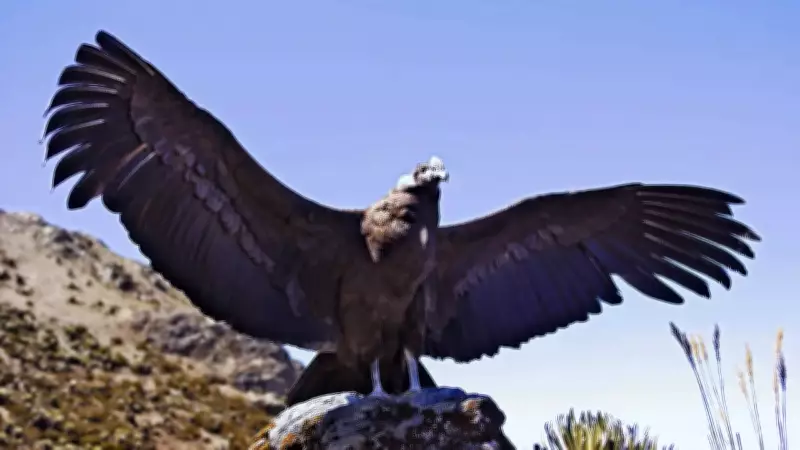
The Andean condor is one of the most powerful aerial specialists in the bird world. With a wingspan exceeding 3 meters, it is designed not for flapping flight but for soaring. It utilizes thermal air currents rising along mountain slopes to glide effortlessly for hours with minimal energy expenditure. As a scavenger, it plays an essential ecological role by cleaning up carcasses in high-altitude ecosystems. Its presence is often associated with remote, dramatic mountain landscapes.

- Andes Mountains across Peru, Chile, Argentina, Bolivia, and Colombia.