Our planet is filled with destinations that boast names so peculiar they spark immediate curiosity. These unusual names often hide fascinating stories of exploration, local legends, and geographical wonders that make these places truly unique.
The Empty Quarter: Earth's Vast Sand Desert
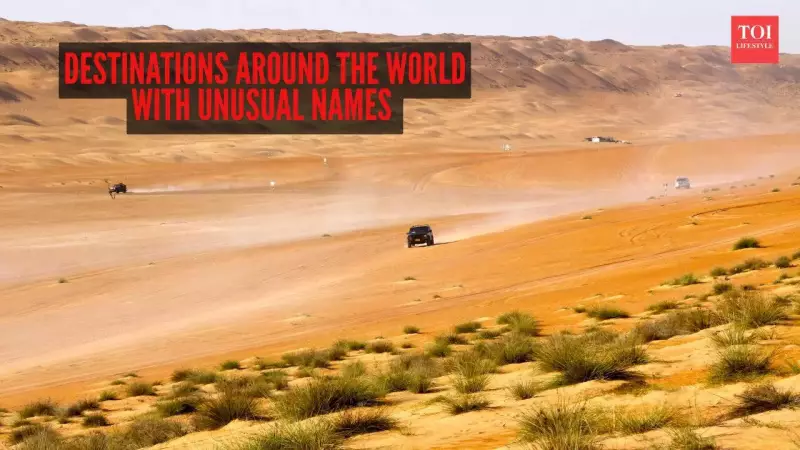
The Empty Quarter, known as Rub' al Khali, holds the distinction of being the world's largest continuous sand desert. Spanning across Saudi Arabia, Oman, the United Arab Emirates, and Yemen, this massive desert earned its name from the complete absence of permanent settlements and its extreme inhospitable conditions.
Towering sand dunes, some reaching heights of over 250 metres, constantly shift under intense sun and powerful winds. For centuries, this region was considered completely impassable, and even today it remains one of the most remote landscapes on Earth. Beneath the shifting sands lie historic trade routes, and visitors who brave this harsh environment often describe experiencing an otherworldly silence.

Skeleton Coast: Namibia's Shipwreck Shoreline
Namibia's Skeleton Coast presents one of the most dramatic and eerie landscapes on the planet. The name originates from the numerous shipwrecks and whale bones that litter its shoreline, caused by treacherous fog, strong currents, and rough seas that have claimed countless vessels over the years.
This region forms part of the Skeleton Coast National Park, a protected area that hosts remarkable desert-adapted wildlife including lions, hyenas, seals, and elephants. Despite its ominous name, the area offers mesmerizing scenery with massive dunes collapsing directly into the ocean, mysterious fog banks, and rusted relics of maritime disasters. The indigenous Himba people fittingly call it 'The Land God Made in Anger'.
Lake Disappointment: Australia's Saline Surprise
Back in 1897, explorer Frank Hann discovered what he hoped would be a freshwater oasis in Western Australia's remote Pilbara region. Instead, he found a saline, often dry lake basin, leading him to name it Lake Disappointment in his frustration.
The lake forms part of a fragile salt-lake ecosystem that holds significant importance for the local Martu Aboriginal people, who know it by a different traditional name and maintain deep cultural connections to the area. Visitors who witness the lake at sunrise or sunset often find the experience so breathtaking that they quickly forget the disappointing name.
Dead Vlei: Namibia's Ancient Marsh
Another remarkable destination from Namibia, Dead Vlei translates to 'dead marsh' and presents a stunning white clay pan surrounded by the towering red dunes of the Namib Desert. The area features iconic dead camel-thorn trees, some estimated to be over 900 years old, preserved from decomposition by the extremely dry environment.
The stark contrast between the blackened trees, white earth, red dunes, and brilliant blue sky has made Dead Vlei one of Africa's most photographed landscapes, creating a visual spectacle that attracts photographers and travelers from around the world.
Witch's Hill: Galápagos Volcanic Wonder
Cerro Brujo, meaning 'Witch's Hill,' is a volcanic tuff cone located on San Cristóbal Island in the Galápagos archipelago. Early sailors gave this formation its mysterious name because they believed the distinctive rock formations resembled a witch's silhouette against the horizon.
Despite its haunting name, the site offers serene beauty with turquoise waters, powdery white sand beaches, and abundant wildlife including blue-footed boobies, Galápagos sea lions, and magnificent frigatebirds. The contrast between the eerie name and the location's natural beauty adds to its unique charm.
These five destinations prove that sometimes the most unusual names belong to the world's most fascinating places, each with stories that enhance their appeal and mystery for adventurous travelers seeking unique experiences.