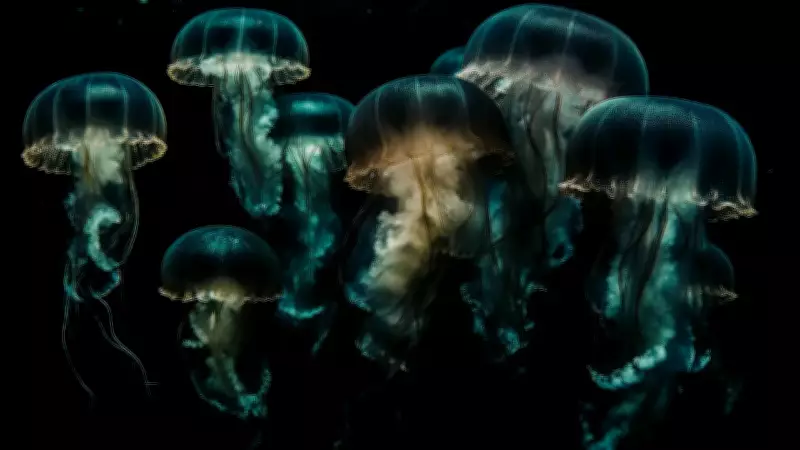
The Ocean's Hidden Horrors: 10 Terrifying Truths Beneath the Waves
Covering nearly 70% of our planet's surface, the ocean is fundamental to Earth's survival. It regulates global weather patterns, absorbs vast quantities of carbon dioxide and solar energy, generates over half the oxygen we breathe, and supports an incredible diversity of life. Yet, despite its critical importance, the ocean remains one of the most enigmatic and least understood environments on Earth. Its sheer scale and hostile conditions have kept many of its secrets locked away, making it a realm of profound mystery and hidden dangers.
What makes the ocean truly frightening is that many of its threats are invisible to the naked eye. While the surface may appear calm and serene, beneath lies a world of powerful currents, crushing pressures, oxygen-depleted dead zones, and sudden weather shifts. Even with modern advancements like satellite imaging, sonar mapping, and robotic submersibles, human exploration has barely scratched the surface of the deep sea's mysteries. Here are ten chilling facts that reveal why the ocean is far scarier than most people realize.
1. Vast Unexplored Territories
Despite technological progress, the majority of our oceans remain uncharted and unexplored. While satellites have mapped large sections of the seafloor, the deepest regions are still largely inaccessible. Hidden beneath the waves are undiscovered underwater volcanoes, massive canyons, hydrothermal vents, and unknown species of marine life. Many of these areas have never been visited by humans or even captured on camera, leaving countless mysteries waiting to be uncovered.

2. The Mariana Trench's Immense Depth
The Mariana Trench is home to Challenger Deep, the deepest known point on Earth, plunging approximately 11 kilometers below sea level. To put this in perspective, if Mount Everest were placed at the bottom of this trench, its peak would still be submerged under over 2 kilometers of water. Conditions here are extreme, with temperatures near freezing and pressures that are almost unimaginable.
3. Crushing Underwater Pressure
Water is incredibly heavy, and pressure increases dramatically with depth. At the ocean's deepest points, pressure exceeds 1,000 atmospheres—equivalent to the weight of several thousand elephants concentrated on a single small area. Without specialized protective equipment, both human bodies and even robust metal machinery would be instantly crushed by these forces.
4. Rapid Disappearance of Sunlight
Sunlight penetrates only the uppermost layers of the ocean. Beyond about 200 meters, light diminishes rapidly, and by 1,000 meters, complete darkness prevails. This absence of sunlight prevents photosynthesis, creating a cold, dark environment where many creatures rely on falling organic matter, hunting, or bioluminescence to survive. The vast majority of Earth's oceanic volume exists in these perpetually dark depths.
5. Expanding Ocean Dead Zones
Ocean dead zones are areas where oxygen levels are too low to support most marine life. While some occur naturally, many are caused by human activities like agricultural runoff and sewage discharge, which trigger algal blooms. As these algae die and decompose, they consume oxygen, creating hypoxic conditions. Large dead zones, such as those in the Gulf of Mexico, pose serious threats to fisheries and ecosystems.
6. Point Nemo: The Ocean's Most Isolated Spot
Point Nemo, known as the oceanic pole of inaccessibility, is the most remote location in the world's oceans. Situated thousands of kilometers from any inhabited land, its extreme isolation has made it a designated spacecraft cemetery. Decommissioned satellites and space stations are deliberately crashed here to minimize risk to populated areas.
7. The World's Largest Waterfall Is Underwater
The Denmark Strait Cataract is an underwater waterfall formed by dense, cold water sinking beneath warmer, lighter water. This massive flow travels for kilometers and is far larger than any terrestrial waterfall. Though invisible to the eye, its power shapes ocean currents and influences global climate patterns.

8. The SOFAR Channel: Oceanic Sound Highway
The SOFAR (Sound Fixing and Ranging) channel is a deep ocean layer where sound waves can travel immense distances with minimal energy loss, due to specific pressure and temperature conditions. This natural acoustic pathway allows whale songs, earthquake rumblings, and even human-made noises to traverse entire ocean basins. It was strategically used for submarine detection during the Cold War.
9. Bioluminescent Deep-Sea Creatures
In the pitch-black depths, many marine organisms produce their own light through bioluminescence—a chemical reaction within their bodies. Anglerfish use glowing lures to attract prey, while squids, jellyfish, and shrimp emit light to confuse predators or communicate. This adaptation is essential for survival in an environment devoid of sunlight.
10. Underwater Volcanic Dominance
The majority of Earth's volcanic activity occurs beneath the ocean surface. The mid-ocean ridge system, an underwater mountain chain spanning over 65,000 kilometers, is where tectonic plates diverge and magma rises to form new seafloor. Most volcanic eruptions happen here, unseen and unnoticed by the world above, yet they play a crucial role in shaping our planet.
These ten facts underscore the ocean's dual nature: a life-sustaining force that is also a realm of profound danger and mystery. As exploration continues, each discovery reminds us of how much remains unknown about Earth's final frontier.