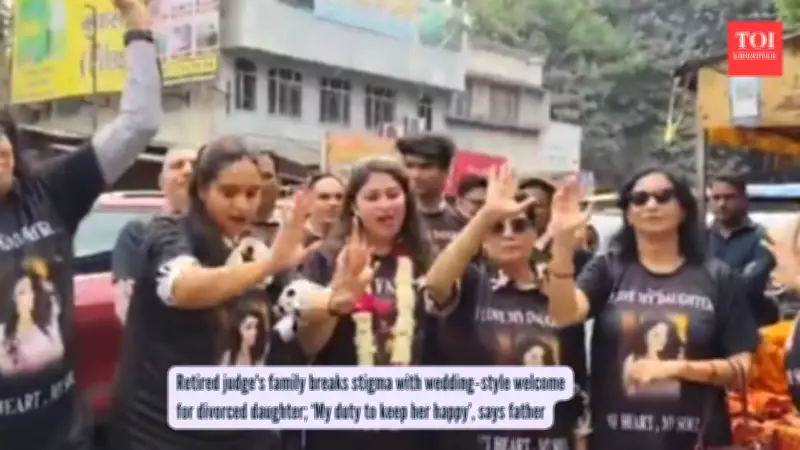
Meerut Family Celebrates Daughter's Divorce with Music and Dance, Defying Social Stigma
In a powerful departure from societal norms that often treat divorce as a whispered failure, a family in Meerut has made an extraordinary statement by celebrating their daughter's legal separation with music, garlands, and a vibrant dhol procession. Instead of concealing the divorce, they transformed an emotional moment into a public declaration of dignity, independence, and evolving attitudes toward marital separation in contemporary India.
'My Duty to Keep Her Happy': Father's Unwavering Support
The scene unfolded as a gentle rebellion against deep-rooted stigma when the family chose celebration over mourning after the Meerut Family Court granted the divorce on April 4. Dr. Gyanendra Sharma, the father and a retired judge from Meerut, articulated his perspective clearly to PTI, stating, "If my daughter is not happy in marriage, it is my duty to bring her out of that environment. We did not seek alimony or anything else. I just brought my daughter back."
Rather than a somber homecoming, the family welcomed their daughter, Pranita, with drums, dance, sweets, and floral garlands, turning the conclusion of an eight-year marriage into an empowering and joyous occasion. Viral videos captured the moment outside the court, showing relatives dancing to dhol beats and distributing sweets as Pranita exited after the verdict. The family members wore black T-shirts printed with her photo and the words "I Love My Daughter," making a legal exit into a visible affirmation of unconditional support.

Eight-Year Marriage Ends Amid Allegations of Harassment
According to family accounts, Pranita married Army Major Gaurav Agnihotri in December 2018, but the relationship gradually deteriorated into distress. Her father reported that she faced continuous mental, emotional, and physical harassment in her marital home, with even the birth of their son failing to alleviate the situation, as detailed in a Free Press Journal report. After years of attempting to salvage the marriage, Pranita prioritized her well-being and filed for divorce in the Meerut Family Court, which provided legal closure to the prolonged dispute.
Notably, the family emphasized that they neither sought nor accepted alimony or any material compensation, underscoring that their primary concern was her safety and happiness rather than financial gain. This stance challenges common perceptions in parts of India where a woman returning to her parents after divorce is often viewed as a tragedy or failure, reframing the divorce as a liberation from years of alleged unhappiness.
Education and Family Support as Pillars of Resilience
Pranita, who now works as a Finance Director, holds a postgraduate degree in psychology, a background that informs her focus on mental health and resilience. In the aftermath of the court verdict, she offered advice to women facing similar circumstances, urging them to speak up and seek help rather than endure abuse in silence. She encouraged a focus on education, self-reliance, and emotional strength before entering marriage, arguing that independence enables healthier life choices.
This celebration not only highlights a personal victory but also serves as a broader commentary on shifting societal norms. By publicly embracing their daughter's divorce with joy and support, the Meerut family has sparked conversations about dignity, autonomy, and the importance of familial backing in overcoming adversity, setting a precedent for others to follow in redefining narratives around separation and empowerment.