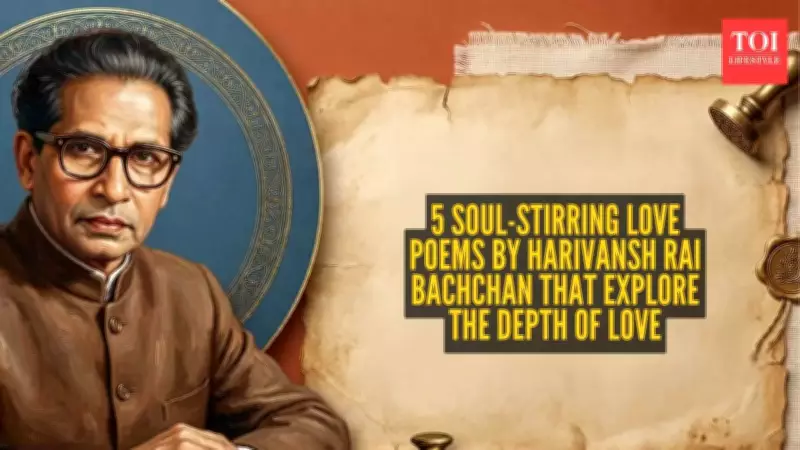
5 Timeless Love Poems by Late Harivansh Rai Bachchan That Capture the Beauty of True Love
Harivansh Rai Bachchan wasn't merely a poet; he was a profound observer of the human condition. For those who have experienced the solitude of a 2 AM heartache, his verses resonate as authentic reflections of life's messy, beautiful, and often exhausting reality. His perspective on love transcends typical Bollywood romance, delving into the grit and grace required to keep one's heart genuinely open.
The "Drunk on Life" Energy of Madhushala
While Madhushala is widely recognized for its imagery of wine and taverns, it serves as a powerful metaphor for the intensity of existence. Bachchan poetically asserts that life itself, and by extension love, is the intoxicating wine. He encourages not cautious sips but full immersion—embracing the sweetness, the bitterness, and even the inevitable hangover of heartbreak. This poem stands as a bold reminder that a life overly guarded is a life half-lived.
The Healing Power of Jo Beet Gayi So Baat Gayi
This composition is the ultimate anthem for moving forward. The line "Jo beet gayi so baat gayi" (What is past is past) is not a cold dismissal of pain but a gentle acknowledgment of life's transient nature. Bachchan observes that stars fall and flowers wither, yet the universe continues its course. It offers a dignified perspective on healing, suggesting that after profound loss or a shattering breakup, it is not only acceptable but natural to carry on with life's journey.

Love as the Fuel in Agneepath
Commonly interpreted as a poem of sheer willpower, Agneepath (The Path of Fire) reveals a deeper layer when viewed through the lens of love. The arduous walk through fire becomes bearable, even purposeful, when fueled by love—for a person, a dream, or a higher calling. For Bachchan, love is not merely a tender emotion; it is the resilient backbone that provides strength to stand firm when adversity seeks to break one's spirit.
Rebuilding from Zero in Need Ka Nirmaan Phir
Penned after the loss of his first wife, Shyama, this poem carries the palpable weight of grief. It does not celebrate joyous love but instead explores the silent aftermath of a storm. It captures the exhausting endeavor of reconstructing a life when the person who was one's emotional anchor is gone. Despite its raw vulnerability, the poem holds a flicker of hope, affirming that even after the darkest night, the possibility of building something new endures.
The Messy Notebook of Kya Bhoolun Kya Yaad Karun
This work feels less like a formal composition and more like an intimate, overheard conversation. The poet grapples with the question, "What should I forget? What should I remember?" It presents a beautifully honest examination of how memories shape our identity, capturing the confusing middle ground where a recollection can feel simultaneously like a cherished gift and a heavy burden.
Why Harivansh Rai Bachchan's Poetry Still Resonates
Bachchan never attempted to portray love as flawless. Instead, he presented it in all its authentic complexity—confusing, messy, and at times frightening. He embraced its contradictions, illustrating how love can be loud and passionate one moment and quiet the next.
Contemporary readers engaging with his work are not merely studying historical literature; they are seeing their own sleepless nights and evolving relationships mirrored in his words. This enduring relevance is why his poetry remains impactful long after the book is closed. True love, as Bachchan understood, does not fade; it deepens and enriches with the passage of time.