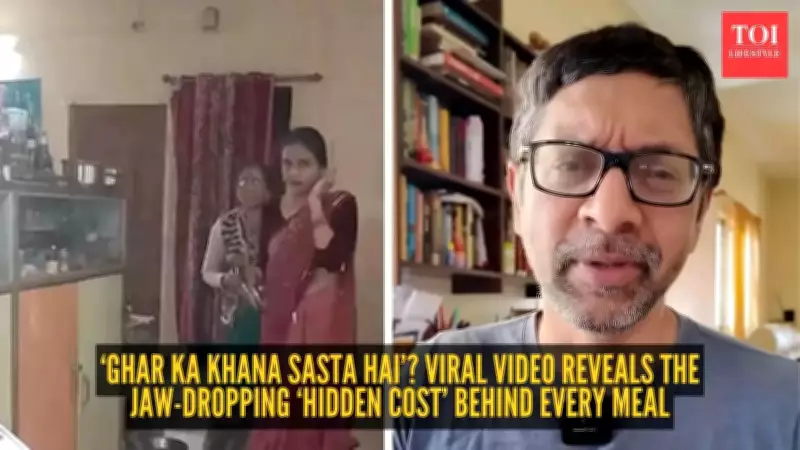
In India, the phrase "Ghar ka khana bana lo, sasta padta hai" (Cook at home, it's cheaper) is often repeated as an unquestionable truth. However, a recent Instagram video has sparked widespread discussion, prompting many to reconsider this long-held assumption. The creator of the viral video delves into the real, often overlooked expenses associated with home cooking, urging viewers to think beyond just the price of ingredients.
Homemade Food: More Than Just a Meal
The video begins with a simple yet provocative question: "Cheaper than what? And for whom?" It points out that most people label homemade food as inexpensive without accounting for the immense labor involved. Even preparing a basic dish like dal chawal requires significant effort. As the creator explains, "Ghar ka dal chawal demands 45 minutes of washing, chopping, monitoring, and cleaning." This estimate excludes additional tasks such as grocery shopping, meal planning, and post-cooking cleanup, which add to the overall time commitment.
When "Cheap Food" Becomes Expensive
The video introduces the concept of opportunity cost, a critical economic factor often ignored in discussions about home cooking. The creator argues, "If the person cooking could have earned 200 rupees an hour doing literally anything else, your cheap meal just got expensive." Historically, homemade food has been perceived as affordable because the labor of grandmothers, mothers, and wives was never monetized or valued. The video states, "The reason your grandmother's, your mother's, and your wife's cooking seemed cheap is that you never considered the opportunity cost of the time spent cooking." This perspective highlights how unpaid domestic work can mask the true economic impact.

When Home Cooking Is Truly Economical
The creator outlines two scenarios where cooking at home can be genuinely cost-effective. First, if one can hire domestic help at very low wages, reducing personal labor costs. Second, by leveraging modern conveniences like ready-made ingredients, instant mixes, frozen vegetables, microwaves, air fryers, or Instant Pots to cut down on preparation time. The video provides a concrete example: "A 40-rupee packet of ready-to-eat poha is actually cheaper than making it at home," when factoring in time and effort.
Ready-Made Food: Not Laziness, but Necessity
The video challenges the stigma around using ready-made food, asserting that it is not a sign of laziness. Instead, it frames the adoption of such technology as a practical response to modern life's demands. While homemade food is still praised for its health benefits, superior taste, and nutritional value, the creator emphasizes that it is not always the cheaper option. The key message is to enjoy traditional homemade items like "ghar ka achar" (homemade pickle) without judging those who opt for convenience.
Online Reactions and Public Response
The video has resonated deeply with online audiences, garnering widespread agreement and thoughtful comments. One user noted, "The cost of this 'free labour' is often the health of the woman cooking," highlighting gender dynamics in domestic work. Another praised the video as "a fabulously balanced assessment of the standard line we hear so often!" A third comment summed it up: "There's no such thing as a free or cheap meal – someone is paying for it in some way." These responses reflect a growing awareness of the hidden costs in everyday activities.
Disclaimer: This article is based on a video shared on social media and reactions posted online. The views expressed do not necessarily reflect those of the publication, and claims have not been independently verified.