Soha Ali Khan once revealed an amusing family moment that perfectly illustrates changing attitudes toward home design in contemporary India. During an interview last year, she explained how her mother, veteran actress Sharmila Tagore, reacted when visiting their home.
From Perplexed Parents to Personal Expression
"When my mother came to stay with us, she was perplexed by the idea that someone would want to display shoes as works of art in the middle of the room," Soha shared. "And that too in see-through boxes, she found it a rather strange concept." This generational difference in perspective captures a significant shift occurring in urban Indian homes today, where personal expression increasingly takes precedence over traditional decor norms.
The New Philosophy of Home Design
Walk into modern urban residences across India, and you'll immediately notice the transformation. Spaces no longer resemble catalog-perfect showrooms but instead feel lived-in, layered, and distinctly personal. According to interior design professionals, today's display culture represents more than just a passing trend—it's an emotional approach to living spaces that values presence over perfection.

Shelves are opening up, cabinets are becoming transparent, and personal collections are finally stepping into the light. This movement represents a fundamental shift from mere storage to meaningful self-expression within domestic environments.
Storage Transformed into Storytelling
Interior designer Priyanka Mishra observes this change daily in how clients approach their living spaces. "Instead of hiding books, heirlooms, or objects collected over the years, homeowners now want them to be seen," she explains. "Open shelving, modular cabinetry, and layered display surfaces are doing more than storing objects—they're actively shaping a room's personality."
Books introduce rhythm, ceramics provide texture, and travel artifacts bring color and memory into spaces. Storage, decor, and personal expression are no longer separate concepts but instead overlap to create richer, more meaningful environments.
Beyond Minimalism: The Layered Home
While minimalism maintains its followers, Mishra notes that many homeowners are consciously choosing spaces that feel intentionally layered rather than pristine and perfect. "People no longer want homes that look untouched," she observes. "They want rooms that authentically reflect their journeys, tastes, and memories. It's about thoughtful curation rather than excess—personality instead of perfection."
Collections as Identity Expression
Digital content creator Kripa Patel Joshi, who collects perfumes, shares her perspective on this phenomenon. "When people see your collectibles, they instantly understand what you love and your sense of taste," she says. "Because I've collected so many perfumes, people can experience my personal style through them. Even the first row of bottles reflects my mood—it's usually what I'm feeling or loving that week. Displaying collectibles today is very much a form of identity expression."
Decor That Tells Personal Stories
For Bangalore-based homeowner Manvi Gandotra, displaying her collection represents letting her home communicate her family's story. She and her husband realized their travel finds were becoming memories locked away in boxes, which no longer felt appropriate.
"Now, Turkish plates sit alongside Portuguese blue-and-white tiles, a Sri Lankan mask, batik art, and Kashmiri embroidery from my home state," she describes. "Some pieces were picked up together on trips, some were gifted by friends, and a few—embroidery I made myself—are deeply personal. Seeing them every day brings those moments back instantly."
She adds, "Each object holds a place, a feeling, a chapter in our lives. The home feels less like a styled space and more like a living timeline."
When Collections Take Center Stage
Display culture extends far beyond traditional art or antiques. For sneaker collector Nikhil Thomas, it represents a bold expression of identity. What once lived in scattered boxes now occupies a dedicated corner of his home—sneaker crates stacked neatly, pairs arranged by color, with lighting specifically designed to spotlight each pair.

His passion for sneakers traces back to childhood when his father, working in Dubai, would bring home surprise pairs—an influence that never faded. Speaking about his collection taking center stage, Thomas says, "Sneakers are always on trend, and collecting and displaying them is both a style and an identity statement. I'm always proud of my collection. Every day, when I walk past it, it makes me happy and even inspires me to add more."
Unexpected Collections as Decor
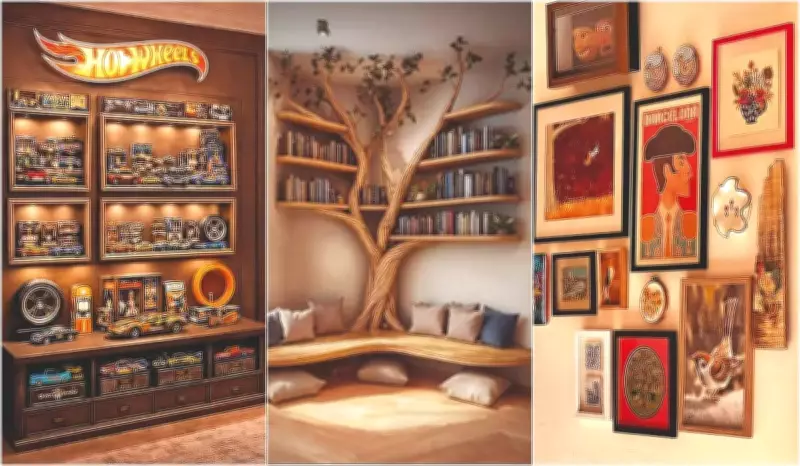
Even toy collectors are embracing this trend. Many Hot Wheels enthusiasts are bringing their collections into plain sight, transforming them into decor through wall displays, glass cabinets, and DIY shelves. As one Reddit user explained, "I keep my carded Hot Wheels in my walk-in closet, organized by brand. The open ones are in a glass cabinet, while loose cars lie on tables and windowsills."
Decor That Sparks Meaningful Conversation
Across these diverse homes, display isn't about showing off wealth or status—it's about showing life itself. Whether featuring travel artifacts, books, art, or sneakers, what's visibly displayed reflects where people have been and what they genuinely value.
The impact becomes particularly visible in how guests respond. In Manvi Gandotra's experience, conversations no longer begin with comments about furniture or finishes. Instead, they start with questions like "Where is this artifact from?" and gradually unfold into shared stories of travel and memory.
"It makes people slow down, notice details, and share their own travel stories," she says, "which is exactly what we love about having these pieces around."
Designing Spaces Around Collections
Kripa Patel Joshi describes how her collections directly influence her interior design choices. "When I was creating my beauty room, I planned the interiors with my collectibles in mind. At the moment, I collect perfumes, and earlier I collected sunglasses, so I created dedicated display cabinets and custom storage to showcase them properly. My collection definitely influences how I design my space—I want it to be functional, but also visually beautiful."
Nikhil Thomas echoes this sentiment regarding his sneaker display. "The sneaker display always sparks conversation. They're stacked perfectly in the corner, and anyone who comes home goes straight to them. I'm always happy when guests just say 'wow'—that's a sneakerhead feeling, being super proud."
The Future of Home Design
As interior designer Priyanka Mishra summarizes, "Design today is less about hiding life and more about celebrating it. When thoughtfully displayed, personal collections bring soul, depth, and continuity into a space—something no closed cabinet can ever replace."
This movement represents more than just an aesthetic shift—it's a fundamental reimagining of what homes should be. Rather than sterile showpieces, modern Indian homes are becoming living archives of personal journeys, visible expressions of identity, and spaces that genuinely tell the stories of those who inhabit them.