Scientifically Proven Methods to Safely Clean Your Sofa at Home
The longevity of your furniture and the overall well-being of your family are intimately connected to maintaining a clean living environment. Over time, sofas accumulate a significant amount of allergens, dust mites, and various organic pollutants that can severely compromise indoor air quality. While professional cleaning services are available, it is entirely possible to undertake this task yourself using methods that have been validated through rigorous scientific studies. To execute a successful and safe cleaning routine, you must first accurately identify the specific type of fabric your sofa is constructed from, then select an appropriate pH-neutral cleaning solution tailored to that fabric. This approach enables you to eliminate deep-rooted dirt and contaminants from your upholstered furniture without causing any harm to its structural integrity or diminishing its visual appeal.
How to Safely Clean Your Sofa at Home While Understanding Fabric Codes
Identifying the manufacturer's cleaning code, which is typically located on care labels, is an absolutely critical step before applying any liquids or chemicals to the fabric. These codes are essential for preventing permanent damage to the fabric fibers and avoiding the risk of dye bleeding. Utilizing an incorrect solvent can lead to disastrous outcomes such as fabric shrinkage or the complete destruction of the fabric backing.
Here are the standard manufacturer's cleaning codes:

- W: Use water-based cleaning agents exclusively.
- S: Use mild, dry-cleaning solvents that do not contain any water.
- S/W: Both water-based and solvent-based cleaning agents are safe for use.
- X: Only vacuuming is permitted; no cleaning agents should be applied to this fabric.
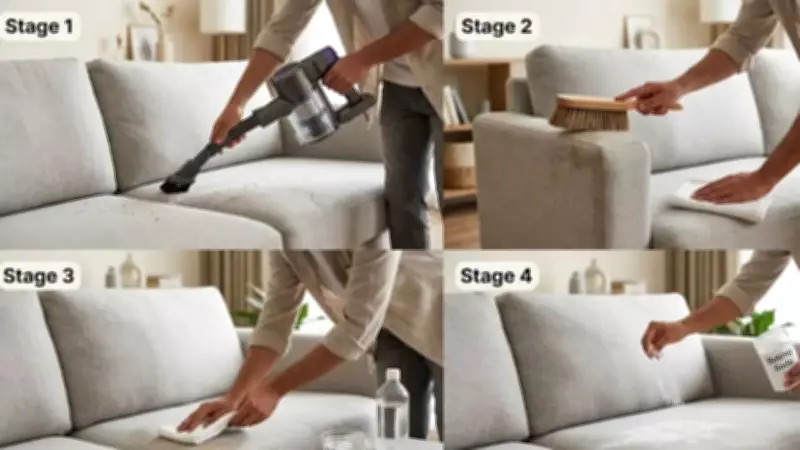
Stage 1: Removing Dry Soil with High-Efficiency Vacuums
The initial step in any safe and effective cleaning methodology is the thorough removal of all dry particulate material, including dust. Dust comprises a multitude of contaminants and allergens that gradually accumulate within soft furnishings like couches over extended periods.
Preparation: Attach the correct upholstery nozzle to your vacuum cleaner and ensure the suction level is appropriately reduced to prevent fabric damage.
Execution: Apply the vacuum to the entire surface of the couch using very light pressure, paying special attention to seams, corners, and each individual cushion.
Deep Cleaning: After removing the bulk of dry soil, utilize the brush attachment to eliminate any residual particles, such as animal dander, that may remain embedded.
Hidden Areas: Remove all cushions from the sofa frame and meticulously vacuum beneath each cushion, including the edges and surrounding areas.
Stage 2: Cleaning Without a Vacuum Cleaner
If a vacuum cleaner is not available, you can still manually remove surface soil from your upholstery without forcing particles deeper into the fabric weave.
Remove Loose Soil: Employ a soft-bristled brush to gently lift and dislodge any encased debris from the fabric surface.
Remove Dust: Use a dry rag to brush or gently pat the cushions, effectively releasing trapped dust particles.
Light Cleaning: Once dry soil has been eliminated, you can address bonded oils and light stains. The objective here is to lift soil from the fabric surface without saturating the internal foam or padding.
Stage 3: Implementing the Cleaning Process
After all dry soil has been thoroughly removed from the cushions, proceed with the following steps to complete the cleaning process.

- Mix a very mild detergent with lukewarm distilled water to create a gentle cleaning solution.
- Submerge a microfiber cloth in the solution, then wring it out thoroughly so it is damp but not wet.
- Using circular motions, wipe the entire surface of each cushion, scrubbing stains persistently until they begin to fade.
- Utilize a dry cloth to absorb excess moisture, then allow the cushions to air dry completely or set up a fan to accelerate the drying process.
Stage 4: Chemical Neutralization and Deodorizing
Instead of merely masking unpleasant odors with synthetic perfumes or air fresheners, consider using a dry absorbent like baking soda, which eradicates smells on a molecular level.
If your sofa emits a bad odor, generously sprinkle it with baking soda and allow it to sit for 30 to 60 minutes. The baking soda will actively absorb oils and neutralize odors embedded in the sofa. Finally, vacuum or sweep away the powder to reveal a fresher, cleaner piece of furniture.