

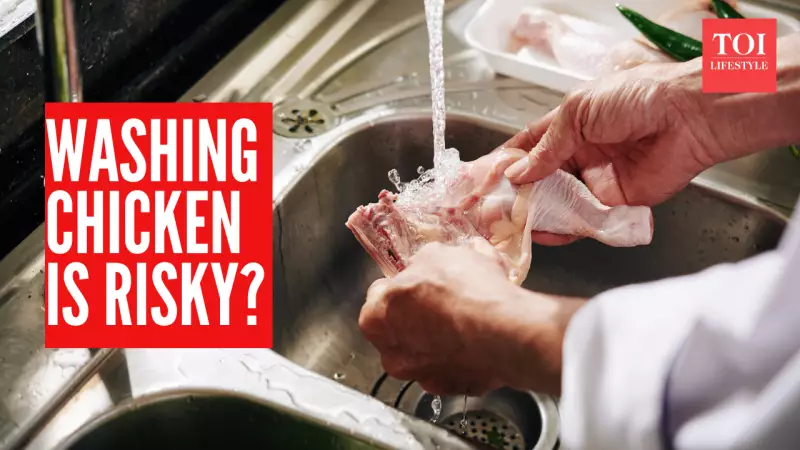
For generations in Indian kitchens, the ritual of thoroughly rinsing chicken before cooking has been considered a non-negotiable step towards cleanliness and safety. The prevailing belief is simple: the more you wash, the cleaner the meat becomes. However, groundbreaking food safety research presents a starkly different and alarming reality. Contrary to popular practice, washing raw chicken significantly increases the risk of Salmonella infection rather than reducing it.
The Hidden Danger: How Salmonella Spreads in Your Kitchen
Salmonella is a group of bacteria commonly residing in animal intestines. According to the World Health Organization, it causes millions of global infections annually, primarily through contaminated food like meat, eggs, and unpasteurized dairy. Symptoms include severe diarrhea, nausea, fever, vomiting, and dehydration. While healthy adults may recover within a week, the infection can turn critical for vulnerable groups like children, the elderly, and those with compromised immunity.
The core of the problem lies not in the chicken itself but in the act of washing it. A pivotal study published in AIP Publishing explains that the risk escalates from water droplets ejected from the chicken's surface during rinsing. These droplets, invisible to the naked eye, can travel far, transferring bacteria from the poultry to surrounding countertops, utensils, and even ready-to-eat foods. The research further noted that using a higher tap height intensifies this dangerous splashing effect.

Shocking Data: The USDA Study on Kitchen Contamination
A 2019 study by the United States Department of Agriculture (USDA) provides concrete evidence of this widespread kitchen contamination. Their findings are a wake-up call for home cooks everywhere. The study revealed that 60 percent of people who washed raw poultry had bacteria lingering in their sink afterward. Even more concerning, 14 percent still had bacteria in their sinks after attempting to clean them. Most alarmingly, 26 percent of participants transferred bacteria from the raw poultry to their ready-to-eat salad lettuce, directly creating a pathway for foodborne illness.
"Individuals are putting themselves at risk of illness when they wash or rinse raw poultry," the USDA study conclusively stated. This data challenges a deep-seated culinary habit, urging a shift towards science-backed practices.
Safe Chicken Handling: What You Should Do Instead
Abandoning the long-held practice of washing chicken can be difficult. However, if one is reluctant to skip it entirely, exercising extreme precaution is non-negotiable. The USDA and food safety experts recommend a three-pronged approach for safe chicken consumption:
1. Prepare Non-Cook Items First: Always chop vegetables, prepare salads, or handle any food that won't be cooked before you even touch raw chicken. This simple sequence prevents cross-contamination.
2. Sanitize Surfaces Rigorously: Thoroughly clean and sanitize every surface—countertops, cutting boards, knives, sinks—that has come into contact with raw meat or its juices. Use hot, soapy water followed by a disinfectant.
3. Cook to the Correct Temperature: The only guaranteed way to destroy illness-causing bacteria is through proper cooking. Chicken must be cooked to a safe internal temperature of 74°C (165°F) as measured by a food thermometer. Ensure no pink meat remains, and juices run clear.
By adopting these methods, you can enjoy chicken dishes without compromising the health and safety of your family. Remember, the heat from proper cooking is your most powerful weapon against bacteria, not the water from your tap.
Disclaimer: This article is for informational purposes only and should not be considered professional medical advice. Always consult with a healthcare provider or food safety expert for specific guidance.






