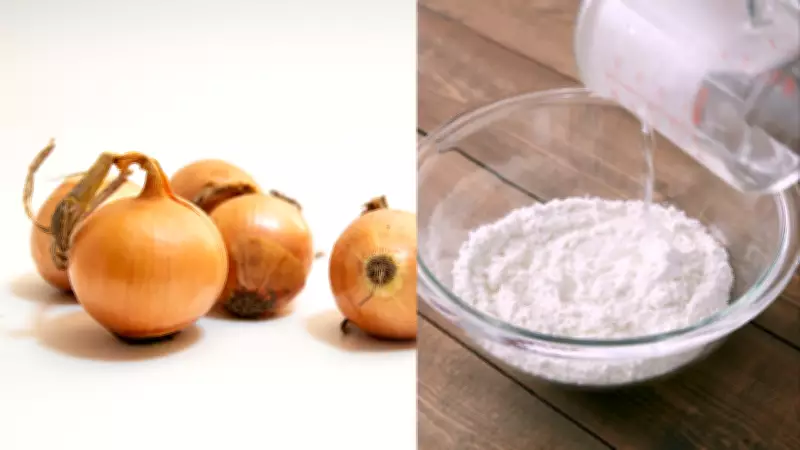
Onion and Baking Soda Pest Control: The Science Behind This Home Remedy
At first glance, the concept of employing onions and baking soda to manage or attract pests might appear somewhat unconventional. Indeed, numerous individuals might even consider it mere folklore or an unsubstantiated trick handed down through generations without factual foundation. However, the reality is that this approach has a legitimate basis in both chemistry and pest behavior. Pests are not drawn to substances through mystical means; rather, their attraction stems from environmental factors such as odors, moisture levels, and available food sources. When onions and baking soda are combined, they create a mixture that can potentially help control pest populations effectively.
Why Insects Are Attracted to Onions
Scientific research, including studies like 'Repellent activity of green detergents and raw vegetable extracts against Drosophila melanogaster,' indicates that insects rely heavily on their olfactory senses to locate nourishment. When onions are sliced or chopped, they emit a potent aroma due to the presence of sulfur compounds. This odor disperses rapidly through the air, and these sulfur-based molecules can mimic the natural scent of food for many insects, particularly those that feed on decaying organic materials. Pests are frequently lured by food, moisture, and chemical signals in their surroundings, which explains why something as straightforward as a chopped onion can function as an effective trap. Its fragrance signals a potential food source, attracting various pests such as flies, ants, and cockroaches.
The Role of Baking Soda in This Bait
The function of baking soda, scientifically known as sodium bicarbonate, is entirely distinct. It is inaccurate to claim that baking soda attracts insects on its own. Instead, it is incorporated into the mixture primarily due to its alkaline properties. When insects consume the baking soda, often coated with enticing substances like food remnants, it can impact their internal physiological processes. It has been suggested that baking soda may interfere with the digestive systems of insects, potentially interacting with acids in their bodies to cause gas buildup. However, it is crucial to emphasize that there is limited scientific evidence confirming its efficacy in killing insects. In simpler terms, the individual roles in the mixture are clear: onions serve to attract pests, while baking soda attempts to eliminate them.

How to Make and Use Onion Baking Soda Bait at Home
Creating this bait at home is remarkably straightforward. Follow these simple steps:
- Chop a small onion and place it in a shallow bowl.
- Mix one to two teaspoons of baking soda with the chopped onion.
- Optionally, add a pinch of sugar to enhance its attractiveness to insects.
- Position the bowl in areas where insects are commonly found, such as near sinks, dustbins, or kitchen corners.
To ensure effectiveness, replace the mixture every day or two, as the onion's odor diminishes over time. Additionally, always keep this mixture out of reach of pets and children to prevent accidental ingestion.
Why the Mixture Works: A Science-Based Understanding
The rationale for labeling this combination as "bait" is rooted in insect behavior. While baking soda alone lacks attractiveness, pairing it with a food-scented element like onion or sugar makes the mixture functional. According to insights from Anticimex Malaysia, insects are drawn by the onion's odor, ingest the mixture, and may experience acidity buildup in their systems due to the baking soda. Some methods utilize this combination for non-toxic pest control, though success rates vary significantly because different insects respond differently to various smells, moisture levels, and environmental conditions.

Insects are driven by their biological needs and are not inherently attracted to substances like sodium bicarbonate. This approach is not a stroke of genius but rather a practical application of chemistry and biology working in tandem. The strong odors from onions are mistaken for food by pests, while sodium bicarbonate serves as a chemical agent in the mixture. There is no magic involved; it relies solely on olfactory cues and the chemical properties of baking soda. Although this method may not be universally effective, it offers a fascinating glimpse into natural pest management strategies.