Kerala's Distinctive Holy Week Cuisine: A Fusion of Faith and Flavor
The culinary landscape of Kerala during Holy Week, culminating in Easter, is remarkably distinctive, deeply rooted in local customs, community practices, Western influences, religious rituals, and the rigorous fasting observed throughout the over 45-day Lent period. This sacred time transforms food into a powerful medium of symbolism and devotion.
Kozhakatta Saturday and the Symbolism of Stones
The week begins with the central Kerala tradition of 'Kozhakatta Saturday,' which occurs the day before Palm Sunday. Tsarina Abrao Vacha, who operates a fifth-generation bakery established in 1852 in Fort Kochi, explains, "It is essentially a coconut ada shaped into a round form. Interestingly, this is a festival food found across India, often called modak." For Christians who converted during Portuguese colonial times, European traditions led to the preparation of hot cross buns instead of kozhakattas.
"In our bakery's history, I've learned these buns were once delivered to British bungalows in Fort Kochi," Tsarina adds. The kozhakatta itself is rich with symbolism, believed to represent the stones hurled at Jesus during his judgment. Conversely, the buns symbolize the bread broken with his disciples at the Last Supper. In some communities, they replace the indri appam, a staple for Maundy Thursday in central Kerala, and are particularly favored by children.

Vegetarian Hot-Cross Buns and Lenten Observances
Tsarina emphasizes the adherence to tradition, noting, "We use black raisins in our hot cross buns, unlike golden raisins, possibly symbolizing dark times or death." Significantly, these buns are vegetarian, aligning with Lenten fasting practices that involve abstaining from eggs and meat. She proudly maintains the original recipe, where the cross on top is crafted from strips of dough rather than being piped on, as some modern bakeries do.
Sacred Rituals: The Preparation of Indriappam
Food entrepreneur Jeemol Koruth recalls that during Holy Week in her Kottayam childhood, devotion was as crucial as any ingredient. "By Maundy Thursday, households maintained an almost monastic silence, mentally and emotionally preparing to commemorate Christ's crucifixion," she reminisces.
Preparation for Thursday's indriappam (or inriappam) and kalathappam starts on Tuesday. A palm frond from Palm Sunday is washed, dried, and fashioned into a small cross to place on the indriappam. "The entire family would gather for prayers before cooking began. The appams, never tasted during preparation to preserve purity, were made in the morning and eaten after evening church services," Jeemol recounts.
While most households prepared only indriappam, an unleavened bread, some also made kalathappam, featuring jaggery, spices, coconut chips, and a caramelized onion base. "The family head would break the indriappam into 13 pieces—honoring Jesus and his disciples at the Last Supper—dip them in a sweetened coconut and jaggery milk mixture, and distribute them. Each year, a new utensil is used for making indriappam. This wasn't merely cooking; it was a sacred ritual. Following these practices today strengthens my cultural ties amidst life's changing pace," she reflects.
Good Friday Austerities and Easter Celebrations
Maundy Thursday leads to the austerities of Good Friday, a day of fasting for most Christians, typically involving a single meal of rice gruel. "Uluva (fenugreek) kanji is a very basic dish, with a hint of bitter fenugreek and the thinnest coconut milk, providing minimal nourishment on this fasting day," explains Tsarina.
Easter Sunday, however, is a celebration centered on lamb. "It's 'lamb this, lamb that,'" Tsarina laughs. "The lamb is a prominent symbol of Jesus, with scriptural stories of sacrifice leading to glory. In Middle Eastern Christianity, Islam, and Judaism, lamb features in celebrations, likely influencing our tradition." Intriguingly, in their 174-year baking history, no cakes were made for Easter. "The British have simnel cake, Eastern Europeans have paska, and Russians, Ukrainians, and Poles have Kulich—all heralding spring," she notes.

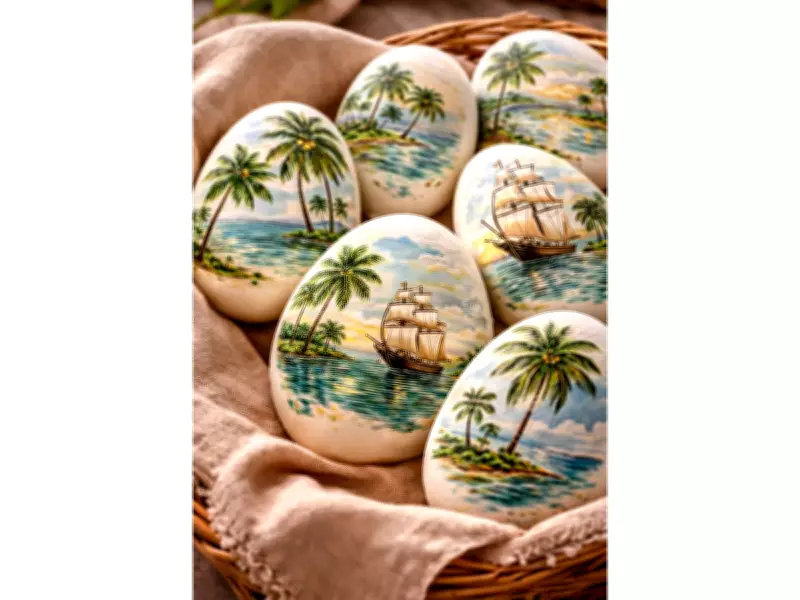
Tsarina fondly remembers painting Easter eggs from the bakery's supplies. "Unlike today's chocolate eggs, they were made of plaster of Paris in my youth. We'd shop in Broadway for small toys like cars and whistles to fit inside, and I'd paint coconut trees, landscapes, and ships on the shells," she shares.
Did You Know?
The term indriappam or inriappam derives from INRI, an acronym for Iesus Nazarenus, Rex Iudaeorum (Jesus of Nazareth, King of the Jews), which was inscribed on Jesus's cross.