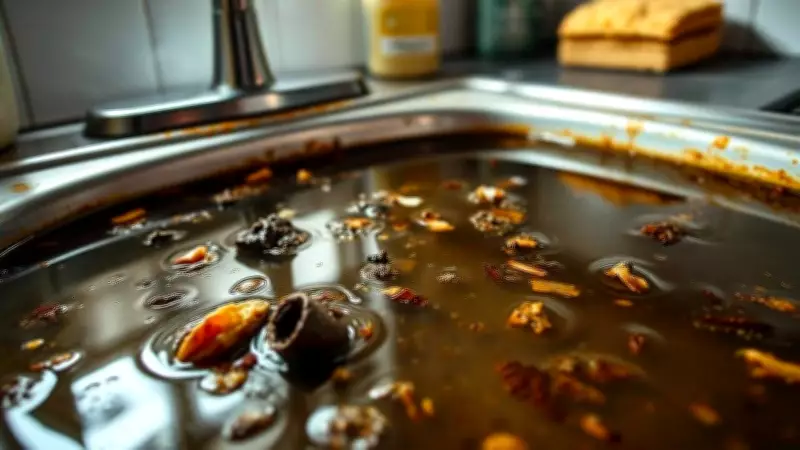
The Unseen Menace in Your Pipes: The Rise of Fatbergs
We have all stood at the sink, watching water drain away, perhaps celebrating the removal of a stray noodle or hair. However, the real threat lies invisible yet stubbornly sticky. An accumulation of fat, oils, and grease, known as FOG, is silently hardening into a concrete-like substance deep within the plumbing of countless homes. Even if you avoid pouring bacon grease directly down the drain, you might still be fostering a fatberg.
The Chemistry Behind Kitchen Clogs
This issue extends beyond mere disposal habits; it involves complex chemical reactions when grease mixes with water. Many assume greasy substances float as a thick layer, but in bustling kitchens, grease breaks into thousands of minuscule droplets that slip past easy capture. These particles drift through pipes as sludge, awaiting the right conditions to adhere permanently.
Why Dishwashers Exacerbate the Problem
Modern plumbing systems enable faster cleaning, yet this technology may inadvertently worsen the very issues we aim to resolve. Manual dishwashing tends to produce larger grease globules, which are simpler to trap compared to the finer droplets generated by dishwashers.

A comprehensive study published in the journal Water Research uncovers the hidden magnitude of this dilemma. Researchers discovered that approximately 80 percent of grease particles from dishwashers measure smaller than 45 micrometres. For context, a human hair is about 70 micrometres wide. These tiny particles easily bypass standard grease traps and interceptors, flowing unchecked into main sewer lines.
The Saponification Process: From Soap to Stone
Once inside the plumbing, these particles undergo saponification, a process akin to soap-making but with a harsh twist. Instead of yielding soft, fragrant bars, it results in a hard, wax-like substance. The investigation notes that fatty acids combine with calcium in concrete pipes and sewage, forming "calcium soaps" that harden like stone. This explains why plumbers often extract solid, rock-like obstructions.
Debunking the Baking Soda and Vinegar Myth
A popular home remedy involves baking soda and vinegar, celebrated for its satisfying foamy reaction. However, scientifically, this method fails to address fat blocks due to their chemical composition. Simple solutions like these prove ineffective. Emphasizing source control, such as pre-wiping dishes, is vital to prevent expensive clogs.
According to a review titled International evolution of fat, oil and grease (FOG) waste management, grease buildup accounts for a staggering 40 to 70 percent of global sewer blockages. The study highlights that these deposits often incorporate other solids like wet wipes and food scraps, creating reinforced structures that demand high-pressure jetting or mechanical removal.
Source Control: The Ultimate Solution
The research conclusion is clear: source control is the only effective strategy against recurring blockages. Homeowners should first revise pre-washing techniques. Avoid relying on dishwashers for fatty residues; instead, use paper towels to remove visible grease and oil from plates and pans before washing.
Smart Pre-Washing Tips for Clear Drains
To ensure your drain remains unblocked, remember it is designed solely for water passage. Never discard cooking oil down the drain; even hot oil solidifies upon contacting cold plumbing. Store used grease in an old glass bottle or empty coffee tin for disposal.
For maintenance, flush pipes weekly with a pot of hot water mixed with degreasing dish soap. This helps expel free-floating debris before it reacts with calcium and hardens. Understanding this hidden battle within your plumbing can prevent "concrete" formation, keeping your kitchen operational without emergency plumbing calls.