

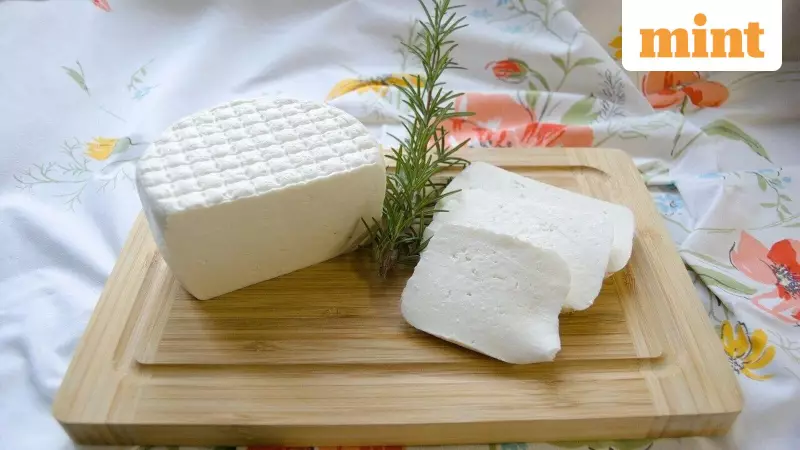
Is the paneer you buy from your local vendor the real deal? India's top food safety watchdog is stepping in with a plan to help consumers answer that crucial question. The Food Safety and Standards Authority of India (FSSAI) is drafting stricter norms to clearly distinguish between pure, milk-based paneer and its non-dairy lookalikes flooding the market.
The Plan: Clear Labels and Coloured Identifiers
According to a proposal reviewed by Mint and confirmed by two government officials, FSSAI intends to make it mandatory for paneer substitutes to be labelled as "paneer analogues." These products, made from ingredients like vegetable oil and skimmed milk powder, will be barred from using any dairy-related terminology on their packaging.
To make the distinction visually immediate, these analogues will have food colour added to them, ensuring they do not mimic the classic white appearance of real dairy paneer. Furthermore, they will only be permitted to be sold in sealed packages, not loose. The regulations also mandate that the nutritional profile of these analogues must match that of real paneer, with standards for fat and protein content potentially requiring at least 80% milk constituents.

"Currently, analogues are designed to mimic the white, creamy appearance of traditional or real paneer," said the first government official, who spoke on condition of anonymity. "The proposed regulations aim to empower consumers to make informed choices instantly and promote healthy eating."
A Massive Market and a Widespread Problem
This regulatory push addresses a significant issue in India's vast ₹65,000-crore domestic paneer market. Organised brands like Amul, Mother Dairy, and Parag account for only about 10% of sales. The remaining 90% is controlled by the unorganised sector, where non-dairy substitutes are often sold without any disclosure, especially during festivals when demand peaks.
Price is a major driver for these fake products. While loose paneer typically sells for around ₹340 per kg, branded, packaged paneer is priced closer to ₹460 per kg. The health implications, however, are severe. Genuine paneer is rich in protein and healthy fats, while analogues often contain unhealthy trans fats and lack nutritional value.
"Analogue paneer looks like real paneer but health-wise it is poor," warned Dr. Suranjit Chatterjee, a consultant at Apollo Hospitals, Delhi. "It often contains trans fats which are bad for the body, and lacks the natural nutritional value of milk protein."
Industry and Regulatory Response
The proposal suggests amending the Food Safety and Standards Regulations, 2011, to specifically regulate dairy analogues misrepresented as paneer. The matter was discussed in an FSSAI Central Advisory Committee meeting and is currently under consultation.
Industry leaders have welcomed the move for greater transparency. Jayatheertha Chary, deputy managing director of Mother Dairy, stated that a clear distinction is essential to safeguard consumer trust and curb misleading practices. He noted a growing consumer shift towards packaged paneer for assured hygiene and quality.
R.S. Sodhi, past president of the Indian Dairy Association, emphasized that the term "paneer" itself implies a dairy product. He argued that paneer should not be sold loose, as packaged sales ensure consumers know what they are buying. "The loose market remains vulnerable to adulteration," he added.
Authorities have repeatedly tried to crack down on adulterated paneer through seizures. Just before Diwali in October, officials in Delhi-NCR destroyed 500 kg of fake paneer in Noida. More recently, on Christmas Eve, the Union Health Ministry took to social media platform X to caution consumers against fake paneer, highlighting the importance of awareness for making safe food choices.
The final decision from FSSAI is awaited, but the proposed rules mark a significant step towards cleaning up a staple ingredient in India's vegetarian diet.






