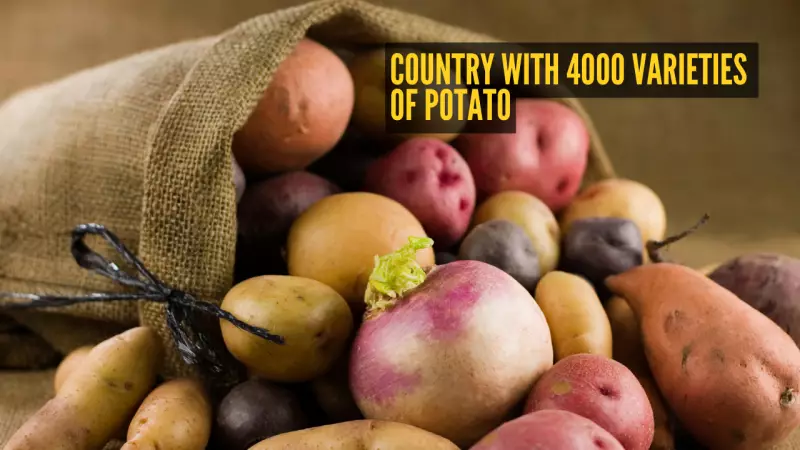
When we think of potatoes, India often comes to mind as a major producer and consumer. However, the title for the greatest diversity of this humble tuber belongs to a country far from the Indian subcontinent. Peru, in South America, is the true homeland of the potato, nurturing an astonishing estimated 4000 varieties of native potatoes, or landraces.
The Andean Heartland of Potato Diversity
According to a study titled 'Dynamic guardianship of potato landraces by Andean communities and the genebank of the International Potato Center', this incredible biodiversity is concentrated in the Andes mountains. Of the roughly 4000 varieties cultivated across the region, a remarkable 3000 are found within Peru itself. These are not commercially bred potatoes but landraces—locally adapted genotypes carefully conserved by farmers across the diverse and challenging conditions of the Andean highlands.
A History Rooted in Ancient Civilisations
The story of the potato begins in this very region. Historical evidence suggests that the first potatoes were domesticated between 7,000 to 10,000 years ago by indigenous peoples in the areas surrounding the Peruvian Andes Mountains and Lake Titicaca. Civilisations like the Incas were among the early cultivators of this vital crop, which would eventually spread across the globe.

The variety is simply breathtaking. These potatoes come in a stunning array of shapes, sizes, textures, and colours. Beyond the common brown and yellow, you can find vibrant blues, deep purples, and bright pinks. Some well-known Peruvian varieties include:
- Papa Blanca
- Purple Peruvian Potato
- Papa Huamantanga
- Blue Peruvian Potato
- Papa Negra Andina
- Papa Huayro
Nutritional Powerhouse and Culinary Star
Beyond their visual appeal, potatoes are a functional food packed with significant health benefits. Classified as a starchy vegetable, they are rich in complex carbohydrates that provide steady energy. Despite their starch content, their high water content gives them a lower energy density compared to other carb sources.
They are an excellent source of vitamin C, potassium, and B vitamins, supporting immunity, heart health, and proper nerve function. When consumed appropriately, they contribute to improved nutrient intake, offer antioxidant effects, and support cardiovascular health.
A Taste of Peru: Iconic Potato Dishes
This rich potato heritage is deliciously showcased in Peruvian cuisine. Here are some must-try dishes that celebrate the tuber:
Papa a la Huancaína: A beloved starter featuring boiled potatoes smothered in a creamy, mildly spicy sauce made from ají amarillo (yellow chilli), queso fresco, milk, and crackers, served cold with olives and eggs.
Causa Limeña: A vibrant, layered dish made with yellow mashed potatoes seasoned with lime and ají amarillo, typically filled with layers of avocado, tuna, chicken, or vegetables.
Papa Rellena: These are delicious stuffed potato croquettes. Mashed potato is filled with spiced ground meat, onions, olives, and boiled eggs, then shaped and fried to a perfect golden brown.
Ocopa Arequipeña: Boiled potatoes served with a uniquely flavoured sauce made from huacatay (Andean black mint), peanuts, chilli peppers, and fresh cheese, offering a deep and aromatic taste.
Carapulcra: Considered one of Peru's oldest dishes, it uses papa seca (sun-dried potatoes). These are slow-cooked with pork or chicken, peanuts, various chilli pastes, and spices, resulting in a rich, smoky, and earthy flavour.
So, while India enjoys its own special relationship with the aloo, the crown for ultimate potato diversity rests firmly in Peru, a testament to ancient agricultural traditions and incredible biodiversity that continues to feed and inspire the world.