Bengaluru Gardener Masters Art of Growing European Tulips in Tropical Climate
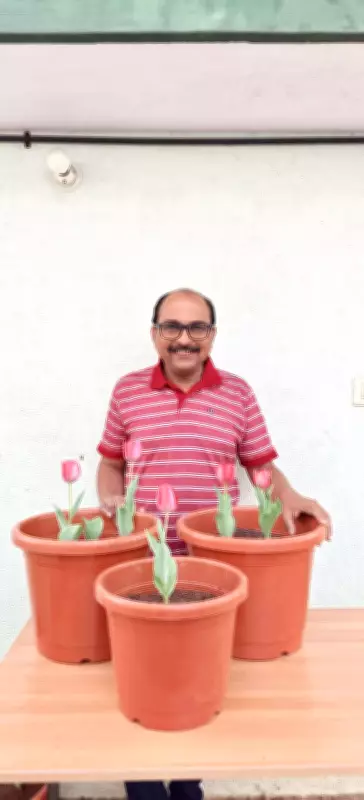
In the heart of Bengaluru's JP Nagar, urban gardener Anand Havaldar makes multiple daily visits to his garden, where a remarkable horticultural achievement is unfolding. Five European tulips have already bloomed in vibrant colors, with a sixth bud promising to join them soon. This floral spectacle represents a triumph over climatic limitations through scientific innovation and persistent dedication.
Creating Artificial Winter in a Refrigerator
"I'm cultivating three distinct European tulip varieties—Van Eijk, Daydream, and Chameleon Red—with eight bulbs of each variety planted," explains Havaldar. "The Van Eijk variety sprouted and bloomed first, marking the initial success of this challenging project."
Tulips naturally thrive in environments with cold winters featuring snowfall, followed by mild summers. Bengaluru's moderate tropical climate presents significant obstacles for growing these temperate flowers naturally. To overcome this, the 52-year-old gardener, who holds a diploma in agriculture from Gandhi Krishi Vigyana Kendra (GKVK), devised an ingenious solution.

"I created an English-style winter by storing the tulip bulbs in my refrigerator," Havaldar reveals. "The bulbs received approximately nine weeks of cold treatment to simulate the winter dormancy period essential for tulip development. This artificial chilling process tricks the bulbs into believing they've experienced their required cold season."
From Kashmir Inspiration to Parisian Assistance
Havaldar's tulip journey began during a visit to Srinagar, Kashmir, where he first encountered the breathtaking sight of crimson tulips in full bloom. The magnificent floral display left an indelible impression, planting a seed of determination to grow these flowers in his own Bengaluru garden.
"I initially brought some tulip bulbs from Srinagar and attempted cultivation in 2023, but unfortunately, the bulbs rotted," Havaldar recalls of his first unsuccessful attempt. Rather than abandoning his dream, he sought assistance from his niece Anupama, an enthusiastic gardener and scientist residing in Paris.
"She brought me three varieties of tulip bulbs from Paris, with each bulb costing approximately Rs 350," Havaldar shares. This international collaboration between Bengaluru and Paris provided the high-quality planting material necessary for his ambitious project.
Scientific Cultivation Techniques and Emotional Rewards
The actual planting occurred during the first week of January using a carefully prepared soil mixture. "I used a fresh soil blend containing garden soil, vermicompost, and cocopeat," Havaldar explains. "The soil preparation and bulb preservation methods combined my gardening experience with expert guidance from Rajesh Bhalla of Parmar University of Horticulture and Forestry in Himachal Pradesh."
Meticulous organization accompanied the planting process, with each pot clearly labeled for identification. Specialized care included ensuring adequate sunlight exposure, implementing controlled watering schedules, and isolating the tulip pots from other plants to prevent potential pest infestations and diseases.
"Watching the crimson tulips swaying gently in the wind evokes powerful feelings of passion and love," Havaldar expresses. "Being surrounded by these beautiful flowers fills me with immense joy and satisfaction." The experience has even given him deeper appreciation for Sylvia Plath's poem 'Tulips,' which was inspired by a bouquet of get-well flowers.
Professional Background and Horticultural Passion
Beyond his gardening achievements, Anand Havaldar serves as a senior engineer at Nexteer Automotive India in Bengaluru. His professional engineering background complements his agricultural education, creating a unique skill set that enables innovative approaches to horticultural challenges.
This successful tulip cultivation project demonstrates how scientific knowledge, creative problem-solving, and international collaboration can overcome environmental limitations. Havaldar's achievement serves as inspiration for urban gardeners facing similar climatic constraints, proving that with proper technique and determination, even the most challenging horticultural goals can be realized.