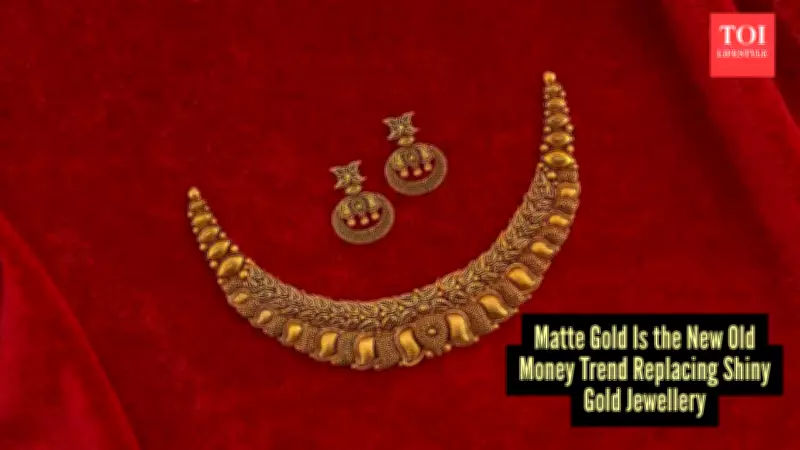
The Rise of Matte Gold: A Subtle Shift in Indian Jewelry Trends
If you have been browsing your Instagram feed or observing the latest airport styles of Bollywood celebrities, you might have detected a gradual transformation. The dazzling, mirror-like sheen of yellow gold—once the quintessential emblem of a "big fat Indian wedding"—is discreetly stepping aside. In 2026, the brilliance is being subdued, and texture is emerging as the dominant force. Welcome to the era of matte gold, the "Quiet Luxury" selection that is redefining perceptions of opulence, from South Bombay to South Delhi.
The "New Money" Dilemma in Modern Gold Fashion
Let us be candid: in India, we adore our gold. However, there exists a clear distinction between the auspicious 22k gold stored in vaults and the jewelry worn to casual brunches. The issue with high-polish, excessively shiny gold in contemporary lifestyle contexts is its susceptibility to imitation. Stroll through any bustling high-street market, and you will encounter rows of brassy, mirror-finish chains that replicate the appearance of pure gold. Since mass-produced fake jewelry depends on that "bling" factor to attract attention, wearing authentic, high-shine pieces can paradoxically make your genuine investment resemble "artificial jewellery." It feels "loud," and currently, both global and local aesthetics prioritize subtlety and whispers over noise.
The Heritage Appeal of Matte Finishes
So, why is matte gold considered the superior option for the fashion-forward individual? It boils down to one essential vibe: Heritage. Authentic, generational wealth—the type that feels "Khandani"—seldom appears brand new. Reflect on your grandmother's vintage bangles or that antique necklace handed down through the family. Over decades, gold naturally softens, developing a warm, muted glow known as patina. Matte, brushed, and satin finishes emulate this effect immediately. They imply the piece possesses history, even if purchased recently. This aligns perfectly with the "Sabyasachi effect" observed in celebrity weddings, where jewelry tends to be heavy, dull, and antique-finished rather than bright and yellow. It signifies artisanship—the notion that a human hand hammered or brushed the metal—instead of a machine polishing it to a soulless mirror shine.

From Traditional Temple Jewelry to Contemporary Boardroom Styles
This trend is not entirely novel for Indian culture; it represents a return to roots. Indian Temple jewelry has long celebrated matte, oxidized finishes. What is evolving is the styling approach. We are transitioning away from intricate, deity-heavy designs for everyday wear and adopting the texture of temple jewelry on modern, minimal silhouettes. Matte gold is inherently more flattering for Indian skin tones. While high-shine metal reflects light and sits atop the skin, matte gold absorbs light and blends with the complexion, creating a warmer and more intimate feel. Additionally, it suits the "daily driver" mentality. A mirror-finish ring displays every fingerprint and scratch, whereas a hammered cuff or brushed signet ring conceals the wear and tear of daily life. It conveys that you are too occupied building your empire to fret about scuffing your ring—and that nonchalance epitomizes true luxury.
Practical Tips for Incorporating Matte Gold into Your Wardrobe
If you are seeking to refresh your jewelry collection, look for pieces that bridge traditional and modern aesthetics:
- The Statement Cuff: Replace a stack of shiny bangles with one wide, hammered gold cuff. It complements a crisp white shirt as effectively as a linen saree.
- Coin Necklaces: Replicas of ancient currency naturally exhibit that worn, matte appearance. Layer them over a turtleneck for an Alia Bhatt-inspired off-duty vibe.
- Brushed Signet Rings: A subtle power move for the office. The muted finish renders it professional rather than flashy.
Ultimately, matte gold embodies an "If You Know, You Know" aesthetic. It does not need to clamor for attention to validate its worth—and neither do you.