In the lush, forested valleys of western Arunachal Pradesh, a quiet revolution is unfolding. Led by the women of the Monpa community, a powerful movement is breathing new life into ancient traditions, from climate-resilient architecture and rare cuisine to endangered crafts. This revival is not just about preserving the past; it's a forward-looking model that links heritage directly to sustainable livelihoods and critical wildlife conservation.
Damu's Heritage Dine: A Culinary Beacon
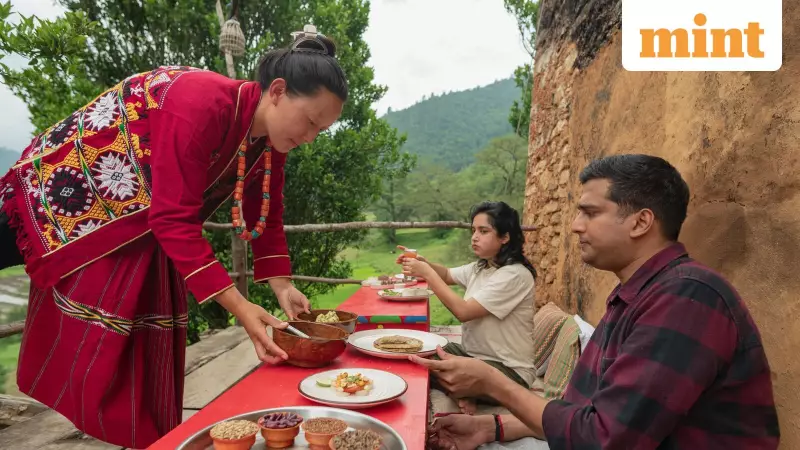
At the heart of this transformation is Damu's Heritage Dine, an 11-seater restaurant that has become a sensation on the busy Tawang tourist circuit. Managed by a team of eight women, the venture is housed in a 150-year-old Monpa heritage structure that belongs to the extended family of one of the founders, Rinchin Jomba. Started in March 2024, Damu's—named after the word for 'daughter'—was born from a collaboration with WWF India.
The restaurant offers an authentic taste of Monpa cuisine, a stark contrast to the generic fare found elsewhere. Dishes like takto khazi (buckwheat noodles), an orange salad with pickled radish, and the remarkable phursing gombu—a cornflour tart filled with oleoresins from the allergenic Chinese lacquer tree—tell stories of the land and its people. The demand is so high that tables now need to be booked a day in advance, generating an estimated ₹1.5 lakh per month during peak season (October-January), with about half being profit.

"We are showcasing heritage without commodifying it. Damu's highlights how tradition too can evolve and keep up with the times," says Jomba, 41, who plates dishes with a fine-dining aesthetic. More than a restaurant, Damu's is a statement against the social stigma increasingly attached to indigenous mud-and-stone homes, demonstrating how these climate-suited structures can be adaptively reused.
Craft-to-Conservation: Weaving a Sustainable Future
The culinary success is part of a broader craft-to-conservation model championed by women's collectives across West Kameng and Tawang districts. In Nyukmadung and Chug, the social enterprise It's All Folk, led by designer Namrata Tiwari, operates through the brand Norbu. This initiative markets products from traditional women's collectives known as tsokpas, like Dangnga and Brokpa.
The model is built on a farm-to-fashion approach. Yak and sheep wool is sourced directly from the Brokpa pastoralists, a community whose livelihood is under severe threat. "Climate change forced the Brokpas to shift to higher altitudes. Attacks on yaks by dogs and disease outbreaks have put their pastoral life in peril," explains Kamal Medhi, Senior Expert for Community-Based Conservation at WWF India. By taking on production, design, and marketing, Norbu provides a vital economic lifeline, currently engaging 45 yak herders and 27 women across two collectives, with a target of 100 beneficiaries.
Similarly, in the Chug Valley, a self-help group led by Dorji Choijam (Dorji Ama) is reviving the centuries-old art of mon-shugu paper making. With training from Delhi-based Tripti Shukla of the Vanwasi-Adiwasi Foundation, the women now create diaries using this sturdy, sustainable paper from the Shugu-Sheng tree bark, dyed with walnut leaves and rhododendrons. "Tradition lives on only when we allow it to breathe and adapt," says Choijam, who has trained 40 women and her own family in the craft.
Funding Conservation Through Community Custodianship
The financial surplus from these heritage ventures is ploughed back into protecting the region's rich ecology. The Monpa community holds custodianship of nearly 60% of the forested land in western Arunachal. Since 2004, WWF India has worked with locals to establish Community Conserved Areas (CCAs), a framework that empowers villages to manage their natural resources.
This model has yielded significant conservation wins, most notably securing over 1,500 square kilometers of red panda and snow leopard habitat. The income from tourism and crafts directly funds these efforts. For instance, surpluses from the Themang Bapu CCA in West Kameng finance forest patrolling to curb illegal hunting and harvesting.

Women are at the fulcrum of this integrated approach. "Women used to play a significant role in pastoral communities. Through the CCAs, the idea was to restore their agency," says Medhi. Of the nine CCAs in West Kameng and Tawang, most are led by village councils where women play a pivotal role.
The movement is inspiring a generational shift in pride. Inspired by Damu's, 24-year-old manager Leki Chomu started a living museum in her 200-year-old ancestral home. The 1,000-year-old village of Mirba in Tawang has been declared a heritage village. The road is long, but the foundation is laid. As Namrata Tiwari of It's All Folk notes, "The results will start coming in a decade." For now, the Monpa women, through their collectives, are ensuring their heritage is not a relic of the past, but a living, breathing, and sustainable foundation for the future.