Thirukkural's Timeless Wisdom: The Power of Unspoken Communication
Thirukkural with the Times delves into the real-world applications and profound lessons embedded within the classic Tamil masterpiece, the 'Thirukkural'. Authored by the revered Tamil poet and philosopher Thiruvalluvar, this monumental text comprises 1,330 concise couplets, each containing just seven words. It is systematically organized into three distinct books that explore the core principles of virtue, wealth, and love, establishing itself as one of history's greatest works on ethics and morality.
The influence of the Kural extends far beyond its origins, shaping scholars, leaders, and thinkers across diverse social, political, and philosophical domains. Motivational speaker, acclaimed author, and diversity advocate Bharathi Bhaskar provides insightful exploration into this enduring masterpiece. The art of interpreting subtle cues predates modern management schools, strategic manuals, and perhaps even the advent of written language itself. Long before the term 'communication skills' entered our lexicon, there existed individuals who possessed the innate ability to comprehend without the need for spoken words.
The Silent Dialogue of Krishnadevaraya and Appaji
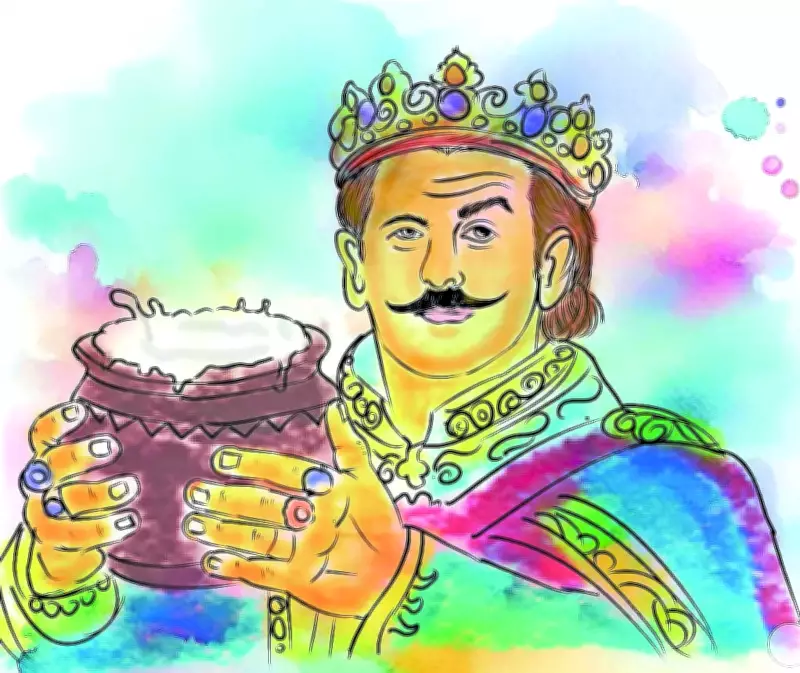
A compelling narrative involves King Krishnadevaraya and his minister, Appaji. The king and his trusted advisor once wandered incognito through the bustling streets, aiming to gain genuine insight into the lives of ordinary citizens. As they passed by a modest dwelling, the enticing aroma of simmering soup wafted into the street. The king's eyebrow lifted ever so slightly—a mere half-centimeter movement. Not a single word was uttered. Yet, Appaji immediately grasped the unspoken message.

He remarked, "Oh King, the soup lacks salt; that is why its aroma is distinct. When a woman cooks without being attuned to the scent, it indicates her husband's absence. This neighborhood is not inhabited by traders, so he has not departed for business. With no ongoing wars, he has not left for battle. The only plausible conclusion is that he has abandoned his wife, leaving her to live in profound distress."
The king remained silent, offering only a simple nod of acknowledgment. The following day, Appaji presented a man before the royal court—the husband who had deserted his wife. After receiving a stern admonition from the minister, the man consented to return home. Overwhelmed with emotion, the woman, tears streaming down her face, expressed her gratitude to the king and pondered how he had discerned her suffering. Appaji calmly stated, "The king possesses omniscient knowledge and extends protection to all."
While the historical accuracy of this tale may be debated, its underlying truth remains irrefutable. A leader's strength is intrinsically linked to the individual beside them who can interpret what remains unspoken. In contemporary organizational settings, this dynamic is often termed "alignment with the boss." Throughout history, the most exceptional leaders have frequently been supported by an intuitive second-in-command capable of reading their thoughts, anticipating decisions, and acting proactively without explicit directives. This represents a symbiotic partnership—silent, remarkably efficient, and immensely powerful.
Symbolic Conversations: The Parsi Migration to India
Our historical records are replete with examples of such silent, yet eloquent, conversations. Between the 8th and 10th centuries, Zoroastrians fled Persia (modern-day Iran) to escape religious persecution, eventually arriving at Sanjan in Gujarat. Their leader, the esteemed matriarch of the community, sought permission from the local ruler, Jadi Rana, to settle within his territory. She dispatched a beautifully adorned vessel to the king—completely empty.
The king immediately comprehended the symbolic gesture. He filled the vessel to its very brim with milk and returned it, conveying a silent message that his land was already saturated and could not accommodate additional inhabitants. The community leader, in turn, understood this cue perfectly. She added sugar to the milk and sent the vessel back once more. Her response was both elegant and unequivocal: "We will integrate seamlessly and enhance your society, just as sugar dissolves and sweetens milk."

Moved by this profound symbolic exchange, King Jadi Rana opened his gates, thereby facilitating the settlement of the Parsis in India—a monumental historical event precipitated entirely by a conversation conducted through symbols.
Thiruvalluvar's Insight on Unspoken Intentions
The ability to perceive what others overlook and to interpret what they leave unsaid is a critical skill. Thiruvalluvar recognized the paramount importance of this aptitude centuries ago. In the chapter dedicated to understanding unspoken intentions (Kuripparidhal), he articulates in Kural 708:
"Mugamnokki Nirkka Amayum; Agamnokki Utradhu Unarvaar Perin."
This translates to: If a leader is fortunate enough to have an individual who can discern their thoughts simply by observing their facial expressions, then the leader need only offer a glance—all necessary actions will be executed accordingly. This principle holds true not only within the realms of ancient kingdoms and modern organizations but also in the intricate dynamics of personal relationships, where silent understanding often forms the bedrock of deep connection and trust.