Singapore's Temasek Wreck: A 14th-Century Porcelain Treasure Rewrites Maritime History
Forget tales of buried treasure—in the waters off Singapore, the real historical riches have emerged as shiploads of exquisite ancient crockery. A groundbreaking maritime excavation has unveiled the Temasek Wreck, a remarkable 14th-century trove dating from the Yuan dynasty era, offering unprecedented insights into early trade networks.
Unearthing a Ceramic Bonanza
Led by archaeologist Michael Flecker of HeritageSG, under the auspices of the National Heritage Board, meticulous digs conducted between 2016 and 2019 recovered an astonishing 3.5 tonnes of ceramic artifacts. This haul includes both delicate shards and remarkably intact pieces, with the standout discovery being an extraordinary cache of rare blue-and-white porcelain.
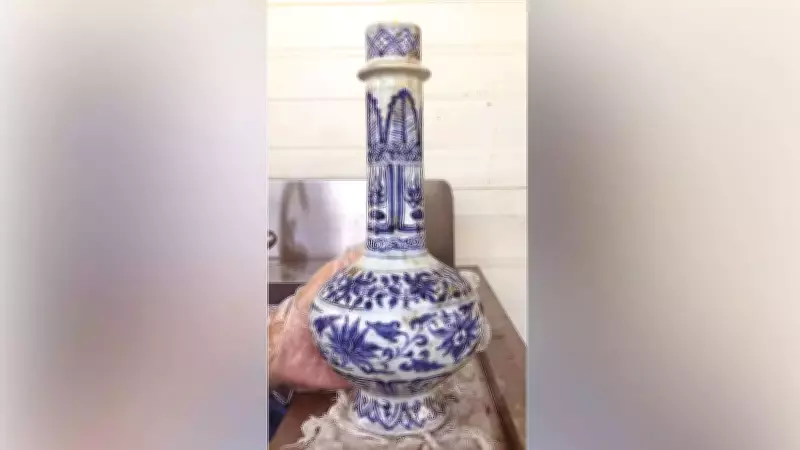
Porcelain Jackpot: The wreck's star cargo is a massive 136 kg collection of Yuan blue-and-white ware, originating from the famed Jingdezhen kilns. This comprises over 2,350 shards and several near-complete pieces. Flecker describes this find as unparalleled in scale, with the quality of the fragments being so exceptional that they are deemed "superlative" even in their broken state.

Complementing this central treasure are diverse ceramics from southern China's kilns, showcasing the mid-14th-century's rich production. The collection includes:
- Longquan celadons with their distinctive green glazes
- Jingdezhen qingbai and shufu wares
- Dehua whiteware known for its purity
- Fujian greenwares
- Cizao storage jars used for transporting goods
Rewriting Historical Narratives
As the first ancient shipwreck ever discovered in Singapore's territorial waters, the Temasek Wreck's cargo provides compelling evidence of a Chinese junk sailing from the port of Quanzhou to Temasek—the bustling historical port that preceded modern Singapore. This discovery illuminates the extensive maritime networks of the Yuan era, a period when Jingdezhen's ceramic output, which would later peak under the Ming and Qing dynasties, was already fueling burgeoning global trade.
The significance extends beyond Singapore's shores: These well-preserved artifacts serve as a crucial reference point for dating ceramics found across Southeast Asia, helping archaeologists better understand regional trade patterns and cultural exchanges during this pivotal historical period.
This maritime treasure trove not only enriches Singapore's heritage narrative but also reshapes our understanding of early Asian trade dynamics, proving that the region's waters hold stories far more valuable than any fictional pirate's bounty.