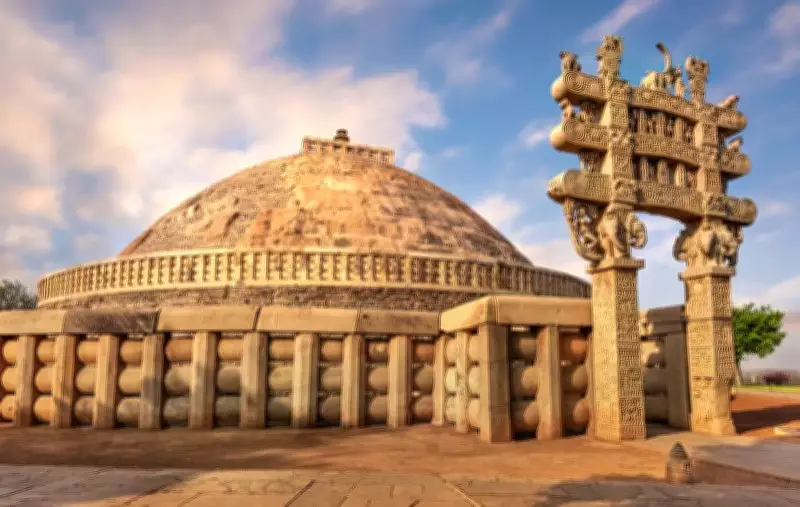
The Enduring Legacy of the Stupa in India's Sacred Landscape
The stupa, a distinctive mound-like structure, stands as one of the most iconic and influential architectural forms in India's history. Originating in ancient times, it has played a crucial role in shaping the nation's spiritual and cultural terrain, leaving an indelible mark that extends far beyond its physical presence.
Architectural and Spiritual Significance
Initially conceived as simple earthen mounds to house relics of the Buddha or other revered figures, stupas evolved into elaborate monuments symbolizing the Buddhist cosmos. Their design, often featuring a hemispherical dome, a harmika (square railing), and a central pillar, represents the path to enlightenment. This architectural form not only served as a focal point for worship but also influenced the development of temple architecture across India, blending spiritual symbolism with artistic expression.
The stupa's role extended beyond mere religious practice; it became a center for community gatherings, education, and cultural exchange. Monasteries and universities, such as Nalanda, often grew around these structures, fostering intellectual and spiritual growth. This integration of architecture with societal functions helped cement the stupa's place in India's sacred landscape, making it a beacon of peace and learning.

Influence on India's Cultural and Geographical Fabric
From the Great Stupa at Sanchi to the Dhamek Stupa at Sarnath, these monuments dot India's geography, creating a network of sacred sites that pilgrims have traversed for centuries. Their locations, often chosen for natural beauty or historical significance, contributed to the sanctification of India's terrain, turning ordinary landscapes into hallowed ground.
The spread of Buddhism under emperors like Ashoka further amplified the stupa's impact, as they were erected across the subcontinent to propagate Dharma. This not only unified diverse regions under a shared spiritual framework but also promoted artistic styles and construction techniques that enriched India's architectural heritage. Over time, elements of stupa design were absorbed into Hindu and Jain traditions, showcasing their cross-cultural appeal.
Modern Relevance and Preservation
Today, stupas continue to inspire awe and reverence, attracting tourists and devotees alike. Their preservation is vital for understanding India's ancient past and its ongoing spiritual journey. Efforts by organizations like the Archaeological Survey of India highlight the importance of these structures in maintaining cultural continuity.
In summary, the stupa is more than just an ancient mound; it is a testament to India's rich spiritual legacy. By shaping sacred spaces, influencing architecture, and fostering community, it has left a lasting imprint on the nation's identity, reminding us of the profound connections between faith, art, and geography.