Stephen Fry Connects Ancient Myths to Modern AI at Jaipur Literature Festival
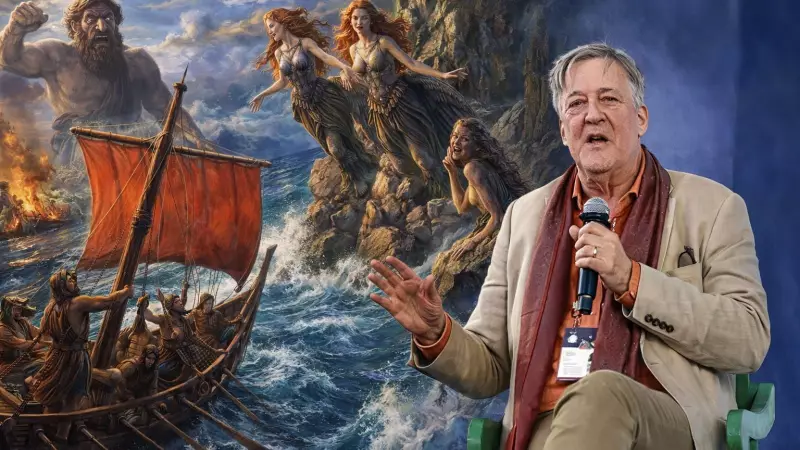
Inside a packed tent at the Jaipur Literature Festival, the air felt thick with anticipation. Author Stephen Fry stood on stage, his presence commanding like a modern-day Olympian. He was discussing his retelling of Homer's "The Odyssey" with Cambridge classicist Simon Goldhill and ancient historian Josephine Quinn. What began as a literary discussion quickly transformed into a deep examination of why this ancient epic still speaks powerfully to our contemporary world.
The Penelope Debate: Passive Wife or Formidable Intelligence?
The conversation turned to one of literature's enduring questions. Josephine Quinn raised the issue of gender dynamics in The Odyssey. She pointed out how Penelope waits faithfully for twenty years while Odysseus travels freely, encountering various women along his journey. Was this simply ancient sexism presented as epic storytelling?
Simon Goldhill responded with enthusiasm for the intellectual challenge. He argued strongly against reducing Penelope to a symbol of passive waiting. "She is the poem's most formidable intelligence," Goldhill insisted. "Penelope actually out-tricks the master trickster himself." He reminded the audience that when Odysseus finally returns home, it is Penelope who controls the recognition process. She tests him thoroughly before accepting his identity.

Goldhill also challenged simplistic readings of Odysseus's adventures. He noted that when Odysseus sleeps with the goddess Calypso, the text suggests coercion rather than willing participation. "To sleep with a goddess risks being unmanned," Goldhill explained. He concluded with a statement that drew both laughter and thoughtful nods from the audience: "Is The Odyssey patriarchal? Of course it is. Is it simply patriarchal? Absolutely not."
Myths That Behave Like Literature
Stephen Fry shared his personal journey with Greek mythology. His fascination began not in formal education but through the stories themselves. He was captivated by their excess—their wit, their sexuality, their sheer strangeness. For Fry, The Odyssey represents a crucial turning point where myth begins to "behave like literature." It develops self-awareness and psychological complexity that feels remarkably modern.
Fry described Homer's gods not as moral authorities but as capricious superhuman forces. "They look the way the world feels," he said. "Beautiful, terrifying, and fundamentally unfair." This perspective resonated through the discussion, highlighting how ancient texts capture timeless human experiences.
Goldhill offered another lens for understanding the epic. He suggested that if we strip away the monsters and magical elements, The Odyssey presents a stern lesson about consequences. Odysseus's men face terrible punishments for their transgressions. The hero himself carries scars from his own pride and decisions. The poem maintains tension between a chaotic universe and a system of cause and effect without ever fully resolving it.
The Haunting Yearning for Home
Fry identified the Greek concept of "nostos" as particularly relevant today. This haunting ache for return, for home, drives much of The Odyssey's emotional power. He quoted Calypso's taunt to Odysseus: "I suppose you miss the smoke of home." Fry suggested this yearning resonates deeply in our fragmented modern world, where traditional centers of home and hearth have dispersed.
AI as Prometheus's Fire: A Modern Warning
In a characteristically insightful leap, Fry connected ancient mythology to contemporary technology. He drew parallels between Prometheus's theft of fire and humanity's development of artificial intelligence. The Greek gods, Fry noted, were not all-powerful. They were subject to fate, time, and eventual obsolescence.
"Once humans received fire," Fry argued, "they began developing tools, systems, and intelligence that gradually made the gods redundant." He issued a warning that feels particularly urgent today. Humans are now creating AI systems that begin as servants and tools. But these creations may not remain subordinate forever.

The anxiety Zeus expressed about fire, Fry suggested, echoes our contemporary fears about consciousness, autonomy, and control. Civilizations, like gods, often assume their permanence until they cease to exist. Fry ended on this thoughtful, somewhat dark note—a fitting conclusion for a discussion about The Odyssey. After all, Homer's epic is not about triumph but survival. It explores how intelligence can be used both creatively and destructively. It examines the dangerously thin line between human ingenuity and catastrophe.
The Jaipur Literature Festival discussion demonstrated why The Odyssey continues to provoke debate rather than consensus. It resists simple moral judgments while offering profound insights into human nature—insights that feel remarkably relevant in our age of artificial intelligence and technological transformation.