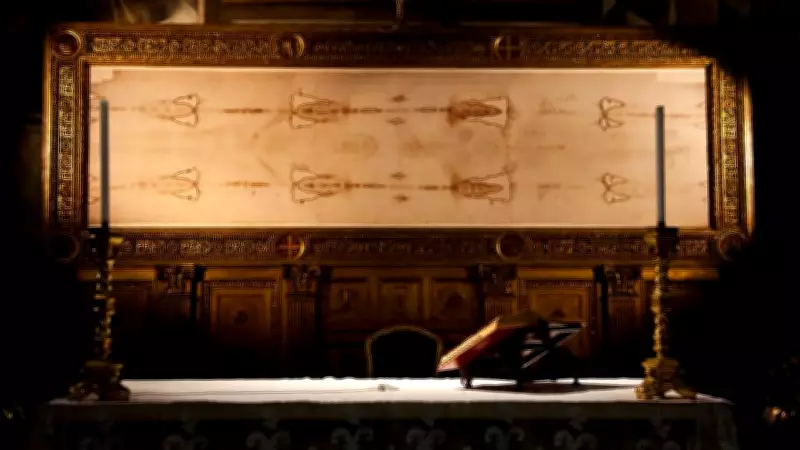
Fresh Academic Clash Over Shroud of Turin Authenticity Erupts in Peer-Reviewed Journal
A renewed and intense debate concerning the authenticity of the revered Shroud of Turin has ignited within the pages of the prestigious peer-reviewed scientific journal Archaeometry. This latest scholarly confrontation centers on a direct challenge to a recent study that proposed the iconic relic could be a sophisticated medieval forgery.
Digital Modeling Study Sparks Controversy
The controversy was triggered by research published last summer by Brazilian 3D designer and investigator Cicero Moraes. His study employed advanced digital modeling techniques to analyze how linen fabric would naturally drape over two distinct forms: a realistic human body and a shallow carved relief placed on a flat surface. Moraes concluded that the specific proportions and subtle distortions visible on the Shroud's mysterious image aligned more convincingly with the characteristics produced by a shallow bas-relief template than with the natural folds of cloth enveloping a human form.
Scholars Push Back, Citing Critical Flaws
In a newly published and robust response within Archaeometry, a team of Shroud specialists—Tristan Casabianca, Emanuela Marinelli, and Alessandro Piana—forcefully argue that Moraes’ digital reconstruction contains significant methodological weaknesses. They contend it fails to adequately account for crucial physical properties of the cloth itself.

The Shroud, preserved under careful custody in Turin’s Cathedral of St. John the Baptist, measures approximately 14.5 feet in length by 3.7 feet in width. It bears the faint, haunting, front-and-back image of a man displaying wounds consistent with historical accounts of Roman crucifixion. Since its first documented appearance in France during the 14th century, the linen has been venerated by countless Christians as the authentic burial cloth of Jesus Christ, while skeptics have questioned its origins for an equal duration.
Historical Context and Scientific Disputes
The debate is deeply rooted in prior scientific investigations. In 1989, a much-publicized radiocarbon dating analysis placed the cloth's origin between 1260 and 1390 CE, squarely within the medieval period. However, subsequent researchers have vigorously challenged these findings, suggesting the tested material sample may have been taken from a later medieval repair section rather than the original ancient weave.
Moraes’ recent study did not revisit the carbon dating controversy. Instead, it focused exclusively on the enigmatic mechanism of image formation. By simulating fabric conformity, he proposed the Shroud's image could have been created by draping linen over a shallow relief—potentially crafted from wood, stone, or metal—designed to transfer the figure onto the cloth.
Counterarguments: Surface Fibers and Blood Evidence
Casabianca, Marinelli, and Piana counter that this approach critically overlooks two definitive features of the Shroud. They emphasize that the mysterious image exists only at a superficial level, affecting solely the outermost fibers of the linen. Furthermore, they cite separate forensic analyses that have identified what they describe as authentic human blood residues on the cloth. According to their argument, these specific characteristics significantly complicate the theory of a medieval artisan fabricating the relic using a simple carved template.
Historical and Artistic Inconsistencies Highlighted
The responding scholars also challenge the historical framework supporting the forgery theory. Moraes referenced historian William Dale, who suggested the Shroud's artistic style appears Byzantine. Casabianca's team notes that such an aesthetic would both predate and be geographically distant from 14th-century France, where the Shroud first historically surfaced. They argue this discrepancy weakens the suggestion that a medieval French craftsman conceived and executed the image, particularly one depicting a nude, front-and-back, post-crucifixion Christ—a motif they assert was virtually nonexistent in Western medieval art of that era.

Ongoing Academic Exchange and Ecclesiastical Caution
Moraes has issued a reply in Archaeometry, defending his methodological approach. He described his work as strictly technical, focusing on the mechanics of how human forms transfer onto fabric rather than engaging with theological or devotional claims. He also pointed to four artworks from the 11th to 14th centuries as potential visual precedents, though his critics maintain that none accurately replicate the Shroud’s unique and distinctive full-body composition.
Beyond this heated academic exchange, church authorities have advocated for prudence. Cardinal Roberto Repole, the Archbishop of Turin and official custodian of the Shroud, cautioned last year against what he termed superficial conclusions. He has consistently called for more profound, rigorous, and comprehensive scientific scrutiny to unravel the enduring mystery surrounding this most famous of Christian relics.