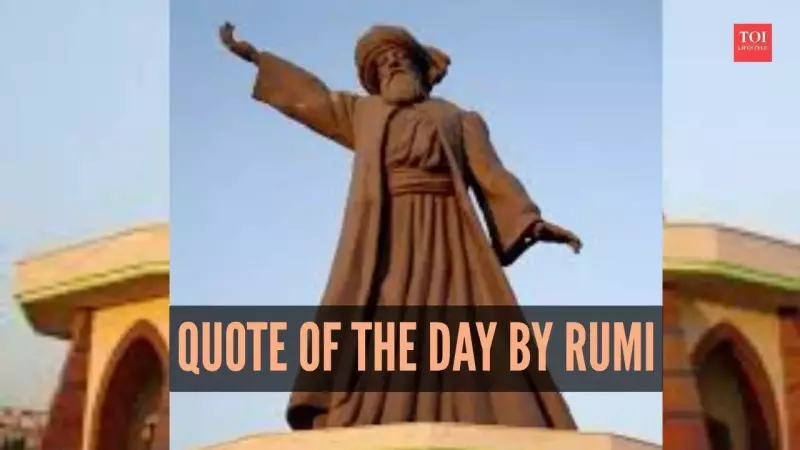
The Enduring Legacy of Rumi's Spiritual Wisdom
Jalāl ad-Dīn Muhammad Rumi remains one of history's most beloved spiritual voices. This 13th-century Persian poet, jurist, and mystic continues to speak directly to the human heart across centuries and cultures.
From Afghanistan to Turkey: A Life of Transformation
Rumi entered the world in 1207 in what we now call Afghanistan. His journey eventually led him to Konya in modern-day Turkey, where he spent significant years of his life. Despite facing considerable personal turmoil, Rumi channeled his experiences into profound writings about self-transformation, divine love, and spiritual truth.
The Universal Language of Sufi Poetry
Rumi's work emerges from Sufism, the mystical tradition within Islam, yet its appeal knows no religious boundaries. His major collections, the Masnavi and Divan-e Shams-e Tabrizi, explore the human soul's deepest yearnings for connection, liberation, and peace. Rather than offering rigid doctrines, Rumi masterfully employed metaphors, stories, and paradoxes to invite personal reflection.

His poetry continues to resonate powerfully because it addresses timeless human challenges: our struggles with ego, desire, suffering, and the universal quest for inner tranquility.
A Timeless Quote on True Peace
Consider this widely attributed Rumi saying: "Peaceful is the one who's not concerned with having more or less. Unbound by name and fame, he is free from sorrow from the world and mostly from himself."
This statement captures essential themes that recur throughout Rumi's work: liberation from ego, freedom from social status, and release from excessive wanting. The quote emphasizes freedom from comparison, freedom from needing recognition, and the deep serenity that follows when we untangle ourselves from desire and fear.
Unpacking the Meaning
Rumi presents peace as an internal state of balance rather than external circumstance. When he speaks of someone "not concerned with having more or less," he points toward liberation from constantly measuring life in terms of gain and loss, success and failure.
The phrase "unbound by name and fame" addresses our ego's attachment to identity and recognition. Rumi suggests that true freedom emerges when we stop defining ourselves by how others see or remember us.
Perhaps most profoundly, the final line about being free from sorrow "mostly from himself" acknowledges that while the world presents challenges, much suffering originates within through excessive thinking, clinging, and internal conflict. By releasing rigid desires, ego-driven ambitions, and harsh self-judgment, we reduce these internal sources of pain.
Relevance for Modern Life
Rumi's insight reminds us that peace must be discovered within, not acquired from outside. When we let go of constant seeking, of needing validation, of ego-based identities, we lighten our burdens and find comfort in simply being.
The essential realization involves understanding that freedom from sorrow depends more on self-awareness than on changing external circumstances. In today's world of constant comparison, accumulation, and recognition-seeking, Rumi's wisdom offers a refreshing counterpoint and practical guidance for cultivating genuine inner calm.
His teachings encourage us to look beyond material measures and social approval to discover the lasting peace that comes from spiritual freedom and self-understanding.