A Panjab University alumnus reflects on a bygone era of romance, when communication was uncertain, heartbreak was inevitable, and waiting was an art form. In a letter to the university, Saurabh Malik shares his memories of studying mass communication, English literature, and an MPhil at PU, where the most powerful communication system was often the complete absence of communication.
The Era of Uncertainty
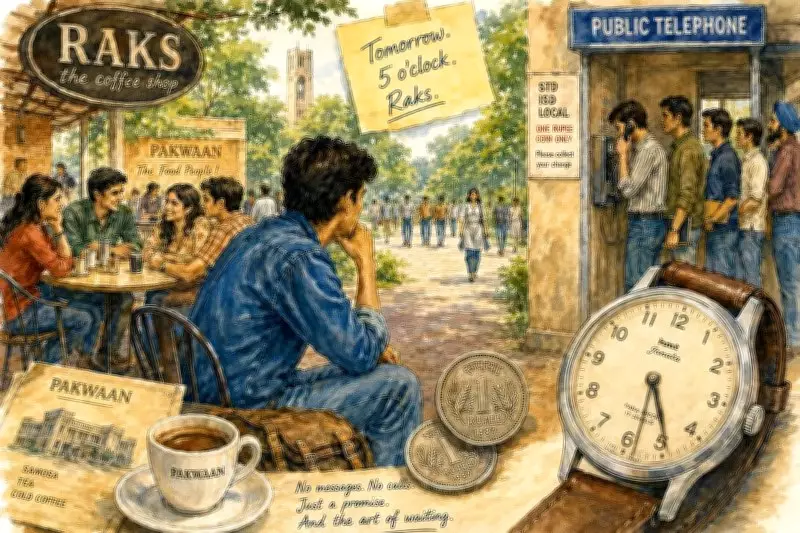
Today's students rely on location sharing, blue ticks, and instant messages. But in the past, students had faith, anxiety, and destiny. Every meeting began with a farewell. A typical exchange: 'Tomorrow. Five o'clock.' 'Where?' 'Raks.' 'Done.' That was it. No confirmation, no reminder, no 'Where are you?' Once a meeting was fixed, it acquired the status of a constitutional amendment.
The next day, you arrived and hoped the other person shared the same understanding of reality. At 5:10, optimism survived. At 5:20, philosophy arrived. At 5:30, you began questioning existence. By 6, you had either discovered enlightenment or decided never to speak to that person again. Waiting was not a bug in the system; it was the system. Every approaching figure carried possibility, every familiar face raised hope, and every stranger reminded you that expectation is humanity's favourite form of self-inflicted suffering.

Two Public Telephones for the Entire Campus
Panjab University had only two public telephones: one at the post office, and another at Capt Rajneesh Talwar's stationary shop 'Station 14.' Students collected one-rupee coins with the seriousness of central bankers guarding foreign exchange reserves. A phone call required planning, timing, and prayer. Receiving calls was even more complicated. Station 14 became a lifeline. Capt Talwar would smile knowingly when the phone rang at a fixed hour, then politely look away, preserving the confidentiality of romances, friendships, and crises with the discretion of a seasoned diplomat.
Return to Campus Decades Later
After decades, Malik returned to the campus. A dog barked at him, a stranger. He recalled a time when the dogs of PU knew students better than some professors did, rising on their hind legs in greeting. Decades later, the dog was right: he still recognised the university, but the university no longer recognised him. The trees stood where they always had. The campus was full of new faces, new ambitions, and new heartbreaks. But every hand carried a mobile phone. People tracked locations, shared arrivals, and corrected delays in real time. Meetings were arranged while people were already on their way. Nobody seemed lost. Which, strangely, felt like a loss.
The Lost Art of Waiting
Communication has undoubtedly improved. Yet somewhere between the first mobile phone and the smartphone, we misplaced an ancient human experience—the art of waiting for someone who had promised to come. No blue ticks, no live location, no proof. Just a promise made yesterday. Looking back, it sounds completely ridiculous. Which is perhaps why it was so beautiful. And perhaps that is what made us the pillars of PU—not our achievements, but our ability to sit at Raks or Pakwaan, watching the crowd, trusting a promise, and believing that the next familiar face would emerge from it.