Telangana's History Rewritten: Rare Bhairava Mantra Peetham Found in Dubbak Temple
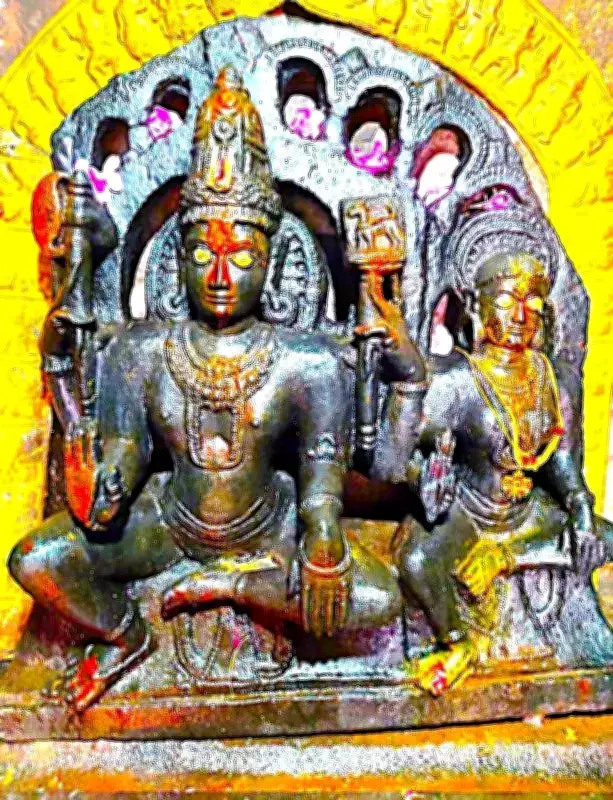
A remarkable discovery at a serene Shaiva shrine in Dubbak has dramatically expanded our understanding of Telangana's historical and spiritual geography. Heritage experts have successfully identified a Bhairava mantra peetham at the mandal headquarters in Siddipet district, following a meticulous re-examination of a Yogabhairava-Kalika sculpture that local villagers have venerated for generations.
Third Bhairava Mantra Peetham in Telangana
"This is the third Bhairava mantra peetham identified in Telangana," announced Sreeramoju Haragopal, convenor of Kotha Telangana Charitra Brundam (KTCB). The significant sculpture was located on the Shivalinga peetham inside the Shaiva temple, which is locally referred to as the Vitthaleshwara temple. Siripuram Narendra, a dedicated Dubbak resident and active member of KTCB, was the first to recognize the idol as Yogabhairava seated alongside the goddess Kalika, as confirmed by Haragopal.
Iconographic Details Confirm Identification
According to P Mahesh, a renowned iconographist, and Haragopal, the identification is firmly grounded in precise iconographic characteristics. The sculpture is crafted in the sukhasana murti posture, with Bhairava holding a parashu (axe) and shvana pataka (dog banner) in his rear hands. In his right front hand, he holds an akshamala (rosary), while his left hand is extended in the prasarita hasta pose, offering darshan to devotees. The Devi is depicted holding a khatvanga (staff) and also displaying the prasarita hasta gesture.

They emphasized that the idol had previously been mistakenly worshipped as a Vaishnava murti due to a widespread ignorance of its true iconographic features, leading to a long-standing misidentification that has now been corrected.
Connection to Ancient Kalamukha Tradition
Haragopal traced the spiritual lineage of this peetham directly to the ancient Kalamukha tradition. He explained that Pashupata Shaivism later branched into the Kapalika and Kalamukha sects. The Kalamukha traditions are believed to have reached the Telugu region by the 6th century CE and maintained a strong influence between the 9th and 13th centuries.
"Many inscriptions mentioning the Kalamukhas were found in Telangana," he noted, adding that numerous temples associated with this tradition eventually faded into obscurity over time, primarily due to the absence of comprehensive inscriptional records.
Previous Discoveries and Future Explorations
Haragopal highlighted that the previously identified Bhairava mantra peethas in the state include the nine-headed Chanda Bhairava at Edulabad and the Svachchhanda Bhairava seats at Indresham. "A fourth peetham remains to be explored," he revealed, pointing to ongoing research efforts. Additionally, he mentioned that there is currently no available information about similar Bhairava mantra peethas existing elsewhere in the country, making this discovery even more significant for regional heritage studies.