The Invisible Menders: Pune's Rafugari Artisans Struggle to Preserve a Fading Heritage
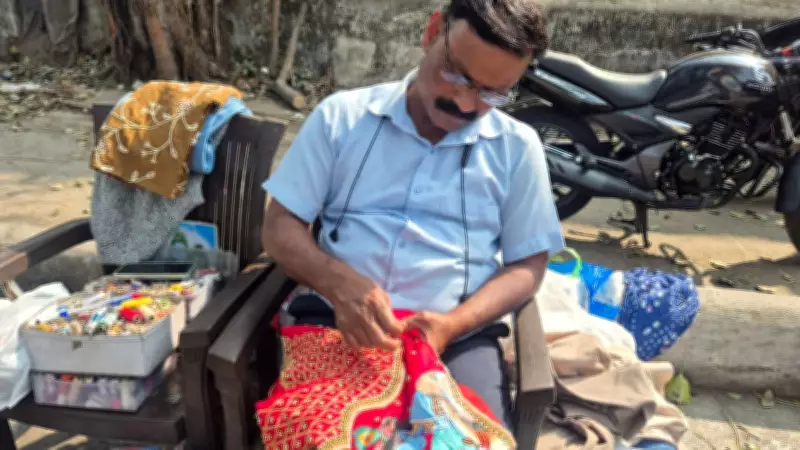
In the bustling streets of Pune, a group of skilled artisans practices a craft so precise that its greatest achievement is invisibility. Rafugari, the traditional art of seamlessly repairing damaged textiles, is facing extinction, but artisans like Datta Sonawane and Fakruddin Ansari are fighting to keep it alive. For over three decades, they have mended garments with such expertise that the repairs blend undetectably into the original fabric, preserving memories and heirlooms for generations.
A Journey Born of Necessity and Passion
Datta Sonawane's path to rafugari began out of sheer necessity. With limited livelihood opportunities in his village of Patas in Daund taluka, he moved to Pune and was drawn to the craft after observing his uncle at work. Through years of observation, trial, and error, he honed his skills, and for 32 years, he has made a daily commute of approximately 65 kilometers each way by train to practice his art outside Life Dry Cleaners on East Street in Pune Camp.
Similarly, Fakruddin Ansari, based in Wakad, has dedicated three decades to rafugari. He explains that the craft, which gained prominence in the 1700s, originated in Kashmir and Central Asia. Historically, it flourished across North India, Iran, and Uzbekistan, where skilled artisans, often called 'textile physicians,' embroidered intricate designs and repaired antique shawls for royal families and the wealthy.

The Art and Technique of Invisible Repair
Rafugari is more than just a physical repair; it is a meticulous process that demands immense skill and patience. Artisans use two primary techniques:
- Patchwork: This involves replacing damaged sections of fabric with identical material, ensuring a perfect match in texture and pattern.
- Tana-Bana (Interlay): In this method, threads are carefully removed from hidden areas of the garment to seal holes, matching the weave and design exactly.
The hallmark of excellent rafu work is its invisibility. As Ansari notes, "The repair should blend into the background design so seamlessly that one cannot pinpoint the original damage later." This precision allows them to fix tears in delicate items like Pashmina shawls, Banarasi sarees, and other high-value garments, making the mend undetectable to the naked eye.
Emotional Threads and Customer Stories
What drives Sonawane and Ansari is not just income but the emotional connections embedded in each garment they repair. Sonawane shares, "Most customers cherish their garments because of attached memories—like a mother's saree, a father's shirt, or a wedding suit." Some clients repeatedly repair the same outfit, considering it auspicious, while others prioritize comfort over cost, paying significant sums for repairs on items like jeans worth lakhs of rupees.
Their clientele spans all age groups, though elderly individuals and those seeking to preserve family heirlooms are most common. Sonawane has worked on garments up to 80 years old, highlighting the trust and value placed in his craft. He recalls repairing jeans valued at Rs 50 lakh, demonstrating the high stakes involved in his work.
Challenges and Physical Toll
Despite its artistry, rafugari comes with significant challenges. The craft is time-consuming, often taking days to complete, yet customers frequently demand immediate service, which is impractical. Ansari emphasizes, "One mistake can force a rework of the entire patch." Additionally, finding threads that match the exact color shade of a garment is critical; a slight mismatch can make the patch visible, ruining the invisible effect.
The physical toll on artisans is also severe. Years of repetitive hand motions and sustained grip lead to tendon strain, joint pain, and muscle issues. Sonawane is currently undergoing medical treatment for hand pain, while Ansari suffers from eye strain and blurred vision due to long hours focusing on intricate details.

A Craft on the Brink of Extinction
Rafugari is a dying craft, threatened by evolving fashion trends, changing consumer behaviors, and a lack of interest from younger generations. Sonawane earns an average of Rs 40,000 to 45,000 per month, but he notes that the number of artisans has drastically declined, leading to increased charges for services. His own sons, both in their final year of graduation, have shown no inclination to learn the craft, making its future uncertain.
However, Sonawane remains determined. He vows to continue working as long as his health permits and offers to teach rafugari free of cost to anyone interested. "I'll definitely work till my body supports, but to keep rafugari alive, I would teach it free of cost to those who are interested," he says, embodying a resilient spirit to preserve this heritage for future generations.