President Droupadi Murmu to Inaugurate Darjeeling Hill Festival at Lok Bhavan
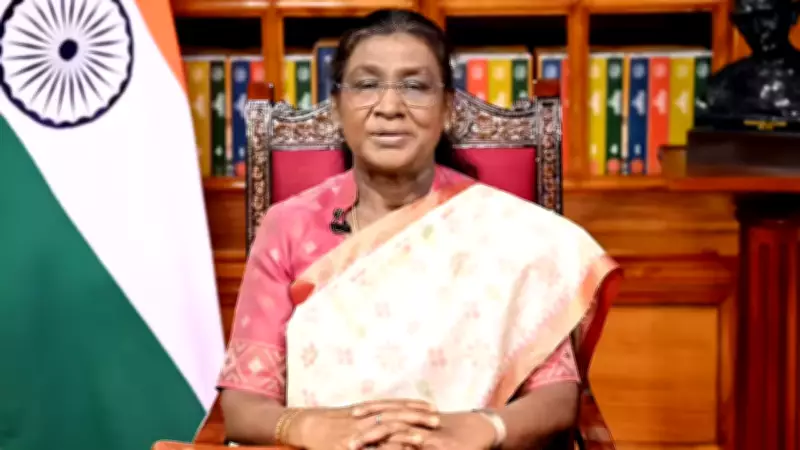
President Droupadi Murmu is set to inaugurate the prestigious Darjeeling Hill Festival at the historic Durbar Hall of the Raj Bhavan in Darjeeling, which has now been officially rechristened as the Lok Bhavan. This significant cultural event marks a major celebration of India's rich tribal heritage and artistic traditions.
First-of-its-Kind Cultural Extravaganza
Curated by experts from the renowned Indian Museum, this groundbreaking festival represents a first-of-its-kind cultural extravaganza that will span multiple prestigious institutions across the region. The exhibition will be spread across several key cultural centers including the Indian Museum itself, the Eastern Zonal Cultural Centre (EZCC), Victoria Memorial Hall, Maulana Abul Kalam Institute of Asian Studies (MAKAIAS), and the Asiatic Society.
The festival will also involve active participation from various universities, public institutions, and non-governmental organizations, creating a comprehensive cultural network that brings together diverse aspects of India's tribal heritage.

Governor's Vision and Festival Conception
The Darjeeling Hill Festival was conceived by Governor C V Ananda Bose, who also serves as the chairman of the board of trustees at the Indian Museum. Governor Bose's vision for this festival emphasizes the preservation and celebration of India's diverse tribal cultures and their artistic expressions.
One of the striking exhibits includes a remarkable brass sculpture depicting a Konyak Naga couple standing with dignified poise upon a rectangular wooden pedestal. The male figure embodies the traditional warrior spirit, holding a Dao in his right hand and a symbolic brass head in the other—both powerful emblems of courage and distinct tribal identity.
Roots and Rhythm Exhibition
The exhibition, titled 'Roots and Rhythm', will showcase the country's incredibly rich tribal legacy through multiple dimensions:
- Artistic brilliance and craftsmanship
- Oral traditions and storytelling methods
- Social systems and community structures
- Spiritual worldviews and belief systems
This comprehensive exhibition will bring together a carefully selected collection of rare artefacts from the Indian Museum's extensive ethnographic collections, representing tribal communities from across the nation.
Geographical Representation and Tribal Diversity
The exhibition spans the diverse geographical regions of India, including:
- The hills and valleys of the North-East
- The dense forests of Central India
- The red soil regions of Eastern India
- The southern highlands
- The unique island cultures of the Andaman & Nicobar Islands
Among the exhibits is a remarkable percussion instrument carved into a graceful conical form with a hollowed interior that amplifies its deep, resonant voice—a true rhythmic masterpiece of tribal craftsmanship.
Diverse Tribal Artefacts on Display
Indian Museum director Sayan Bhattacharya explained the exhibition's scope: "From Adi cane helmets and Naga warrior sculptures to Santhal jewellery, Kondh Dokra effigies, Toda embroidered textiles, and Onge wooden vessels, each object reflects a world where art, ecology, and spirituality are seamlessly intertwined."
The exhibition also features practical items like a rustic wooden bucket crafted in a sturdy cylindrical shape, demonstrating the beautiful blend of natural materials and traditional utility that characterizes tribal craftsmanship.
Educational Initiatives and Tribal Art Camp
As part of this comprehensive cultural initiative, the Indian Museum in Kolkata will organize a special Tribal Art Camp for school students from Darjeeling. This educational program aims to create an engaging platform for young minds to interact directly with indigenous art traditions and explore the creative expressions of India's tribal heritage.

Preserving Millennia-Old Tribal Traditions
India's tribal traditions represent a way of life that has thrived for millennia, deeply rooted in ecological wisdom, spiritual resilience, and artistic brilliance. The Adivasi heritage offers valuable insights into sustainability, coexistence, and cultural identity that remain relevant in contemporary society.
Tribal communities not only live in the present with mindful awareness but also preserve their knowledge systems with a vision for future generations. Each community maintains its distinct identity while nurturing respectful relations with others, upholding the essential principle of unity in diversity that defines India's cultural landscape.
The exposition will particularly emphasize the importance of tribal knowledge in an evolving technological landscape, highlighting how traditional wisdom can complement modern advancements while preserving cultural heritage.
This festival represents a significant effort to document, preserve, and celebrate the diverse tribal cultures that form an integral part of India's national identity, bringing their artistic expressions and traditional knowledge to a wider audience through this comprehensive cultural initiative.