Archaeologists Unearth 'Once-in-a-Lifetime' Prehistoric Treasure Trove Beneath Welsh Castle
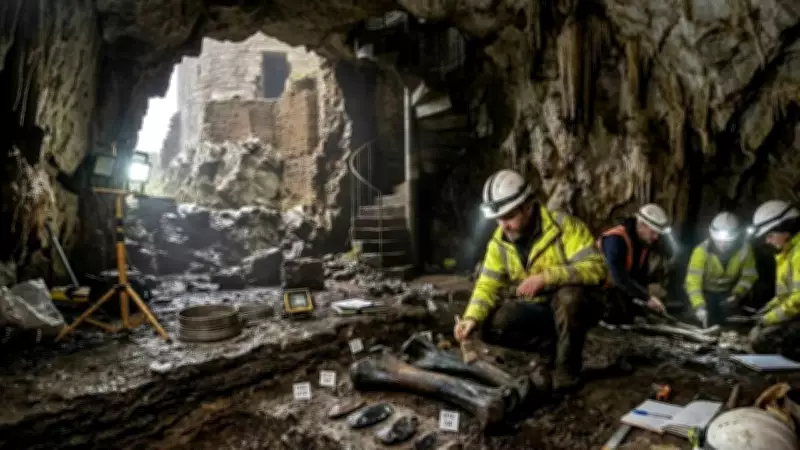
Archaeologists have made an extraordinary discovery within Wogan Cavern, a massive subterranean chamber hidden directly beneath the 11th-century Pembroke Castle in Wales. This find, described as a 'once-in-a-lifetime' archaeological treasure trove, was uncovered during modern small-scale excavations conducted between 2021 and 2024, despite being dismissed as empty by Victorian-era explorers.
Remarkably Intact Sediment Layers Preserve Prehistoric Archive
According to researchers from the University of Aberdeen, the cavern contains remarkably intact sediment layers that preserve an extensive prehistoric archive. These deposits include stone tools and fossils of extinct species such as mammoths, woolly rhinoceroses, and even a hippopotamus dating back approximately 120,000 years. The cave can be accessed via a spiral staircase that is part of the medieval castle situated atop a hill, providing a rare permanent record of prehistoric life through layered history.
Initial analysis values the material contained in this cave to between approximately 45,000 and 35,000 years ago, a period when early Homo sapiens were potentially inhabiting parts of Britain. The sediments may also contain evidence of Neanderthal presence from earlier dates. Because the sediments have been preserved in distinct strata, this cave offers scientists an unusual opportunity to study the effects of climate on ecosystems across different time periods by examining animal and plant life through microfauna and ancient DNA analysis.

Reconstructing Ancient Climates and Prehistoric Survival
The discovery of hippopotamus bones that likely date from the last interglacial period (approximately 120,000 years ago) in the cave sediments suggests that temperatures in Wales were significantly warmer than previously thought during that era. The cave contains extensive evidence of reindeer, wild horses, and a wider range of Pleistocene fauna, potentially providing an accurate timeline for climatic transitions that occurred in Wales.
Researchers hope this data will help answer questions about how prehistoric hunter-gatherers survived the dramatic environmental changes that occurred as the last Ice Age ended and warmer, more temperate climates developed across parts of Europe.
Unlocking Human History Through Advanced DNA Analysis
A new five-year, large-scale investigation led by the University of Aberdeen aims to utilize advanced techniques including ancient DNA analysis and high-resolution dating to map human occupation and environmental shifts spanning over 100,000 years of British history. Scheduled to begin in May 2026 with support from the Calleva Foundation and Pembroke Castle Trust, the project will focus on analyzing genetic material from sediment.
This sediment DNA analysis can identify the presence of humans and animals even when no bones are available. By examining these high-resolution data points, researchers hope to reconstruct the exact sequence of human activity in the area and gain advanced understanding of the transition from Neanderthals to modern humans in Britain.
The discovery of Wogan Cavern represents a prehistoric archive of unparalleled importance for British archaeology, offering unprecedented insights into ancient climates, extinct species, and early human occupation patterns that have remained hidden for millennia beneath a medieval Welsh castle.