Mahisadal's Mirpur Village: A Portuguese Enclave Untouched by SIR Turmoil
In the serene village of Mirpur, located in Mahisadal of East Midnapore district, the State Identification Register (SIR) process has unfolded as a remarkably smooth affair, diverging sharply from the widespread disruptions witnessed across Bengal. Out of a total of 824 voters, only two individuals—one Muslim and one Hindu—have had their names deleted, with no hearings required for the rest. This stands in stark contrast to the chaotic experiences reported elsewhere in the state.
A 300-Year-Old Legacy of Portuguese Mercenaries
The village's unique resilience is rooted in a fascinating historical tapestry. Residents with surnames such as Nunes, Rozario, Lobu, Tesra, and D'Cruz trace their lineage back to Portuguese mercenaries from Goa, who arrived here over three centuries ago. The settlement was established after 1742, during a period when the region was frequently besieged by Maratha marauders, locally referred to as the "Borgis."
Rani Janaki Devi, the queen ruling from Mahishadal Rajbari at the time, hired these Portuguese soldiers as part of her militia to defend against the attacks. While some returned to Goa, others chose to stay, marrying local women and laying the foundations for a community that endures to this day.

The Tesra Surname: A Linguistic Evolution
Among the Portuguese descendants in Mirpur, approximately 60% bear the surname "Tesra," which is a distorted form of the original Portuguese surname "Teresa," altered due to the influence of the local accent. Other surnames like Lobu, Rozario, and Perera persist, though they collectively account for only about 5% to 10% of the village population. Ranjan Tesra, a descendant, highlighted that none from the Christian Para or Firingi Para area—home to around 400 voters, mostly with the Tesra surname—faced name removal or hearings, despite their Portuguese heritage.
Cultural Integration and Fading Roots
Despite their ancestry, the villagers have largely assimilated into local culture. Ratan, who oversees the local church under the CNI-Kolkata Diocese, noted that apart from surnames, connections to Portuguese roots are tenuous due to the remote location. Rare historical items once kept by villagers have been lost over time, and physical appearances show little resemblance to their Portuguese forebears. The only remaining traces in the church are baptismal and marriage record books, which are deteriorating.
Purnima Tesra, a homemaker with two daughters, shared that while she knows of her Portuguese lineage, she has no clear idea where Portugal is located, reflecting the gradual erosion of ancestral knowledge over generations.
Harmonious Coexistence and Voting Preparations
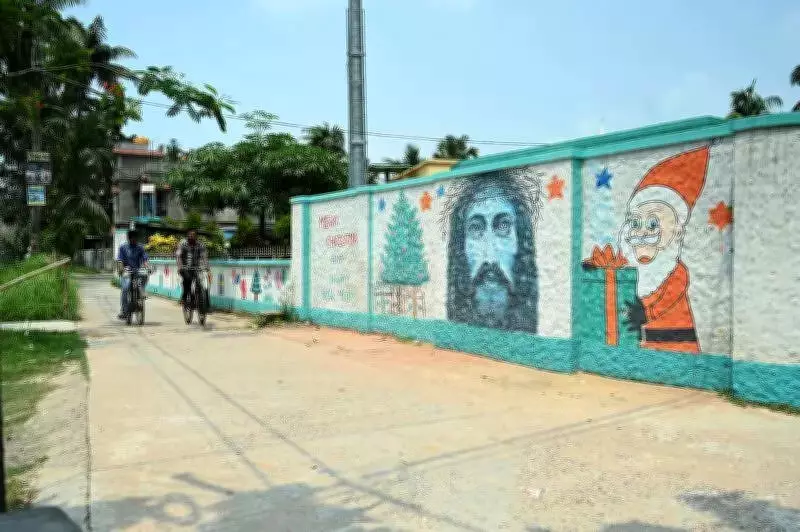
The village exemplifies communal harmony, with Hindu and Muslim families living alongside the Portuguese descendants. Together, they celebrate festivals such as Eid, Durga Puja, and Christmas. As voting approaches, the 824 voters in Christian Para will cast their ballots at two booths: Suklalpur Primary School and Betkundu New Primary School. This peaceful electoral process underscores the village's unique position, largely insulated from the SIR controversies that have plagued other parts of Bengal.
The story of Mirpur serves as a testament to historical resilience and cultural integration, offering a rare glimpse into a community where heritage and harmony coexist seamlessly.