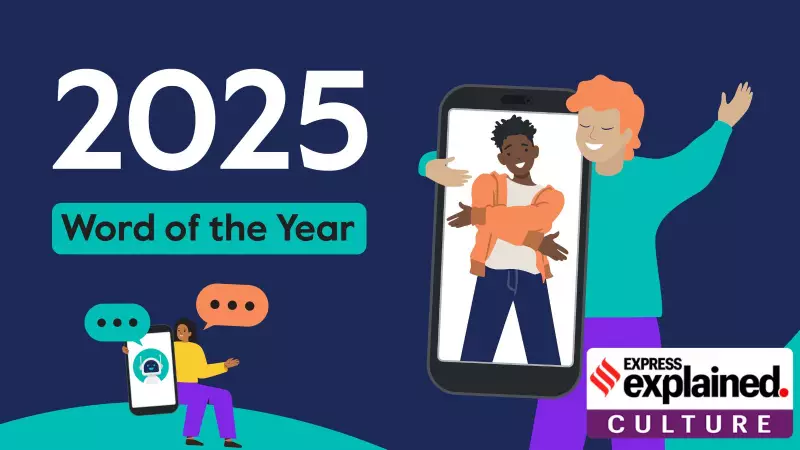
In a significant reflection of our times, the Cambridge Dictionary has declared 'parasocial' as its Word of the Year for 2025. This decision highlights a massive surge in global interest in the term, which the dictionary directly links to the exploding popularity of artificial intelligence companions and the deepening crisis of loneliness worldwide.
What Does 'Parasocial' Mean?
The term 'parasocial' is not new. It was first coined by sociologists Donald Horton and R Richard Wohl back in 1956. They used it to describe the one-sided, illusory relationships that audiences develop with media personalities, like television stars, creating a 'seeming face-to-face' bond where the fan feels a unique, intimate knowledge of the performer.
This phenomenon explains why fans deeply analyze Taylor Swift's lyrics for personal clues, engage in fierce celebrity debates, or, in extreme cases, cross into stalking. These relationships can also extend to fictional characters and have even been linked to the formation of strong political and ideological alignments, fulfilling a basic human need for belonging.

The Digital and AI Amplification
The internet has supercharged parasocial dynamics. With celebrities and influencers accessible 24/7 on smartphones, the illusion of intimacy is stronger than ever. Cambridge noted a specific spike in searches for 'parasocial' in June 2025 after a popular YouTube streamer, IShowSpeed, blocked a fan who openly described their parasocial attachment.
However, the biggest shift is the entry of AI. In September 2025, Cambridge updated its definition of 'parasocial' to explicitly include 'the possibility of a relationship with AI'. Today, AI chatbots are no longer mere tools; they act as work assistants, therapists, and confidants. Services like Replika and Character.ai offer companionship to millions, while platforms like Instagram allow users to slide into the DMs of an AI. Grok's 'Ani' is even marketed as a 'girlfriend simulator'.
A Double-Edged Sword: The Psychological Impact
Are parasocial relationships inherently bad? Not always. Research shows they can be beneficial. Children learn more effectively with characters like Dora the Explorer, and adolescents can use these bonds to help shape their identities. These one-sided ties can also foster real-world communities where people with shared interests form genuine friendships.
The danger emerges when these relationships replace real human contact. This is where AI companions pose a significant, and not yet fully understood, risk. Recent studies from the MIT Media Lab and OpenAI found that 'heavy users' of ChatGPT were more likely to see the AI as a friend and attribute human emotions to it. These same users reported the highest levels of loneliness, a correlation that was magnified when the chatbot's voice was set to the opposite gender.
The research is unclear on whether AI use causes loneliness or if lonely people are simply more drawn to AI. What is clear is the urgent need for societal interventions. With the World Health Organisation reporting that loneliness affects one in 16 people globally, and OpenAI revealing that 70% of ChatGPT conversations are non-work-related, the call to preserve genuine human connection has never been more critical.
By choosing 'parasocial' as its Word of the Year, Cambridge has not only captured the current cultural moment but has also issued a powerful reminder of what we must strive to protect: authentic human relationships in an increasingly digital and lonely world.