The Life and Legacy of Osho: A Spiritual Revolutionary
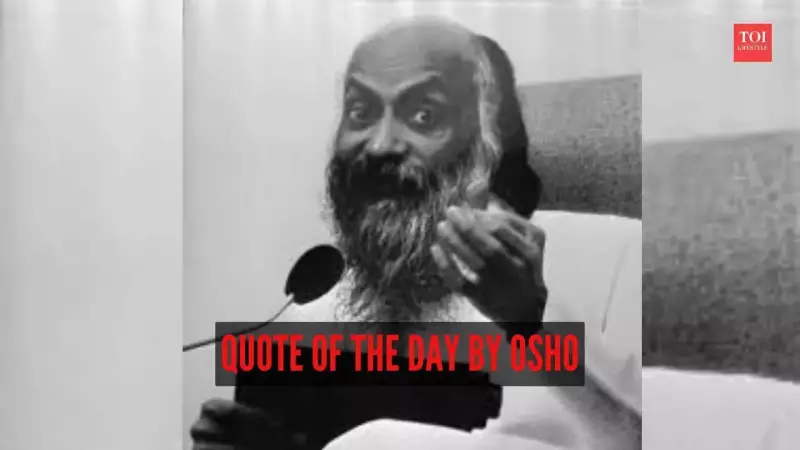
Chandra Mohan Jain, who entered this world in 1931 in the heart of Madhya Pradesh, India, would eventually become known to millions as Osho – one of the most profoundly influential and persistently controversial spiritual thinkers of the twentieth century. His journey through names – from his birth name to Bhagwan Shree Rajneesh and finally to Osho – mirrored his lifelong challenge to conventional religious doctrines and deeply ingrained social conditioning.
A Philosophy of Liberation and Celebration
Osho's teachings centered on a powerful triad: individual freedom, heightened awareness, and transformative meditation. He advocated for living life with complete totality rather than through repression, creating a spiritual framework that resonated across continents. Remarkably, Osho never aligned himself with any single religion. Instead, he synthesized wisdom from diverse traditions including Buddhism, Hinduism, Taoism, Sufism, and various strands of Western philosophy, creating a unique spiritual tapestry that transcended cultural boundaries.
His radical yet accessible approach to spirituality attracted millions of followers globally, particularly throughout Western nations. Osho fundamentally believed that spirituality should not deny life but rather enhance it – a perspective that challenged ascetic traditions and invited people to embrace existence fully. Through thousands of recorded discourses, numerous published books, and innovative meditation techniques, Osho consistently encouraged individuals to live consciously, joyfully, and with creative expression.

The Enduring Impact of Osho's Teachings
Decades after his passing in 1990, Osho's ideas continue to shape contemporary conversations about:
- Mindfulness practices and present-moment awareness
- The nature of individual freedom in modern society
- Creative expression as spiritual practice
- Emotional well-being and holistic living
Osho on Creativity: A Love Affair with Life
The widely attributed quote, “To be creative means to be in love with life. You can be creative only if you love life enough that you want to enhance its beauty, you want to bring a little more music to it, a little more poetry to it, a little more dance to it,” perfectly encapsulates Osho's core philosophy. This statement offers a revolutionary definition of creativity that moves far beyond conventional artistic boundaries.
Redefining Creative Expression
According to Osho's perspective, creativity represents not merely painting, writing, or performance but rather a fundamental attitude toward existence itself. To be creative means to engage in a passionate love affair with life in its entirety. When one genuinely loves life, they naturally seek to add more beauty, richness, and depth to their experience. In this framework, creativity transforms from a pursuit of external success into an act of profound gratitude and celebration.
Osho's deliberate choice of words – “music,” “poetry,” and “dance” – carries deep symbolic significance. These elements represent:
- Harmony – the balanced integration of life's elements
- Expression – the authentic communication of inner experience
- Flow – the natural, effortless movement through existence
The Creative Life as Conscious Living
Osho suggests that true creativity manifests when individuals live with sensitivity, joy, and awareness in all actions – whether related to work, relationships, or personal expression. A creative life embraces every moment, both ordinary and extraordinary, with full intensity and conscious presence. This perspective democratizes creativity, removing it from the exclusive domain of artists and making it accessible to all who choose to live deliberately.

Furthermore, Osho's philosophy emphasizes that creativity emerges from abundance rather than struggle. When love for life fills one's being, creative expression happens effortlessly and organically. One creates not to prove worth or achieve validation, but to share inner richness with the world. This approach inspires a shift from mechanical, routine living toward treating life as art – where each moment presents fresh opportunities to add meaning, beauty, and depth to our human experience.
The Lasting Truth in Osho's Words
Osho's insights on creativity remain profoundly relevant today, rooted in his broader philosophy of awareness, freedom, and celebration. His teachings remind us that creativity represents not a specialized skill but a way of being – available to anyone willing to live consciously and celebrate existence. By embracing this perspective, we can transform life itself into a continuous creative experience, enriching both our individual journeys and the world we share.