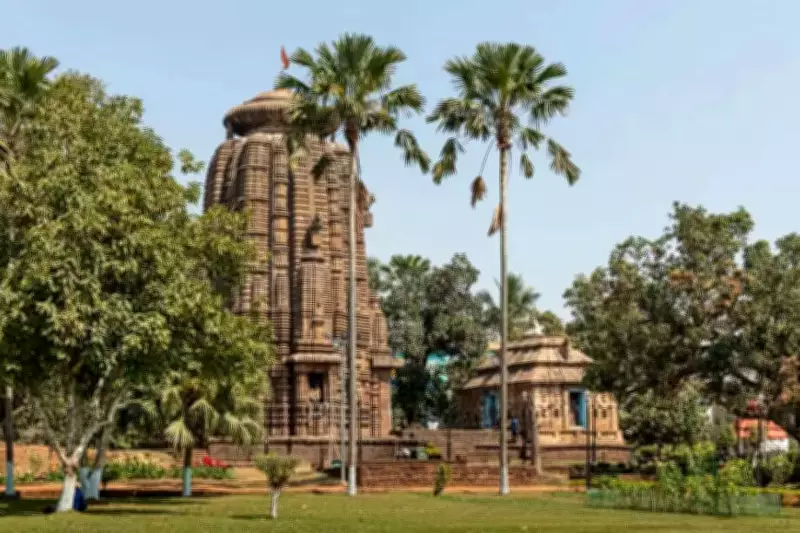
Odisha Government Launches Pioneering Digital Heritage Documentation Project
In a groundbreaking initiative to preserve its rich cultural legacy, the Odisha government has announced a comprehensive survey to create a digital repository of approximately 4,000 heritage monuments and sites. This first-of-its-kind documentation drive aims to systematically capture both tangible structures and intangible cultural expressions associated with these historical assets.
Comprehensive Multidisciplinary Approach
The ambitious project will be spearheaded by the state archaeology wing of the culture department and implemented in a phased manner. Officials have revealed that the documentation will encompass detailed on-site assessments of architectural characteristics, typologies, structural conditions, and historical attributes for each monument. What makes this initiative particularly significant is its holistic approach that extends beyond physical structures to include intangible cultural heritage elements.
These intangible aspects will include oral histories, traditional rituals, local festivals, craftsmanship traditions, performing arts, and community narratives that have been associated with these sites for generations. This comprehensive methodology ensures that both the physical monuments and the living cultural knowledge surrounding them are preserved for future generations.

Advanced Technological Integration
To create an accurate location database and monitor potential encroachments, every heritage site will be geo-referenced using GIS-based spatial mapping tools. The documentation will also map site boundaries, access routes, land-use contexts, environmental settings, and cultural landscape features. This technological integration represents a significant advancement in heritage management practices within the state.
The resulting database will serve as a central reference system that integrates architectural, historical, cultural, and geographical information. Officials emphasize that particular attention will be paid to data accuracy, standardization of formats, and long-term usability to support researchers, policymakers, conservationists, and the general public.
Conservation and Protection Mandate
Beyond documentation, heritage protection forms a crucial component of the project's mandate. During the initial phase, conservation and development proposals will be developed for 75 priority monuments selected based on historical importance, structural condition, and cultural significance.
"We aim to identify the 75 priority monuments that require urgent or strategic conservation attention," explained a senior department official. These proposals will assess current monument conditions, conservation status, and prepare strategies for structural stabilization, restoration, and preventive care measures.
Current Heritage Protection Landscape
Currently, Odisha has over 80 monuments and sites under the protection of the Archaeological Survey of India, while more than 200 monuments are maintained by the state archaeology wing. However, thousands of other ancient monuments and sites remain unprotected by either body, highlighting the urgent need for this comprehensive documentation initiative.
The culture department has recently invited applications from agencies specializing in heritage conservation to develop this comprehensive digital heritage database. Project implementation is expected to commence shortly after the selection of a qualified agency.
This 360-degree documentation approach promises to create an unprecedented view of Odisha's heritage assets, preserving both their tangible and intangible dimensions. The initiative represents a significant step forward in cultural preservation efforts, ensuring that the state's diverse heritage receives the systematic attention and protection it deserves.