Netaji Subhas Chandra Bose Exhibition Revives Visual Memory of Freedom Icon
Curated by Neville Tuli, the exhibition titled "India's Visual Political Iconicity, Part 2 – Netaji Subhas Chandra Bose" is currently on display at the India Habitat Centre in New Delhi. This immersive showcase brings together three decades of archival collecting, focusing on Bose and the broader Indian freedom movement. The exhibition runs until January 29, offering a unique perspective on how Netaji was perceived and remembered through mass-produced visual culture.
Exploring Netaji Through Popular Visual Arts
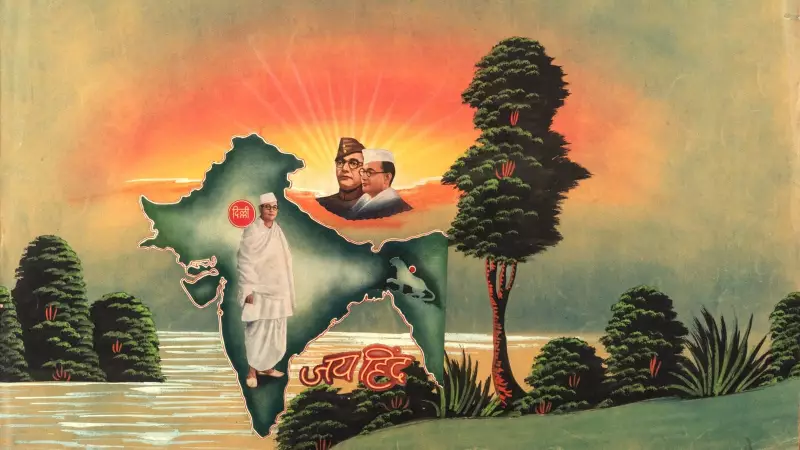
The exhibition moves beyond official portraiture to explore the rich tapestry of visual materials that once adorned homes, street corners, cinema halls, and calendar pages across undivided India. Key exhibits include:
- Lithographs depicting Bose's political journey, from his re-election as INC President in 1939 to his establishment of the Azad Hind Fauj in Singapore.
- Political calendars, such as the 1946 Netaji Subhas Chandra Bose calendar by Vadilal Dyeing and Printing Works and the 'Message to Soldiers' calendar featuring Bose and Dr. Lakshmi Sahgal.
- Rare artefacts like the statue of Netaji, the Japanese Laughing Buddha, and the Swaraj Mandir Postcard, which were among the most difficult to source.
These objects served a dual purpose: they were functional items for daily timekeeping while also quietly embedding political remembrance into everyday life.

Curatorial Insights and Historical Context
Neville Tuli, curator for the Tuli Research Centre for India Studies (TRIS), explained the rationale behind focusing on Bose for this edition of the exhibition. "Bose naturally brought his own unique path to helping India gain her independence, and it is critical to understand and appreciate it with an open mind," he stated. The exhibition is part of the sixth Self-Discovery via Rediscovering India Festival, aiming to provide free access to students, teachers, and the public for contemporary India studies.
Tuli emphasized that sourcing these materials was not a last-minute effort but the result of over three decades of dedicated collecting. The exhibition maps Netaji's life from early portraits to key events like the battle at Kohima in 1944, his martyrdom, and his relationships with figures such as Mahatma Gandhi, Pandit Nehru, and Japanese PM Heidiki Tojo.
Preservation and Accessibility
Despite the age and fragility of many works, restoration has been kept to a minimum. Tuli noted, "We avoid such processes unless it is critical. The key is to frame and protect and prevent further damage." Techniques like de-acidification and Nepali handmade paper backing are used only when necessary, particularly for vintage film material. This approach ensures the authenticity and historical integrity of the artefacts while making them accessible for educational purposes.
The exhibition not only celebrates Netaji's legacy but also underscores the importance of visual culture in shaping national memory and identity.