Muzaffar Ali and Radhikaraje Gaekwad: Guardians of Heritage in a Modern World
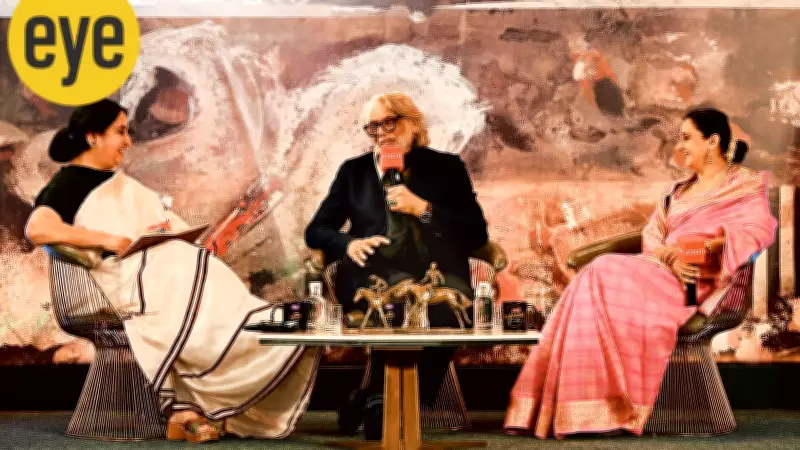
In a profound dialogue with Vandita Mishra, National Opinion Editor of The Indian Express, filmmaker Muzaffar Ali and Maharani Radhikaraje Gaekwad of Baroda delved into the significance of the past, the challenges of safeguarding cultural legacy, and the undying essence of Ganga-Jamuni tehzeeb. Their conversation, held in New Delhi, illuminated how historical wisdom shapes contemporary creativity and societal values.
The Past as a Foundation for the Future
Radhikaraje Gaekwad described the past as a vast reservoir of wisdom and experiences, both positive and negative. She emphasized that while it is crucial to draw from this wealth, individuals must craft their own unique approaches to infuse compassion and innovation into the world. "It's good to dip into that wealth from time to time, but one has to create one's own recipe," she remarked, highlighting the balance between tradition and personal expression.
Muzaffar Ali echoed this sentiment, viewing the past not as an escape but as a window to the future. He argued that without a deep understanding of history, designing meaningful futures becomes impossible. "That vocabulary comes from your inheritance. We have a legacy of relationships that have empowered us," he stated, underscoring the role of cultural and artistic heritage in shaping identity.

Personal Journeys and Professional Insights
Radhikaraje reflected on her early career at The Indian Express, where she honed her skills in expression and analysis. "The power of earning a salary was so empowering," she shared, noting how this experience instilled a sense of independence that continues to influence her work in heritage storytelling. Her exposure to diverse cultures, growing up as the daughter of an IAS officer in Delhi, further enriched her perspective, allowing her to articulate complex ideas cohesively.
Muzaffar Ali recounted his multifaceted journey, from studying geology in Aligarh to becoming a filmmaker, influenced by encounters with luminaries like Satyajit Ray. "Ray taught me that to create a frame, you have to dwell on it. Frame is a meditation," he explained, detailing how his background in painting profoundly impacted his cinematic vision. He credited his artistic roots with preventing him from becoming a "stupid filmmaker," emphasizing the importance of immersive creativity.
Navigating Modern Challenges and Upholding Traditions
Addressing the politicization of history, Muzaffar Ali advocated for focusing on art that unites rather than divides. "I steer clear of narrow paradigms that make us small human beings," he said, urging a search for poetry and music that fosters harmony. Radhikaraje challenged misconceptions about royalty, asserting that their relevance stems from a deep connection with reality. "The fact that they have remained relevant is because they are rooted in reality," she noted, describing how her family has always engaged with people across social classes.
On the topic of Ganga-Jamuni tehzeeb, Muzaffar Ali expressed unwavering optimism. "The Ganga-Jamuni tehzeeb cannot die," he declared, citing historical examples like Wajid Ali Shah, whose patronage nurtured arts such as Kathak and Thumri. He called for Bollywood to embrace a broader, global artistic perspective, moving beyond trivial concerns to celebrate cultural confluence.
Legacy, Custodianship, and Artistic Evolution
Radhikaraje discussed the challenges of communicating custodianship in an era of perceived entitlement. "The basic impression that goes out is not of custodianship but entitlement," she observed, highlighting the responsibility inherent in preserving centuries-old artifacts within royal families. She remains hopeful about engaging younger generations through authentic storytelling on platforms like social media, despite shrinking attention spans.

Muzaffar Ali reflected on his filmmaking process, where characters and poetic concepts take precedence over commercial trends. "All beauty is created out of immersive experiences, but nowadays, there is a lack of time," he lamented, contrasting the depth of classics like Umrao Jaan with contemporary haste. With his films being restored in 4K, he affirmed their timeless relevance, stating that true art, like a revered horse, should be cherished rather than raced.
This conversation underscores the enduring power of heritage in shaping a compassionate and creative future, reminding us that the past is not just a memory but a living guide for generations to come.