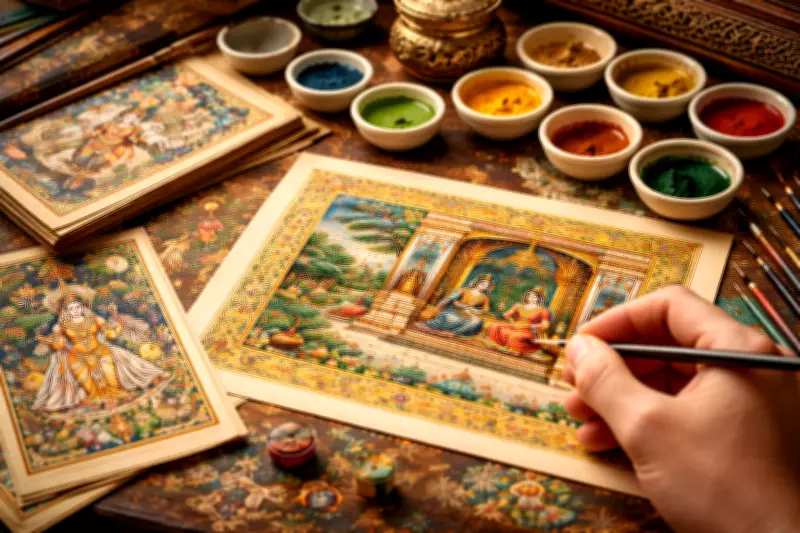
Miniature Paintings: Asia's Pioneering Visual Journalism Centuries Before Cameras
Long before the invention of photography and the digital age, artists across Asia were already mastering a remarkably sophisticated form of visual storytelling through miniature paintings. These small-scale works, often no larger than a book page, functioned as comprehensive visual archives, combining elements of journalism, biography, and historical documentation with extraordinary precision and artistic vision.
The Imperial Storytelling Machines of Mughal Courts
Miniature painting reached its zenith in the imperial workshops of South Asia, particularly under the patronage of Mughal rulers who transformed art into a powerful state-sponsored narrative tool. Lavish manuscripts like the Akbarnama and the fantastical Hamzanama documented the lives, conquests, and legends of emperors through hundreds of meticulously illustrated folios that served as visual chronicles of their reigns.
What made these paintings revolutionary was their narrative technique. Artists employed continuous narration, allowing multiple episodes to unfold simultaneously within a single frame. A battle scene might show cavalry charging in one corner while wounded soldiers retreated in another, with commanders signaling from hilltops above—all within the same composition. This innovative approach enabled viewers to read both time and space in a way that predated cinematic storyboarding by centuries.

Master painters like Basawan developed startling realism for their era, capturing individualized facial features, subtle emotional expressions, atmospheric skies, and architectural details with remarkable accuracy. For contemporary historians, these paintings provide invaluable documentation of clothing styles, court etiquette, weaponry, animal species, and urban layouts that photography wouldn't capture for generations.
Persian Influences and Documentary Impulse
The visual language of miniature painting drew significantly from Persian traditions, particularly in the use of flattened perspective, lyrical color fields, and decorative landscapes. However, Mughal ateliers pushed observational techniques further, blending poetic stylization with a strong documentary impulse. The resulting works feel surprisingly modern in their narrative sophistication, functioning as carefully constructed visual reports from imperial courts.
Rajput and Pahari Schools: Mythology as Visual Epic
While Mughal painters chronicled imperial history, Rajput and Pahari schools transformed miniature painting into a vibrant stage for mythology, romance, and spiritual devotion. These artists created serial narratives from epics like the Ramayana and Mahabharata, along with lyrical cycles depicting the divine love of Krishna and Radha.
Each regional court developed its own visual dialect, with narrative unfolding across multiple folios like a hand-painted graphic novel centuries before the form existed. One painting might show lovers meeting beneath moonlit trees, the next captured their separation at dawn, and another staged their reunion amid storm clouds—creating emotional arcs through visual sequencing.
Color became sophisticated emotional shorthand in these traditions. Indigo skies signaled longing and melancholy, monsoon greens represented renewal and hope, while gold halos announced divine presence. Artists weren't merely illustrating texts but translating complex emotional states into visual rhythm and symbolism.
The Narrative Flexibility of Miniature Painting
Unlike photography, which isolates single moments, miniature painting possessed remarkable temporal flexibility. Artists could compress or stretch time within a single composition. A ruler might appear twice in one picture—departing from a palace gate on the left while simultaneously addressing courtiers on the right—guiding viewers through narrative progression with painterly choreography.

Miniature painters functioned as both keen observers and sophisticated editors. They selected which elements mattered most to their stories: determining who deserved visual prominence, which gestures conveyed authority, what architectural details proclaimed wealth, and which symbols hinted at destiny. Scale became flexible and symbolic rather than literal—an emperor might tower above attendants not because of physical height but political significance.
Collaborative Workshop Production
These narrative masterpieces emerged from highly organized workshop systems that functioned through sophisticated collaboration. One artist might sketch the overall composition, another specialize in painting faces and expressions, a third add intricate textiles and jewelry details, while a calligrapher inserted explanatory text panels. This assembly-line approach allowed massive narrative projects to be completed with remarkable consistency—a production model surprisingly similar to modern newsrooms or film studios.
Why Miniature Paintings Remain Relevant Today
When viewed in museums today, miniature paintings demand and reward close observation. Viewers must lean in, discovering tiny musicians in palace balconies, servants whispering behind curtains, and animals prowling at forest edges. Every corner of these compositions hums with carefully observed life and narrative detail.
These works remind us that the human urge to document triumphs, tragedies, and daily rituals long predates photographic technology. Before camera shutters clicked, brushes carried that responsibility with equal seriousness. Miniature painters froze not milliseconds but meaningful moments of memory: carefully composed, politically charged, and emotionally saturated visual statements.
In our current age of image overload, these hand-painted narratives feel almost radical in their deliberate slowness and complexity. They invite us to linger, decode, and read pictures as earlier viewers did—story by story, detail by detail. Long before photography promised objective truth, miniature painting offered something equally powerful: a way to see the world as it mattered to the people living within it, filtered through artistic vision and narrative intelligence that remains compelling centuries later.